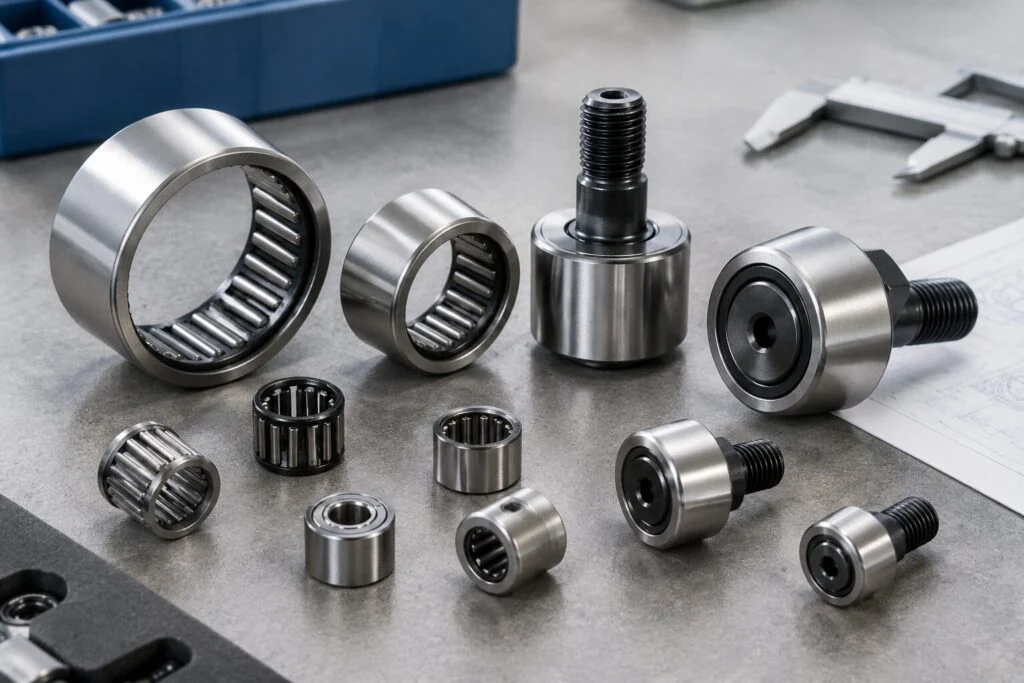
INA vs SKF Timing Kits: Wholesale Supplier for Bulk Orders
Brand loyalty does not silence engine noise; precise tensioner matching does.
Selecting between INA and SKF timing kits requires analyzing specific engine operating conditions and verifying tensioner-pulley tolerance compatibility, rather than relying on general brand reputation. For wholesale distributors and repair groups, the critical decision factor is whether the kit’s damping specifications align with the vehicle’s thermal and vibrational load profile. A mismatched component, even from a premium manufacturer, leads to premature bearing failure and costly warranty claims.
Having managed procurement in the high-temperature logistics hubs of the Middle East before transitioning to specialized timing kit distribution, I learned that technical validation outweighs price negotiation. Early in my career, a shipment of mixed-brand kits failed not because of counterfeit parts, but because the tensioner bearings could not withstand the sustained thermal stress of desert operations. This experience shifted my focus from simple inventory stocking to rigorous technical cross-referencing. Buyers today are not just looking for a lower unit cost; they seek verified alternatives that prevent operational downtime. [NEED_CITE: common causes of timing belt failure in high-ambient temperature environments]
What are the core design differences between INA and SKF timing kits?
Material composition and design philosophy dictate performance under stress, not just the brand name on the box.
While both INA and SKF produce OEM-quality components, their engineering approaches to timing systems differ in ways that affect aftermarket suitability. INA, historically strong in needle roller bearings and camshaft followers, often designs tensioners with specific damping characteristics tailored to tight engine bay configurations. SKF, with its broader heritage in spherical and deep-groove bearings, frequently emphasizes robust sealing technologies and universal fitment strategies.
| Feature | INA Approach | SKF Approach |
|---|---|---|
| Tensioner Design Focus | Compact damping for tight spaces | Robust sealing for contamination resistance |
| Belt Material Technology | High-tooth shear strength formulations | Thermal expansion coefficient optimization |
| Pulley Integration | Precision-matched to specific OEM tolerances | Standardized across multiple platform variants |
| Packaging Traceability | Batch-specific QR codes for verification | Holographic seals with serial number tracking |
[NEED_CITE: ISO standards for automotive timing system component tolerances]
In European car aftermarket scenarios, I have observed that mismatched belt and tensioner pairs cause early-stage noise issues. A distributor once reported recurring complaints about whining sounds shortly after installation. Upon inspection, the issue was not a defective part but a tolerance mismatch between a generic pulley and a high-specification belt. INA kits often include pulleys machined to stricter radial runout limits, which reduces vibration in engines with sensitive acoustic profiles. Conversely, SKF kits may offer superior protection against dust and moisture ingress, making them suitable for vehicles operating in unpaved or industrial areas.
Understanding these nuances allows wholesalers to recommend the right kit based on the end-user’s driving environment rather than defaulting to the most familiar logo. [NEED_CITE: automotive engineering association guidelines on timing component selection]
How to match tensioners and pulleys to avoid engine noise?
Improper tensioner-pulley matching is the primary cause of premature timing system noise, not inherent brand defects.
Most technicians assume that premium brands guarantee zero noise. In reality, the interaction between the tensioner’s damping torque and the pulley’s inertial mass determines acoustic performance. If the damping is too soft, the belt flutters; if too stiff, the bearing experiences excessive radial load.
To verify compatibility, distributors must review the technical datasheets provided by the supplier. Key parameters include the tensioner’s damping torque range and the pulley’s moment of inertia. A US buyer once faced a wave of returns from a fleet operator who installed a new batch of kits. The noise appeared only at idle. By comparing the original equipment specifications with the aftermarket replacements, we identified that the replacement tensioner had a different damping curve than the OEM part. Switching to a kit with a matched tensioner design resolved the issue without changing the belt brand.
| Parameter | Correct Matching | Incorrect Matching |
|---|---|---|
| Damping Torque | Aligned with OEM spec sheet | Deviates significantly from baseline |
| Pulley Runout | Within micron-level precision limits | Exceeds allowable radial deviation |
| Bearing Clearance | Optimized for operating temperature | Standard clearance causing heat buildup |
| Noise Profile | Silent operation across RPM range | Whining or rattling at specific speeds |
[NEED_CITE: technical service bulletins regarding timing belt noise diagnosis]
When sourcing INA vs SKF timing kits, request documentation that confirms the tensioner’s damping specifications. Reliable suppliers provide these datasheets as part of their traceability package. This level of transparency helps repair groups justify their parts selection to customers and reduces the risk of warranty disputes. It is not enough to know the part number; one must understand the mechanical behavior of the assembly.
Which brand suits high-temperature or heavy-load conditions better?
Application-specific selection matrices outperform general brand preferences in extreme operating conditions.
In the Middle East, fleet operators face sustained high ambient temperatures that accelerate lubricant degradation in tensioner bearings. Here, the thermal stability of the grease and the sealing efficiency of the tensioner become critical. I have seen cases where standard kits failed within months due to grease thinning and subsequent bearing seizure. In such environments, kits with enhanced high-temperature grease formulations and robust labyrinth seals perform significantly better.
For heavy-duty commercial vehicles, high-load vibration affects timing stability. The tensioner must absorb shock loads from engine torque fluctuations without losing belt tension. SKF’s approach often includes heavier-duty springs and reinforced housing materials, which can be advantageous in diesel applications with high compression ratios. However, INA’s specialized designs for certain tight-space engines may offer better spatial integration while maintaining sufficient damping.
| Condition | Recommended Focus | Key Component Feature |
|---|---|---|
| High Ambient Temperature | Thermal Stability | High-temp grease, labyrinth seals |
| Heavy Load/Vibration | Shock Absorption | Reinforced housing, robust spring design |
| Tight Engine Bay | Compact Design | Low-profile tensioner, integrated pulley |
| Dusty/Off-Road | Contamination Resistance | Multi-lip seals, dust shields |
[NEED_CITE: impact of ambient temperature on bearing lubricant life]
A mining company in Africa reported extended service life after switching to kits specifically validated for high-dust environments. The key was not just the brand, but the specific seal design included in the kit. Distributors should categorize their inventory based on these operational profiles. Offering a "desert-spec" or "heavy-duty" option alongside standard kits adds value and builds trust with professional buyers.
When evaluating INA vs SKF timing kits for bulk orders, consider the predominant vehicle types in your target market. If your clients mostly service urban delivery vans, standard kits may suffice. If they handle long-haul trucks or off-road machinery, prioritize kits with verified heavy-load capabilities.
How to verify authenticity and avoid counterfeit timing kits?
Traceability documentation and physical packaging checks are the only reliable defenses against counterfeits.
The aftermarket is flooded with fake components that mimic premium branding. These parts often use substandard steel and incorrect grease, leading to catastrophic engine failure. Verifying authenticity requires more than just checking the logo. Genuine products come with batch-specific traceability documents that link the part to its manufacturing origin.
I always advise buyers to request proof of origin for large consignments. Legitimate suppliers provide certificates of conformity and batch numbers that can be verified with the manufacturer. Packaging details also offer clues. Genuine INA and SKF boxes use high-quality printing, specific holographic seals, and precise barcode placement. Counterfeit packaging often exhibits blurry text, misaligned logos, or flimsy cardboard construction.
| Verification Method | Genuine Product Indicator | Counterfeit Warning Sign |
|---|---|---|
| Packaging Quality | Sharp printing, rigid box material | Blurry text, soft or damaged box |
| Holographic Seals | Clear, multi-layered security features | Missing, dull, or easily peeled seals |
| Part Marking | Laser-etched, consistent font depth | Stamped unevenly or painted on |
| Documentation | Batch-specific traceability certs | Generic or missing paperwork |
[NEED_CITE: industry guidelines for identifying counterfeit automotive parts]
A European repair group once received a container of kits that looked authentic at first glance. However, the tensioner bearings lacked the precise laser etching found on genuine units. Upon testing, the grease consistency was wrong, and the bearings failed under minimal load. This incident highlights the importance of physical inspection and documentation review before distributing parts to end-users.
Suppliers who offer mixed-batch consolidation services must maintain strict quality control protocols. They should provide technical datasheets and traceability docs for every brand they stock. This support enables local distributors to promote their products with confidence, knowing they can back up their claims with verifiable data.
Conclusion
Technical validation prevents failure; brand names alone do not.
Choosing between INA and SKF timing kits depends on matching component specifications to real-world operating conditions. Distributors who prioritize traceability, technical datasheets, and application-specific selection build lasting trust with their clients. Avoid the trap of generic recommendations and focus on the engineering details that ensure reliability.