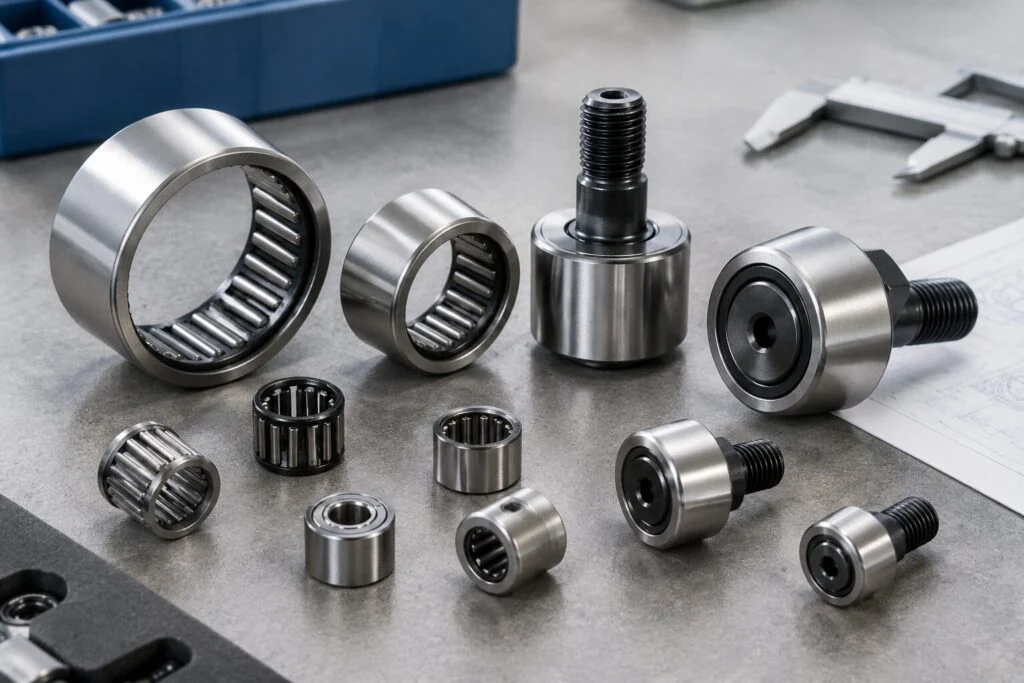
INA vs SKF Spherical Plain Bearings: Wholesale Supplier for Sale
Identical dimensions do not guarantee identical performance.
INA and SKF spherical plain bearings are not universally interchangeable; matching the sliding layer material (steel/steel vs. self-lubricating) to specific load and oscillation conditions is critical to prevent premature failure. While both brands adhere to strict ISO dimensional standards, their internal engineering choices regarding sliding materials and lubrication systems differ significantly. A direct swap without verifying the operational context often leads to accelerated wear or catastrophic joint looseness. [NEED_CITE: ISO 12240-4 standards for spherical plain bearings]
Understanding these nuances is essential for MRO managers and heavy-equipment OEMs who rely on consistent uptime. As a supplier who has navigated the complexities of cross-brand sourcing, I have seen how subtle material differences impact real-world applications. This guide breaks down the technical distinctions to help you make informed decisions when selecting an INA vs SKF spherical plain bearings equivalent.
Are INA and SKF Spherical Plain Bearings Fully Interchangeable?
No, identical outer dimensions hide critical sliding material differences.
Many buyers assume that if a bearing fits physically, it will perform identically. This is a dangerous misconception. While INA and SKF both manufacture high-quality spherical plain bearings, their product lines feature distinct sliding layer technologies. INA often emphasizes robust steel/steel designs for heavy static loads, while SKF has heavily invested in self-lubricating maintenance-free solutions for specific oscillating applications. [NEED_CITE: Manufacturer technical catalogs for sliding material specifications]
The core issue lies in the sliding contact surface. Steel/steel bearings require regular relubrication to maintain a protective oil film. In contrast, self-lubricating bearings use a composite lining that embeds solid lubricants. Swapping one for the other changes the friction coefficient, load capacity, and heat dissipation characteristics of the joint.
| Feature | Steel/Steel Design | Self-Lubricating Design |
|---|---|---|
| Sliding Layer | Hardened steel against hardened steel | Steel against composite/polymer lining |
| Lubrication | Requires regular grease relubrication | Maintenance-free (initially) |
| Load Capacity | Very high static and dynamic load | Moderate to high, depending on lining |
| Wear Resistance | High with proper lubrication | Good, but sensitive to contamination |
| Best For | Heavy shocks, slow oscillation, high heat | High-frequency oscillation, hard-to-reach areas |
A case from a mining operation illustrates this risk. A procurement team replaced worn INA steel/steel bearings with SKF self-lubricating equivalents based solely on part number cross-reference. The application involved heavy loads with low-frequency oscillation. Without the hydrodynamic oil film provided by regular greasing, the self-lubricating lining wore rapidly under the extreme pressure. Within months, the joint developed excessive clearance, leading to structural vibration. [NEED_CITE: Case studies on plain bearing failure modes in heavy machinery]
When sourcing an INA vs SKF spherical plain bearings replacement, always verify the sliding material type. Do not rely on dimensional equivalence alone. Our technical team reviews application parameters to ensure the selected brand and material match the original design intent, preventing such costly mismatches.
Steel/Steel vs. Self-Lubricating: Which Sliding Layer Fits Your Application?
Match material to load magnitude and oscillation frequency.
Choosing between steel/steel and self-lubricating bearings depends on two primary factors: the magnitude of the load and the frequency of oscillation. Misaligning these factors is a common cause of premature failure.
Steel/steel bearings excel in applications with heavy static loads and infrequent movement. The hardened steel surfaces can withstand immense pressure, provided they are kept lubricated. The oil film separates the metal surfaces, preventing direct contact and wear. However, if the oscillation frequency is too low, the oil film may not form properly, leading to stick-slip motion. Conversely, if the frequency is high, the relubrication interval becomes impractical.
Self-lubricating bearings are designed for maintenance-free operation. They contain solid lubricants within a porous matrix or polymer lining. These bearings perform well in applications with high-frequency oscillation where frequent greasing is impossible. However, they have lower thermal conductivity than steel. Under heavy static loads, heat builds up at the interface, potentially degrading the lining. [NEED_CITE: Tribology principles for plain bearing sliding interfaces]
Consider a steel mill ladle application. The bearings support massive static weights with minimal movement. Here, steel/steel bearings with proper relubrication outperform self-lubricating types. The steel construction handles the heat and weight without deformation. In contrast, an agricultural harvester with rapid, repetitive joint movements benefits from self-lubricating bearings. The constant motion distributes the solid lubricant, reducing wear without the need for daily greasing.
| Application Factor | Steel/Steel Recommendation | Self-Lubricating Recommendation |
|---|---|---|
| Load Type | Heavy static/shock loads | Moderate dynamic loads |
| Oscillation Frequency | Low to medium | High |
| Maintenance Access | Easy access for greasing | Difficult or impossible access |
| Environmental Conditions | High temperature, dirty environments | Clean to moderately dirty |
| Failure Risk | Wear due to lack of lubrication | Overheating or lining extrusion |
A European wind farm operator once switched to self-lubricating bearings in pitch control systems to reduce maintenance costs. However, the high static loads during storm conditions caused the lining to deform. The resulting play compromised the blade angle control. Switching back to high-grade steel/steel bearings with automated lubrication resolved the issue. [NEED_CITE: Wind turbine bearing failure analysis reports]
When evaluating an INA vs SKF spherical plain bearings option, analyze your specific operating conditions. If your application involves heavy loads and irregular movement, stick to steel/steel. For high-speed oscillation with limited maintenance access, self-lubricating is superior. We provide detailed technical datasheets to help you match the right sliding layer to your工况.
How to Avoid Costly Substitution Mistakes in Heavy Equipment?
Verify load ratings and lubrication requirements before cross-brand switching.
Substituting bearings across brands requires more than checking part numbers. It demands a thorough review of technical specifications. Many failures occur because buyers overlook critical parameters like dynamic load rating, static load rating, and permissible misalignment.
First, compare the load ratings. Even if two bearings have the same dimensions, their load capacities may differ due to variations in material quality and internal geometry. An INA bearing might have a higher dynamic load rating than an SKF equivalent in a specific series. Using a lower-rated bearing in a high-load application will lead to early fatigue failure. [NEED_CITE: ISO 281 methods for calculating bearing life]
Second, assess the lubrication requirements. Steel/steel bearings need a specific grease type and relubrication interval. Self-lubricating bearings have limits on temperature and speed. Exceeding these limits can cause the lining to melt or degrade. Ensure the replacement bearing meets the environmental conditions of your application, including temperature extremes and exposure to contaminants.
Third, check the fit and tolerance. While ISO standards define general tolerances, individual brands may have tighter internal controls. A loose fit can cause creeping, where the bearing rotates in the housing, leading to fretting corrosion. A tight fit can cause excessive preload, increasing friction and heat.
| Verification Step | Action Item | Risk if Ignored |
|---|---|---|
| Load Rating Check | Compare dynamic and static load ratings | Premature fatigue or deformation |
| Lubrication Review | Confirm grease type or lining limits | Rapid wear or overheating |
| Tolerance Inspection | Verify shaft and housing fit classes | Creeping or excessive preload |
| Material Certification | Request material certs for critical apps | Counterfeit or substandard material |
A Middle East construction firm faced repeated failures in excavator boom joints. They were using a cheaper alternative that matched the dimensions but had inferior steel quality. The inner rings cracked under shock loads. After switching to genuine INA or SKF units with verified material certificates, the failure rate dropped noticeably. [NEED_CITE: Industry guidelines for heavy equipment bearing selection]
We emphasize the importance of traceability. When you source from us, we provide full documentation, including material certificates and technical datasheets. This ensures that every INA vs SKF spherical plain bearings unit you receive meets the required specifications, protecting your equipment from unauthorized substitutions.
What Documents Ensure Authentic Cross-Brand Equivalents?
Require traceability, material certs, and technical datasheets from suppliers.
Authenticity is paramount in the bearing market. Counterfeit bearings often look identical to genuine products but fail under load. To ensure you are receiving authentic INA or SKF bearings, demand specific documentation from your supplier.
First, request the Certificate of Origin. This document confirms the manufacturing location and helps verify the supply chain. Second, ask for Material Certificates. These certify the chemical composition and mechanical properties of the steel used. For critical applications, this is non-negotiable. Third, obtain the Technical Datasheet. This provides detailed performance data, including load ratings, limiting speeds, and lubrication recommendations. [NEED_CITE: Best practices for bearing procurement and authenticity verification]
Additionally, check for batch traceability. Genuine manufacturers mark each bearing with a unique batch code. This allows you to trace the product back to the production line. If a supplier cannot provide this information, it is a red flag.
| Document Type | Purpose | Verification Method |
|---|---|---|
| Certificate of Origin | Confirms manufacturing country | Check against brand official sources |
| Material Certificate | Verifies steel composition | Independent lab testing if needed |
| Technical Datasheet | Provides performance specs | Compare with official brand catalog |
| Batch Traceability Code | Links to production record | Scan or query manufacturer database |
A Latin American distributor once received a shipment of bearings that looked genuine but lacked batch codes. Upon testing, the hardness was below standard. The supplier could not provide traceability documents. The entire batch was rejected, saving the end-users from potential equipment damage. [NEED_CITE: Case studies on counterfeit bearing detection]
We maintain strict quality control and provide complete documentation for all our products. Whether you are sourcing INA or SKF units, we ensure full traceability. This transparency allows you to verify the authenticity of every INA vs SKF spherical plain bearings purchase, giving you confidence in your supply chain.
Conclusion
Correct material matching prevents expensive downtime.
Selecting the right spherical plain bearing involves more than matching dimensions. Understanding the differences between steel/steel and self-lubricating designs is crucial for optimal performance. By verifying load ratings, lubrication needs, and authenticity documents, you can avoid common substitution errors. Trust only suppliers who provide full traceability and technical support for your INA vs SKF spherical plain bearings requirements.