
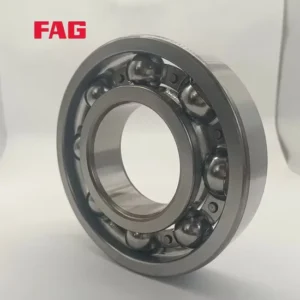
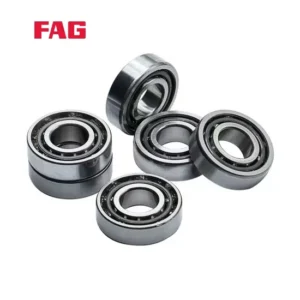
Product Details
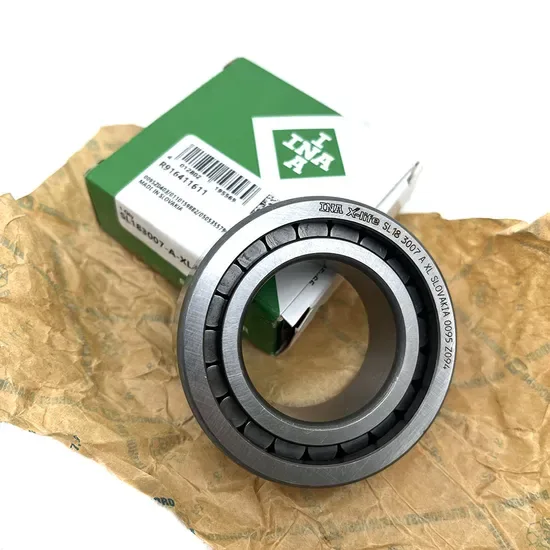
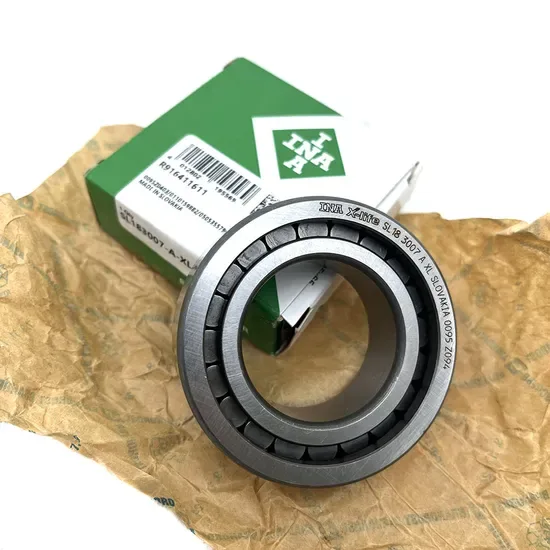
About This INA Bearing
Original Factory Batch Traceability — Every dispatched unit includes verifiable production batch documentation, ensuring the metallurgical pedigree perfectly matches the manufacturer's exact manufacturing records.
Technical Specifications
| Parameter | Value |
|---|---|
| Designation | FAG 16032 |
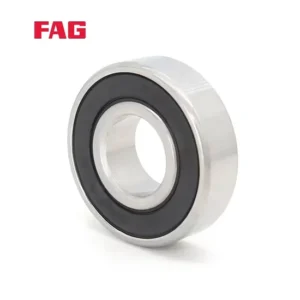
| Bearing Type | Deep Groove Ball Bearing |
| Cage Material | Machined brass cage (M suffix option) |
| Clearance Class | C3 radial internal clearance (C3 suffix option) |
| Precision Class | P0, P6, P5, P4, P2 |
| Lubrication | Grease or Oil |
| Separated | Unseparated |
| Origin | Jiangsu China |
Application Suitability
| Industry | Typical Applications |
|---|---|
| Electric Motors | High-temperature motor shafts requiring thermal expansion accommodation |
| Pumps | Continuous duty fluid transfer impellers operating at elevated speeds |
| Robotics | Precision joint actuators demanding strict dimensional tolerances |
| Conveyors | Heavy-duty drive rollers subjected to sustained radial loads |
Why Standard Clearance Fails in High-Heat Motor Applications
Thermal expansion demands specific internal geometry to prevent catastrophic seizure.
Early in my career supplying motor components for mining operations in Nigeria, a client ignored clearance specifications to cut costs. They installed standard clearance bearings instead of the required C3 variants. Within days, the intense operating heat caused the internal components to expand and lock up completely, halting the entire production line. The financial impact of that single decision cascaded through the entire facility, destroying shafts and burning out motor windings. When sourcing a FAG 16032 deep groove ball bearing for similar high-temperature environments, overlooking this single suffix turns a routine maintenance task into an unplanned shutdown. Engineers often assume that tighter tolerances always mean better performance, but in thermal dynamic systems, that assumption is fundamentally flawed.
Matching the Right Suffix to Your Operating Environment
Selecting the correct FAG 16032 deep groove ball bearing requires aligning the internal design with your specific thermal and mechanical realities. Our engineering team reviews your exact operating parameters to ensure the chosen configuration handles the expected heat generation and rotational speeds. By validating the clearance and cage requirements upfront, we prevent the premature failures that plague improperly specified drive systems. We do not simply ship part numbers; we analyze the operational context to confirm that the selected variant will survive the actual working conditions. This proactive technical alignment bridges the gap between catalog specifications and real-world mechanical demands, ensuring your equipment runs reliably from day one.
Navigating Thermal and Mechanical Stress in Drive Systems
Electric motors and heavy-duty pumps generate significant internal heat, directly impacting the internal geometry of rotating components. If the initial gap is too tight, thermal growth eliminates the necessary operating space, leading to excessive friction and eventual seizure. Furthermore, high-speed applications demand a cage design that maintains stability under continuous centrifugal force. Selecting the appropriate lubrication method—whether grease or oil—must also account for the operating temperature to ensure the film thickness remains adequate throughout the service interval. In dusty or humid environments, the unseparated design requires careful attention to external sealing arrangements to prevent contaminant ingress. Neglecting these interconnected variables inevitably accelerates wear and compromises the overall efficiency of the drive train.
Decoding the M and C3 Suffixes for Operational Reliability
The machined brass cage, indicated by the M suffix, provides exceptional durability and high-speed stability compared to pressed steel alternatives. Brass cages operate quietly and handle higher vibration levels, making them ideal for precision equipment and robotics. The C3 radial internal clearance is specifically engineered to accommodate thermal expansion. When the inner ring heats up faster than the outer ring during startup or continuous operation, the C3 gap prevents the rolling elements from binding. This combination ensures the FAG 16032 deep groove ball bearing maintains its dimensional accuracy and operational smoothness even under demanding thermal profiles. Understanding how these specific design features interact with your load profiles allows maintenance teams to predict service intervals more accurately and avoid unexpected mechanical interventions.
The Financial Impact of Overlooking Internal Geometry
Specifying a standard clearance FAG 16032 deep groove ball bearing for a high-heat application inevitably leads to catastrophic damage and unplanned downtime. The resulting seizure often destroys the shaft, housing, and surrounding motor windings, exponentially increasing the repair bill. According to failure analysis frameworks, a significant share of premature failures stems directly from incorrect initial selection rather than manufacturing defects. Properly defining the required internal gap and cage material during the procurement phase eliminates these hidden costs and protects your operational budget. The true cost of a misapplied component is never just the price of the replacement part; it encompasses the lost production hours, the emergency freight charges, and the labor required to dismantle the damaged assembly.
Securing Authentic Components with Full Traceability
We specialize in supplying genuine FAG inventory with complete batch traceability, ensuring every component meets the manufacturer's exact metallurgical standards. For high-risk applications where the C3 clearance is critical, we verify the exact suffix configuration against your equipment requirements to prevent costly misapplications. Our flexible sourcing model accommodates everything from single-unit emergency replacements to full-container project consolidations. By maintaining massive spot inventory of standard and special part numbers, we drastically reduce the lead times typically associated with premium brand procurement channels. Furthermore, our cross-brand equivalent consultation allows us to suggest viable alternatives if a specific variant faces temporary supply constraints, keeping your maintenance schedules on track without compromising operational integrity.
Documentation & Authenticity
- Original batch certificates confirming the exact C3 clearance and P-grade precision.
- Official manufacturer QR codes for immediate digital authenticity verification.
- Dimensional inspection reports validating running accuracy before dispatch.
- Material test certificates verifying the metallurgical composition of the brass cage.
Storage, Handling & Mounting
- Retain the original VCI packaging until installation to protect the unseparated design from humidity.
- Use induction heating for inner ring mounting to preserve the precise C3 internal gap.
- Store machined brass cage variants away from direct sunlight to prevent thermal distortion before use.
- Apply clean gloves during handling to avoid skin acids contaminating the precision-ground raceways.
Technical Review and Selection Support
To ensure the selected configuration perfectly matches your application, please provide your specific radial and axial load profiles, operating speeds, and expected temperature ranges. Sharing the original OEM equipment numbers allows our technical team to perform precise cross-reference verification and L10 life recalculations. This detailed data exchange guarantees that the final recommendation addresses your unique operational challenges without relying on guesswork. By supplying comprehensive environmental data, including exposure to corrosive agents or heavy particulate matter, you enable our engineers to refine the selection and recommend the optimal lubrication strategy for your specific machinery.
Frequently Asked Questions
Q: How can I verify the authenticity of the received components?
A: Every genuine unit features an official manufacturer QR code that you can scan using their dedicated mobile application. This digital verification confirms the original production batch, manufacturing date, and specific suffix configuration, ensuring you receive authentic components rather than counterfeit substitutes that compromise system reliability.
Q: What is the functional difference between standard and C3 clearance?
A: Standard clearance suits normal temperature applications, while the C3 variant provides a larger internal gap. This extra space accommodates thermal expansion when the inner ring operates at significantly higher temperatures than the outer housing, preventing the rolling elements from binding and causing catastrophic seizure during continuous high-speed operation.
Q: When should I specify a machined brass cage over pressed steel?
A: The machined brass cage is essential for applications involving high rotational speeds, heavy vibrations, or elevated temperatures. It offers superior structural integrity and damping characteristics compared to pressed steel, ensuring stable rolling element guidance and extended service life in demanding environments like precision robotics and heavy-duty electric motors.
Q: How do precision classes affect the performance of this model?
A: Higher precision classes, such as P4 or P2, guarantee stricter dimensional tolerances and superior running accuracy. This reduces vibration and noise during high-speed rotation, making them mandatory for sensitive applications like robotics and precision equipment where minimal shaft runout is critical for maintaining overall system accuracy and product quality.