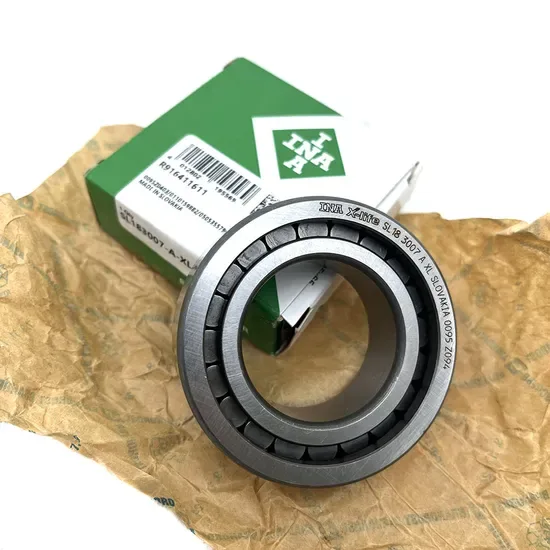

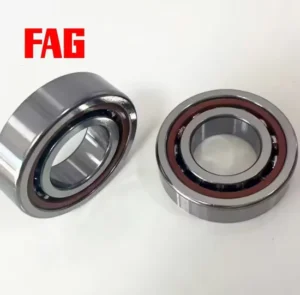
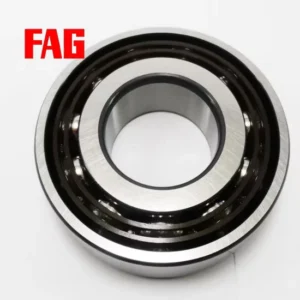
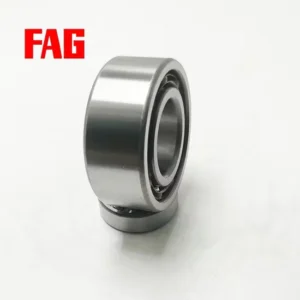
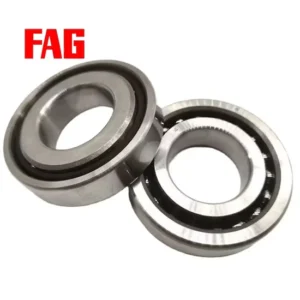
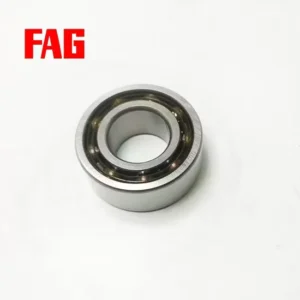
Product Details
About This INA Bearing
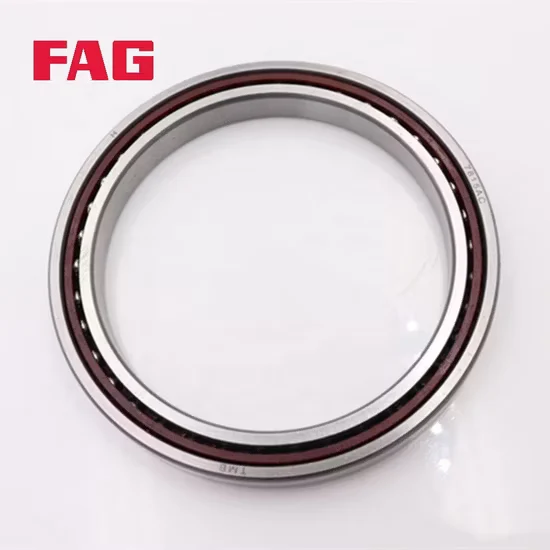
Original Batch Traceability — Every FAG B71920-C-T-P4s-UL angular contact ball bearing ships with verifiable factory batch documentation to guarantee spindle precision.
Technical Specifications
| Parameter | Value |
|---|---|
| Designation | FAG B71920-C-T-P4s-UL |
| Bearing Type | Angular Contact Ball Bearing |
| Bore Diameter (d) | 100 mm |
| Outside Diameter (D) | 140 mm |
| Width (B) | 20 mm |
| Contact Angle | 15° |
| Precision Class | P4s (ISO) |
| Material | Steel |
| Origin | Jiangsu China |
Note: The 'T' and 'UL' suffixes remain unverified and require manufacturer catalog confirmation for exact cage and preload definitions.
Application Suitability
| Industry | Typical Applications |
|---|---|
| CNC Machining | CNC router spindles, high-speed milling centers |
| Precision Manufacturing | Machine tool spindles, robotics rotary joints |
| Fluid Dynamics | High-speed pumps, precision equipment drives |
Why Missing a Single Suffix Destroys CNC Spindle Accuracy
Precision spindle assemblies fail when procurement overlooks microscopic tolerance suffixes.
Early in my career handling exports to West Africa, a shipment of CNC spindle bearings was dispatched with only the base model number on the commercial invoice, omitting the critical preload and precision suffixes. The on-site assembly team installed them blindly, resulting in severe spindle vibration and immediate machine downtime. That incident cemented my strict protocol for verifying every suffix against the specific machining load profile. When sourcing a FAG B71920-C-T-P4s-UL angular contact ball bearing, assuming standard clearance or generic precision will inevitably compromise the router's surface finish. The microscopic deviations in raceway geometry directly translate into visible chatter marks on the final machined parts, causing massive financial losses for the end user.
Matching the Bearing to High-Speed Routing Demands
A CNC router spindle demands exceptional rotational accuracy to maintain tight tolerances during continuous milling operations. The FAG B71920-C-T-P4s-UL angular contact ball bearing provides the necessary rigidity and thermal stability for these high-speed environments. Our engineering team cross-references your specific spindle housing dimensions and operational speeds to ensure this exact configuration aligns with your machine's dynamic requirements. By analyzing the specific cutting forces and tool overhang, we prevent premature wear and ensure the spindle maintains its geometric accuracy throughout the entire machining cycle, safeguarding your production quality.
Managing Thermal Expansion and Radial Loads
High-speed routing generates significant friction heat, which directly impacts internal clearance and lubrication effectiveness. The 15° contact angle optimizes the balance between radial load capacity and axial thrust resistance, minimizing heat generation compared to steeper angles. Proper oil-air or grease lubrication intervals must be strictly maintained to prevent thermal runaway. Furthermore, the precision class ensures that dimensional variations under thermal stress remain within acceptable limits for fine machining. If the internal clearance is not perfectly matched to the operating temperature gradient, the rolling elements will experience excessive sliding, rapidly degrading the lubricant film and accelerating raceway fatigue.
Decoding the Core Engineering Parameters
The 15° contact angle, designated by the 'C' suffix, is specifically engineered for high-speed applications where radial loads dominate and axial thrust is moderate. This geometry reduces centrifugal forces on the rolling elements, allowing the spindle to reach higher RPMs without excessive friction. The P4s precision class guarantees extremely tight dimensional and running accuracy, which is non-negotiable for eliminating chatter marks on machined surfaces. Steel construction provides the fundamental durability required to withstand the continuous vibrational stresses of heavy-duty routing. The precise curvature of the raceways, combined with the strict tolerance bands, ensures that the load is distributed evenly across the contact ellipse, maximizing the fatigue life of the component under dynamic cutting conditions.
The Hidden Costs of Incorrect Spindle Configuration
Selecting a bearing with inadequate precision or the wrong contact angle leads to catastrophic spindle failure and unplanned downtime. According to failure analysis frameworks, improper preload or clearance causes excessive internal sliding, rapidly degrading the raceways. This not only voids the machine warranty but also results in scrapped workpieces and lost production hours, far exceeding the initial savings of purchasing a generic alternative. The secondary damage to the spindle shaft and housing bore often requires complete assembly replacement, turning a minor procurement error into a major capital expenditure that halts the entire manufacturing line.
Securing Authentic Precision for Your Facility
We maintain massive spot inventory of premium spindle bearings, ensuring rapid fulfillment for urgent maintenance requirements. Our quality assurance protocol includes verifying the P4s tolerance reports before dispatch, so you never receive a standard P4 substitute. We provide comprehensive cross-brand equivalent model consultation if your OEM specifies an alternative, ensuring smooth integration into your existing maintenance schedule. Additionally, our flexible consolidation shipping allows you to mix this precision component with standard MRO replacement bearings in a single container. Our technical support team remains available long after delivery to assist with failure analysis and application guidance, ensuring your spindle operates at peak efficiency.
Documentation & Authenticity
- Original factory batch traceability documents confirming the P4s precision grade.
- Dimensional and running accuracy inspection reports verifying 15° contact angle tolerances.
- Official manufacturer app QR code verification for absolute authenticity.
- Certificate of Conformity matching the specific FAG B71920-C-T-P4s-UL designation.
Storage, Handling & Mounting
- Store the P4s precision bearing in its original sealed packaging to prevent microscopic dust contamination.
- Maintain strict climate control to avoid thermal shock before mounting the 100mm bore component.
- Use clean, lint-free gloves when handling the steel races to prevent corrosion from skin moisture.
- Follow the manufacturer's exact preload pairing marks during the spindle assembly sequence.
Technical Review and Selection Support
To ensure optimal spindle performance with the FAG B71920-C-T-P4s-UL angular contact ball bearing, please share your specific radial and axial load calculations, maximum operating RPM, and target operating temperature. Providing the original OEM equipment manual or spindle housing drawings allows our technical team to verify the exact clearance and preload requirements for your application.
Frequently Asked Questions
Q: How to verify the authenticity of FAG B71920-C-T-P4s-UL bearings?
A: Authenticity is confirmed by scanning the official manufacturer QR code on the packaging and cross-referencing the batch number with the factory's digital traceability system. We also provide the original dimensional inspection reports that detail the specific P4s tolerance achievements, ensuring the component meets the strict requirements for CNC router spindles.
Q: What is the difference between P4 and P4s precision classes?
A: The P4s class represents a specialized precision tier optimized specifically for machine tool spindles, offering tighter running accuracy and stricter dimensional tolerances than the standard P4 class. This enhanced precision minimizes high-speed vibration and ensures superior surface finish quality during continuous CNC routing operations.
Q: How to select the correct contact angle for CNC router spindles?
A: A 15° contact angle is typically selected for high-speed routing where radial loads are dominant and axial thrust is relatively low. This geometry reduces internal friction and heat generation, allowing the spindle to maintain thermal stability and rotational accuracy at elevated RPMs without premature lubricant degradation.
Q: What are the cross-reference precautions regarding clearance and preload?
A: When cross-referencing equivalent models from other premium brands, it is critical to match not just the physical dimensions but also the exact internal clearance and preload configuration. Mismatched preload in a spindle arrangement will cause uneven load distribution, leading to rapid thermal expansion and catastrophic bearing failure.
Q: What are the recommended lubrication intervals for high-speed spindle bearings?
A: Lubrication intervals depend heavily on the spindle's maximum RPM, operating temperature, and the specific grease or oil-air system used. Operators must strictly follow the machine tool builder's maintenance schedule to prevent lubricant starvation, which is a primary cause of raceway smearing and premature spindle failure in high-speed applications.