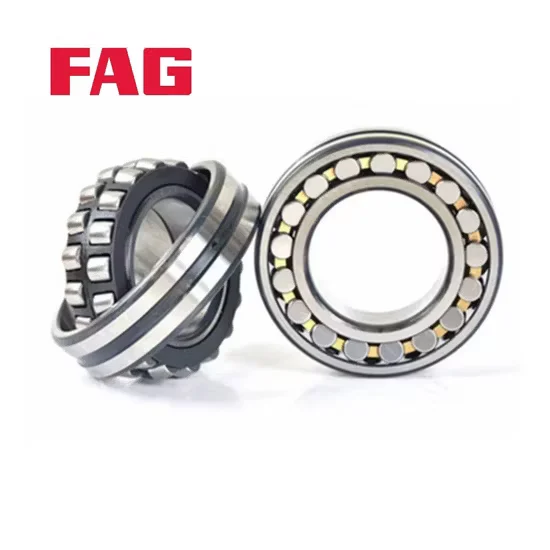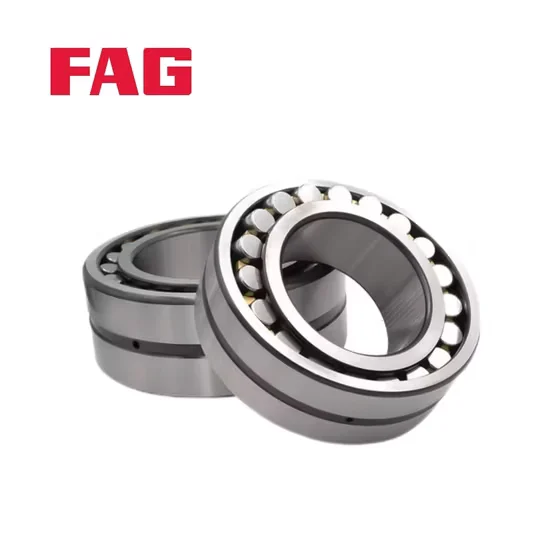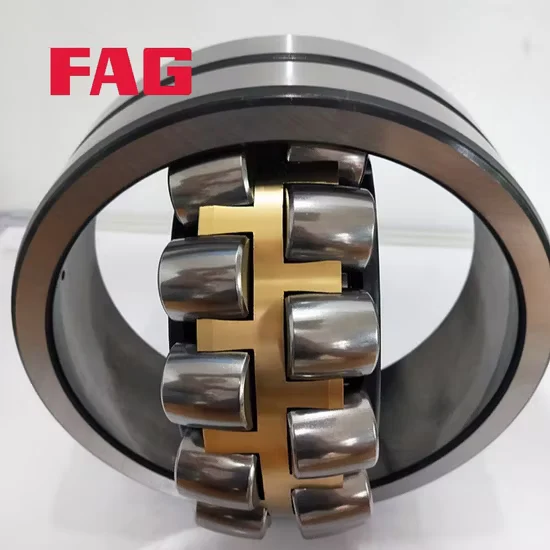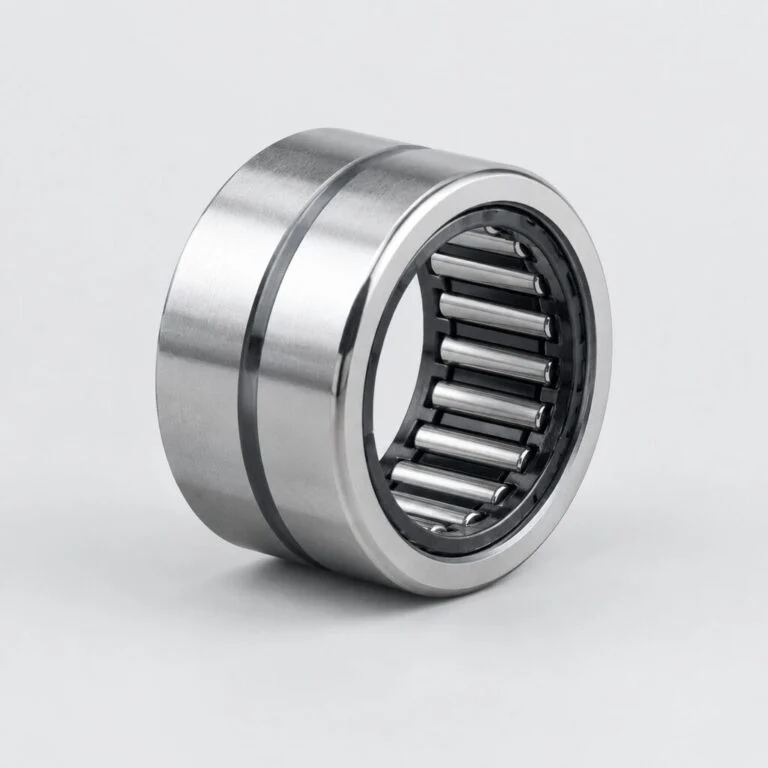


Product Details
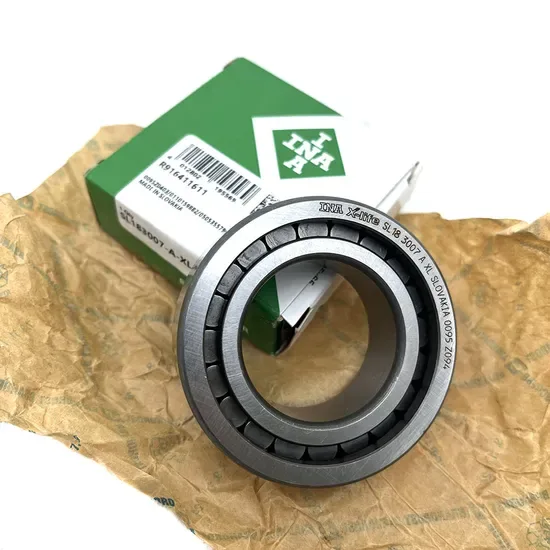
About This INA Bearing
Unified Multi-Brand Sourcing — Consolidate your FAG 22310-E1-a-K-M spherical roller bearing orders alongside other premium makes in a single mixed shipment without juggling multiple vendors.
Technical Specifications
| Parameter | Value |
|---|---|
| Designation | FAG 22310-E1-a-K-M |
| Bearing Type | Spherical Roller Bearing |
| Structure | Double Row, Self-Aligning |
| Bore Type | 1:12 Tapered Bore (K) |
| Cage Material | Machined Brass Cage (M) |
| Main Material | Chrome Steel Gcr15 |
| Precision Class | P0 / P6 / P5 / P4 / P2 |
| Origin | Jiangsu, China |
Note: Suffixes E1 and a are unverified and require manufacturer catalog confirmation prior to final order placement.
Application Suitability
| Industry | Typical Applications |
|---|---|
| Mining & Aggregates | Vibrating screen exciter mechanisms and primary jaw crusher main shafts |
| Steel Manufacturing | Continuous caster roll segments and hot strip mill table rollers |
| Pulp & Paper | Paper machine dryer section felt rolls and press section suction rolls |
Why Overlooking Clearance Ruins the FAG 22310-E1-a-K-M spherical roller bearing
A missing clearance suffix turns a precision component into a catastrophic failure point under thermal load.
Early in my career handling customs documentation in Suzhou, I shipped a batch of spherical roller bearings to a steel mill. The paperwork simply listed the base number without closely monitoring the exact clearance class. The mill installed them in a high-temperature continuous caster. Under intense thermal expansion, the standard internal clearance vanished, causing the rollers to skew and the bearing to seize completely, halting the entire production line. That incident proved that in heavy-duty environments, specifying the exact internal clearance is the difference between uninterrupted operation and unplanned downtime.
Matching the Bearing to Extreme Vibratory Loads
When sourcing a FAG 22310-E1-a-K-M spherical roller bearing for vibrating screens, the equipment demands exceptional resistance to high-frequency shock loads. Our global supply network ensures that you receive genuine units with complete traceability, preventing the premature fatigue that plagues counterfeit alternatives. By securing exact factory batches, we help maintenance teams avoid the hidden risks of mismatched internal geometries in critical exciter mechanisms.
Operational Challenges in Heavy-Duty Crushing Environments
Crushers and vibrating screens subject rolling elements to severe combined loads, where heavy radial forces intersect with intense axial vibrations. In these scenarios, the internal temperature rises rapidly, making the selection of an appropriate clearance class absolutely vital to accommodate thermal expansion without inducing preload. Furthermore, the presence of abrasive dust requires reliable sealing solutions or effective external lubrication strategies to prevent contaminant ingress. If the lubrication film breaks down under extreme pressure, the resulting metal-to-metal contact accelerates surface distress and spalling.
Decoding the Core Engineering Features
The machined brass cage, indicated by the M suffix, provides superior durability and heat dissipation compared to pressed steel alternatives, making it ideal for the high-vibration environments of vibrating screens. The 1:12 tapered bore, denoted by the K suffix, allows for precise radial internal clearance adjustment during mounting on adapter sleeves, which is critical for achieving the optimal fit on crusher shafts. While the base design features a double-row self-aligning structure to tolerate minor shaft misalignments, the exact internal clearance must be carefully matched to the operating temperature to prevent thermal seizure. Selecting the right precision class ensures that the bearing runs smoothly without generating excessive heat from internal friction. Furthermore, the Gcr15 chrome steel material delivers the necessary fatigue strength to withstand continuous radial loading in demanding industrial settings.
The Hidden Financial Impact of Incorrect Selection
Failing to verify the exact suffix configuration often leads to catastrophic damage that extends far beyond the cost of a replacement part. When a bearing seizes due to thermal expansion or cage failure, the resulting shaft scoring and housing deformation require extensive machining and prolonged equipment downtime. According to industry failure analysis frameworks, a significant share of premature failures stems directly from improper clearance selection or inadequate mounting practices rather than manufacturing defects. Such unplanned outages disrupt entire production schedules and void equipment warranties.
Why Procurement Teams Trust Our Supply Chain
We maintain massive spot inventory covering thousands of standard and special part numbers, ensuring that urgent maintenance requirements for your crushers are met without waiting for typical multi-week lead times. Our cross-brand equivalent model consultation helps you find suitable alternatives if the exact configuration faces supply constraints. Every unit we dispatch includes complete traceability documentation, protecting you from the pervasive risk of counterfeit bearings in the heavy machinery aftermarket. We also offer flexible consolidation shipping, allowing you to mix this specific model with other premium brands in a single container to optimize your freight costs. Furthermore, our technical team provides long-term after-sales support for failure analysis, helping you diagnose root causes rather than just replacing parts.
Documentation & Authenticity
- Original factory batch traceability reports confirming the exact production date for your crusher spares.
- Official app QR code authentication to verify the genuine origin of the brass cage bearing.
- Material inspection reports validating the Gcr15 chrome steel composition and heat treatment hardness.
- Dimensional and running accuracy inspection certificates ensuring P-class tolerances before dispatch.
- Certificate of Conformity detailing the specific tapered bore and clearance specifications.
Storage, Handling & Mounting
- Keep the tapered bore bearing in its original anti-corrosion packaging until mounting to preserve the factory-applied rust preventative.
- Use induction heaters for mounting the inner ring on adapter sleeves, ensuring uniform thermal expansion without damaging the brass cage.
- Measure the drive-up distance carefully to achieve the correct residual internal clearance for high-temperature vibrating screen applications.
- Store the double-row units horizontally in a dry, temperature-controlled environment to prevent false brinelling on the raceways.
- Wear clean cotton gloves when handling the machined brass cage to prevent acidic sweat from initiating surface corrosion.
Engineering Review Before Ordering
To ensure optimal performance, please share your specific operating parameters, including radial and axial loads, rotational speed, and ambient temperature, so our engineering team can perform an L10 life calculation and verify the required clearance class. If you are replacing an existing unit, providing the original equipment manufacturer part number allows us to execute a precise cross-reference check. Supplying details about the mounting arrangement and sealing environment will help us confirm that the tapered bore and brass cage configuration perfectly align with your maintenance protocols.
Frequently Asked Questions
Q: How do I verify the authenticity of these bearings through official channels?
A: Authenticate the bearing by scanning the packaging QR code using the manufacturer's official mobile application. This digital verification confirms the original factory batch and exact suffix configuration. We also provide comprehensive physical traceability documents, including certificates of conformity and material test reports, ensuring complete transparency from the production line directly to your maintenance warehouse.
Q: What is the difference between standard and specific suffixes in this designation?
A: Standard suffixes like K for tapered bore and M for machined brass cage have universally defined engineering meanings that dictate mounting and load capacities. Conversely, specific suffixes such as E1 and a in this designation require direct confirmation from the manufacturer's current technical catalog before ordering. We always cross-check these exact codes with the factory to ensure the internal geometry perfectly matches your equipment requirements.
Q: How should I select the correct clearance class for vibrating screen applications?
A: Vibrating screens generate significant heat and operate under heavy shock loads, often necessitating a larger internal clearance like C3 to accommodate thermal expansion. If the clearance is too tight, thermal growth eliminates the internal gap, leading to excessive friction and premature seizure. Our technical team evaluates your specific operating temperatures and load profiles to recommend the precise clearance class that prevents thermal binding while maintaining operational stability.
Q: What are the mounting best practices for bearings with a 1:12 tapered bore?
A: Mounting a tapered bore bearing on an adapter sleeve requires precise measurement of the drive-up distance or the reduction in radial internal clearance. You must use a feeler gauge to ensure the inner ring expands exactly to specified limits. Over-tightening eliminates necessary operational clearance, while under-tightening causes the inner ring to spin on the shaft, resulting in severe fretting corrosion and extensive shaft damage during operation.
Q: How does a machined brass cage compare to steel cages in high-shock environments?
A: A machined brass cage offers superior strength, better heat dissipation, and higher resistance to sudden shock loads compared to pressed steel cages. In high-vibration equipment like crushers, the brass cage maintains structural integrity and guides rollers effectively, reducing fracture risks. Additionally, brass is less susceptible to damage from marginal lubrication conditions, providing extra reliability during startup or transient load spikes in demanding industrial applications.