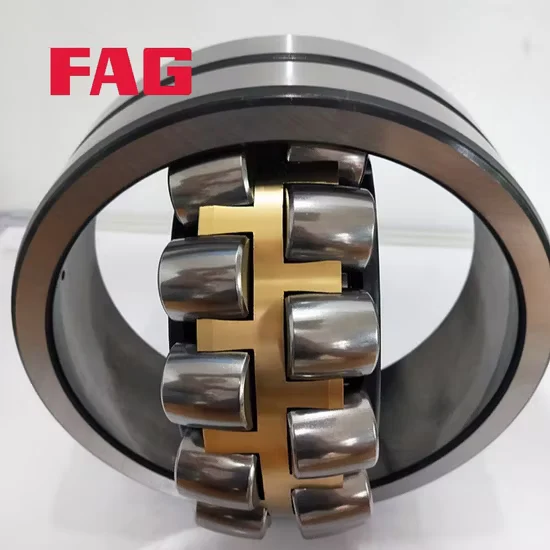


Product Details
About This INA Bearing
Mixed-Brand Sourcing — Consolidate this FAG unit with other premium labels in a single shipment without juggling multiple vendors.
Technical Specifications
| Parameter | Value |
|---|---|
| Designation | FAG 23120-E1-a-K-M |
| Bearing Type | Spherical Roller Bearing |
| Structure | Double Row, Self-Aligning |
| Main Material | Chrome Steel Gcr15 |
| Bore Type | Tapered Bore (1:12 taper) |
| Cage Material | Machined Brass Cage |
| Origin | Jiangsu China |
Note: Suffixes E1 and a require manufacturer catalog confirmation for exact internal design specifics.
Application Suitability
| Industry | Typical Applications |
|---|---|
| Mining & Aggregates | Vibrating screens and jaw crushers |
| Pulp & Paper | Paper machine dryer cylinders |
| Metallurgy | Steel mill continuous casting equipment |
Why Brass Cages Outlast Stamped Steel in Heavy-Duty FAG 23120-E1-a-K-M spherical roller bearing Applications
Brass cages survive the shock loads that tear stamped steel apart.
In remote mining sites across East Africa, I have seen too many vibrating screens fail prematurely because the wrong cage material was specified for high-impact environments. When equipment operates under severe radial loads and constant vibration, a machined brass cage provides the necessary structural integrity to prevent roller skewing and catastrophic cage fragmentation. Stamped steel cages simply lack the mass and rigidity to dampen these extreme vibratory forces, leading to rapid pocket wear and eventual seizure.
Matching the Cage Design to Extreme Vibratory Stress
Selecting the right FAG 23120-E1-a-K-M spherical roller bearing for vibrating screens demands more than just matching the bore and outside diameter. The machined brass cage ensures the rollers remain perfectly aligned even when the screen deck experiences erratic shock loads. Our engineering team routinely cross-references these specific cage requirements against OEM specifications to prevent premature fatigue.
Managing Thermal Expansion and Misalignment in Crushers
Jaw crushers generate immense radial forces and significant shaft deflection, demanding a self-aligning structure to compensate for housing misalignment. Furthermore, the friction from heavy loads generates substantial heat, making the internal clearance class critical to avoid preload buildup. Proper lubrication intervals must be strictly maintained to flush out abrasive dust ingress, which otherwise accelerates raceway wear. If the lubrication film breaks down due to contamination or thermal degradation, the metal-to-metal contact will rapidly destroy the precision-machined roller profiles.
Decoding the Tapered Bore and Brass Cage Configuration
The K suffix indicates a 1:12 tapered bore, which is essential for mounting on adapter sleeves to achieve precise radial internal clearance. This adjustment capability is vital when dealing with heavy interference fits on crusher shafts. The M suffix confirms a solid machined brass cage, offering superior durability and resistance to cage wear compared to pressed steel alternatives. The chrome steel Gcr15 construction provides the necessary core hardness and fatigue resistance for continuous heavy-duty operation. Together, these design elements ensure the bearing can withstand the punishing operational realities of mineral processing facilities.
The Hidden Financial Drain of Incorrect Clearance Selection
Specifying a standard clearance bearing for a high-temperature crusher application often leads to internal preload as the shaft expands thermally. This unnoticed preload drastically increases operating temperatures, leading to rapid lubricant degradation and eventual roller spalling. Such unplanned downtime in a remote processing plant incurs massive financial losses far exceeding the initial component cost. Replacing a seized bearing in a confined crusher housing also exposes maintenance crews to severe safety hazards and delays the entire production line.
Securing Authentic Components for Critical Machinery
Sourcing genuine FAG 23120-E1-a-K-M spherical roller bearing units requires strict supply chain verification to avoid counterfeit parts that fail under load. We provide full batch traceability and cross-reference equivalent models from other premium brands if lead times fluctuate. Our technical team actively reviews your mounting procedures, specifically advising on the correct drive-up distances for tapered bore installations to prevent the exact metallurgical damage I witnessed on African mine sites. We also consolidate mixed-brand orders, allowing you to secure all required maintenance spares in a single, fully documented shipment.
Documentation & Authenticity
- Original manufacturer batch traceability documents verifying the production date and facility.
- Dimensional and running accuracy inspection reports confirming tolerance compliance before dispatch.
- Material certification validating the Gcr15 chrome steel chemical composition and heat treatment.
- Official QR verification codes for authenticating the bearing via the manufacturer's digital platform.
Storage, Handling & Mounting
- Store the tapered bore bearing in its original anti-corrosion packaging until immediately before mounting to protect the precision-machined inner ring.
- Use induction heaters with automatic demagnetization for mounting; never use open flames, which destroys the Gcr15 steel microstructure and causes early spalling.
- Measure the drive-up distance and residual radial clearance meticulously when mounting on adapter sleeves to prevent internal preload.
- Apply clean gloves when handling the machined brass cage to prevent acidic sweat from initiating localized corrosion on the copper alloy.
- Ensure the self-aligning outer ring is not pinned or restricted in the housing, allowing it to freely compensate for shaft deflection.
Preparing Your Technical Data for Precision Selection
To ensure the selected bearing perfectly matches your vibrating screen or crusher, please share the exact radial and axial load profiles along with the operating speed and ambient temperature. Providing the OEM equipment model number allows our engineers to perform a thorough cross-reference check and calculate the expected L10 fatigue life. If you are replacing an existing unit, detailing the current failure mode helps us recommend optimal clearance and sealing adjustments.
Frequently Asked Questions
Q: How does the tapered bore affect the mounting process for this bearing?
A: The 1:12 tapered bore requires mounting on an adapter sleeve or tapered shaft journal. This design allows technicians to precisely adjust the radial internal clearance by controlling the drive-up distance. Proper adjustment is critical to prevent internal preload, which can cause excessive heat generation and premature failure in heavy-duty applications.
Q: Why is a machined brass cage preferred over pressed steel for vibrating screens?
A: Vibrating screens subject bearings to severe shock loads and high accelerations. A machined brass cage offers superior structural strength and wear resistance, preventing roller skewing and cage fragmentation under these extreme conditions. It also provides better guidance for the rolling elements, ensuring smoother operation and extended service life in high-vibration environments.
Q: What steps should I take to verify the authenticity of the supplied bearing?
A: Every unit we supply comes with complete supply chain traceability documentation and original manufacturer batch codes. You can cross-check these details and scan the official QR verification codes using the manufacturer's designated mobile application. We also provide material and dimensional inspection reports to confirm the exact specifications match your procurement requirements.
Q: How do I determine the correct internal clearance for a high-temperature crusher application?
A: High-temperature environments cause the inner ring to expand more than the outer ring, reducing internal clearance. For such applications, a larger clearance class is typically required to compensate for thermal expansion and heavy interference fits. Share your operating temperature and shaft fit details with our engineering team so we can calculate the optimal residual clearance.