
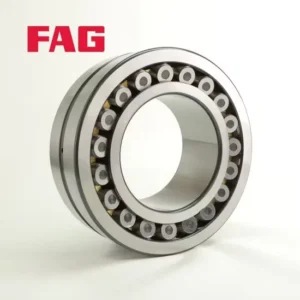


Product Details
About This INA Bearing
Cross-Reference Triad Alignment — Verifying bore taper, cage material, and internal geometry simultaneously prevents mismatched replacements in heavy-duty vibrating screens.
Technical Specifications
| Parameter | Value |
|---|---|
| Designation | 22230-E1-a-K-M |
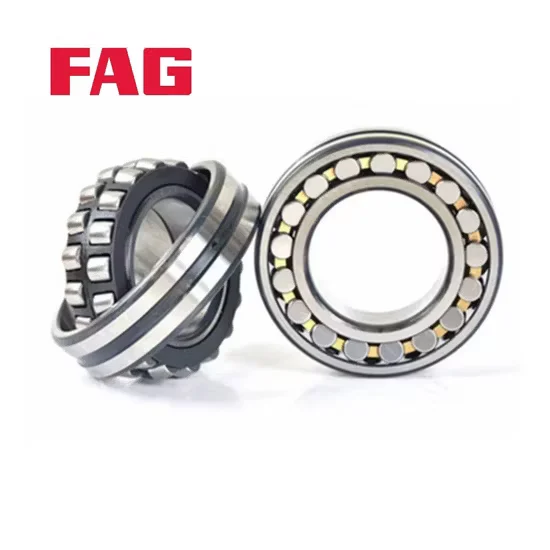
| Bearing Type | Spherical Roller Bearing |
| Structure | Double Row, Self-Aligning |
| Bore Type | 1:12 Tapered Bore (K) |
| Cage Material | Machined Brass (M) |
| Internal Design | Enhanced (E) |
| Main Material | Chrome Steel Gcr15 |
| Origin | Jiangsu China |
Note: The '1' and 'a' suffixes remain unverified and require manufacturer catalog confirmation.
Application Suitability
| Industry | Typical Applications |
|---|---|
| Mining & Construction | Vibrating screens and primary crushers |
| Metallurgy | Steel mill continuous casting and rolling equipment |
| General Heavy Industry | Paper machines and heavy-duty material handling |
Why Flame Heating Destroys the FAG 22230-E1-a-K-M spherical roller bearing Before It Even Spins
Direct flame application alters the metallurgical structure of the inner ring, causing premature spalling under heavy radial loads.
I have seen maintenance crews in steel mills use welding torches to expand tapered bore inner rings because they lacked proper induction heaters. This localized overheating ruins the carefully controlled heat treatment, dropping the hardness well below specification and creating soft spots on the raceway. When installed on a continuous caster, the bearing fails within months due to subsurface fatigue and severe spalling. Proper mounting is just as critical as selecting the right FAG 22230-E1-a-K-M spherical roller bearing for the application. Ignoring these thermal limits guarantees catastrophic operational disruptions and unnecessary replacement costs.
Matching Internal Geometry to Extreme Vibratory Loads
When dealing with severe shock loads in crushing equipment, the enhanced internal design distributes stress more evenly across the rolling elements. This specific FAG 22230-E1-a-K-M spherical roller bearing utilizes a machined brass cage to maintain structural integrity when the shaft deflects under uneven material feed. Our engineering team cross-references these exact internal clearances and cage types to ensure the replacement matches the original equipment manufacturer's demanding vibratory specifications. We analyze the specific load zones and roller profiles to guarantee that the enhanced geometry provides the necessary fatigue resistance for continuous, high-impact mineral processing operations.
Navigating Misalignment and Contamination in Harsh Environments
Heavy machinery rarely operates with perfect shaft alignment, and housing deflection introduces complex combined loading patterns that can quickly destroy rigid bearing types. The self-aligning capability accommodates these angular errors without binding the rolling elements or generating excessive internal friction. In dusty mining environments, the open design requires careful attention to external sealing arrangements and regular relubrication intervals to flush out abrasive particles before they score the raceways. Selecting the correct clearance class is equally vital to compensate for thermal expansion during continuous operation at elevated temperatures, ensuring the rollers maintain optimal contact with the raceway.
Decoding the Tapered Bore and Brass Cage Configuration
The 1:12 tapered bore allows for precise mounting on adapter sleeves, enabling technicians to dial in the exact internal clearance reduction during installation by measuring the drive-in distance. A machined brass cage provides superior resistance to vibration and sudden shock loads compared to pressed steel alternatives, which can easily deform and fracture in high-amplitude vibrating screens. The enhanced internal geometry increases the load-carrying capacity by optimizing the roller profile and raceway curvature, reducing edge stresses significantly. These specific design choices ensure the bearing survives the punishing cycles of mineral processing equipment while maintaining stable operating temperatures and minimizing lubricant degradation.
The Cascading Financial Impact of Incorrect Clearance Selection
Installing a bearing with insufficient internal clearance in a high-temperature steel mill application leads to excessive preload, rapid thermal runaway, and eventual seizure. This unplanned downtime halts the entire production line, resulting in catastrophic damage to the shaft, housing, and adjacent drive components. Warranty voidance is almost guaranteed when failure analysis reveals improper mounting techniques, incorrect clearance specifications, or contamination ingress. Following the rigorous guidelines established in ISO 281 for dynamic load rating calculations and life expectancy modeling prevents these costly operational disruptions. Understanding the true cost of poor specification alignment protects your maintenance budget.
Securing Traceable Heavy-Duty Replacements Without the Guesswork
Sourcing the exact tapered bore and machined brass configuration eliminates the risk of receiving a standard cylindrical bore variant that simply will not fit the existing adapter sleeve assembly. We provide complete batch traceability documentation, ensuring the metallurgical certification matches the specific production run of your heavy-duty components. Our flexible consolidation shipping handles mixed-size orders, so you can replenish your entire vibrating screen maintenance inventory in a single container without managing multiple freight forwarders. Technical support includes verifying the exact suffix alignment to prevent receiving an open cage variant when a sealed one was required, safeguarding your equipment against premature contamination failure.
Documentation & Authenticity
- Certificate of Conformity confirming the exact 1:12 tapered bore and machined brass cage specifications.
- Original factory batch tracing linking the physical bearing to its specific heat treatment and grinding records.
- Official manufacturer app QR verification to instantly validate the authenticity of the enhanced internal design.
- Material inspection report verifying the chrome steel composition and hardness levels before dispatch.
- Dimensional and running accuracy inspection confirming the self-aligning geometry meets strict tolerance bands.
Storage, Handling & Mounting
- Store the machined brass cage variant in its original moisture-barrier packaging to prevent corrosion on the exposed rolling elements.
- Use induction heaters instead of open flames to expand the 1:12 tapered bore, preserving the factory heat treatment.
- Monitor the drive-in distance carefully during adapter sleeve mounting to achieve the correct residual internal clearance.
- Apply clean gloves when handling the open bearing to prevent sweat and acidic residues from etching the chrome steel raceways.
- Ensure the external sealing arrangement is fully functional before commissioning, as the open design relies on housing seals for contamination protection.
Providing the Right Parameters for Technical Verification
To ensure the selected replacement perfectly matches your machinery, please share the specific radial and axial loads, operating speeds, and ambient temperatures. Providing the original equipment manufacturer's part number allows our engineering team to perform a precise cross-reference check and verify dimensional compatibility. Detailing the housing dimensions and shaft deflection characteristics helps us verify that the self-aligning capability and internal clearance are optimized for your exact application. We will then provide a comprehensive technical proposal outlining the expected L10 life and recommended relubrication intervals based on your specific operational parameters.
Frequently Asked Questions
Q: How do I verify the authenticity of the FAG 22230-E1-a-K-M spherical roller bearing?
A: You can scan the QR code on the packaging using the manufacturer's official mobile application to instantly verify the product's origin. Additionally, we provide original factory batch traceability documents that link the specific bearing to its production run, ensuring complete transparency and confirming the enhanced internal design specifications.
Q: What is the difference between a machined brass cage and a pressed steel cage?
A: A machined brass cage offers significantly higher structural strength and better resistance to severe vibrations and shock loads, making it ideal for crushers and vibrating screens. Pressed steel cages are lighter and suitable for standard applications, but they may deform or fracture under the extreme dynamic stresses typical in heavy mining equipment.
Q: How should I mount a bearing with a 1:12 tapered bore?
A: Mounting requires an adapter sleeve and precise measurement of the drive-in distance or internal clearance reduction. Always use an induction heater to expand the inner ring evenly; never use an open flame, as localized overheating destroys the metallurgical structure. Proper mounting tools ensure the tapered bore locks securely without damaging the raceway.
Q: Why is the self-aligning feature critical for steel mill equipment?
A: Heavy machinery like continuous casters often experiences shaft misalignment and housing deflection due to extreme loads and thermal expansion. The self-aligning structure allows the inner ring and rolling elements to pivot slightly within the outer ring, preventing edge loading and premature fatigue failure while maintaining smooth operation under harsh industrial conditions.
Q: Can you cross-reference this model with other premium brands?
A: Yes, our technical team can cross-reference this specific tapered bore and machined brass configuration to equivalent models from other major international manufacturers. This ensures you receive a dimensionally and functionally identical replacement, maintaining the original equipment's performance standards even if the primary brand faces extended lead times or stock shortages.