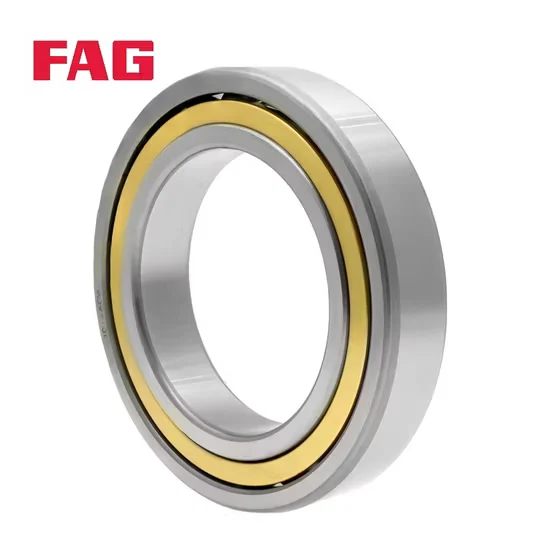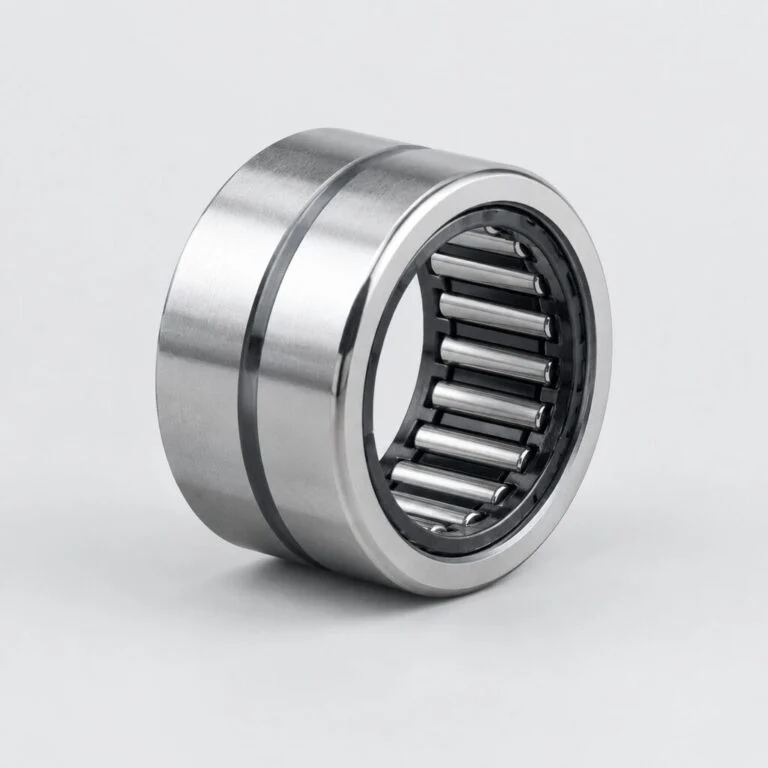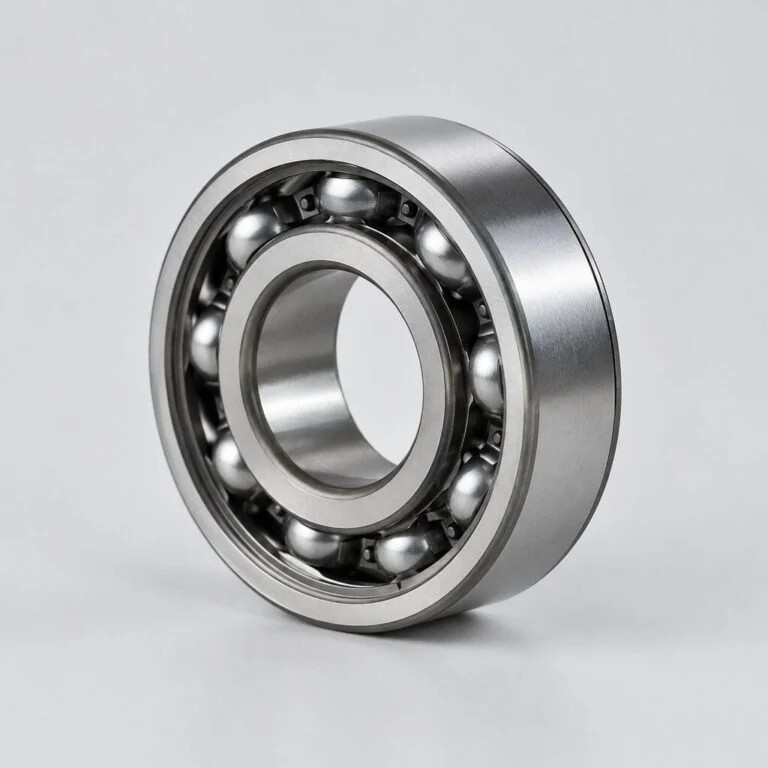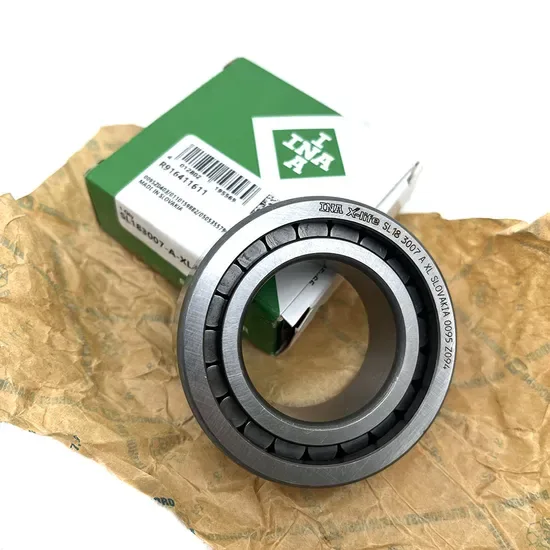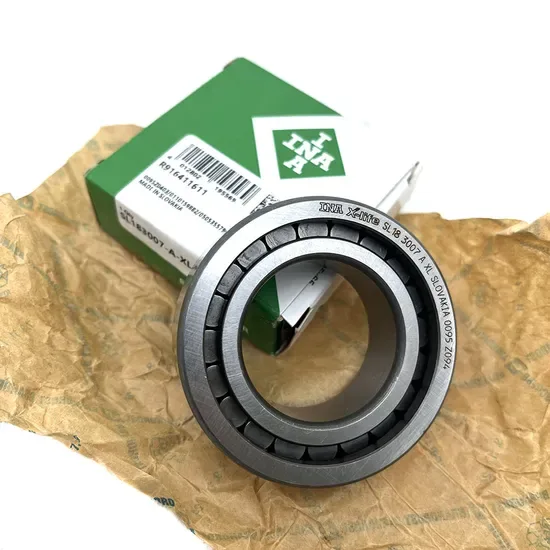

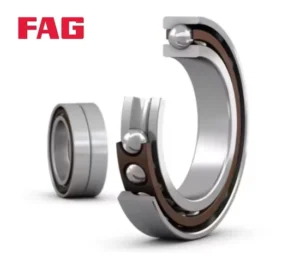
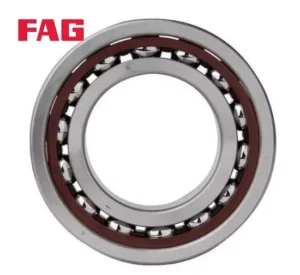
Product Details
About This INA Bearing
Consolidated Multi-Brand Sourcing — Procure the FAG 3311 double row angular contact ball bearing alongside complementary spindle components from a single verified supply chain without juggling multiple vendors.
Technical Specifications
| Parameter | Value |
|---|---|
| Designation | 3311 |
| Bearing Type | Double Row Angular Contact Ball Bearing |
| Contact Angle | α=30° (Bd Type) / α=45° (Da Type) |
| Number of Rows | Double |
| Material | Bearing Steel |
| Cage Material | Polyamide (Tvh), Sheet Steel, Brass (MP) |
| Seal or Shield Type | Open, 2Z, 2HRS |
| Precision Class | P0 / P6 / P5 |
| Certification | ISO 15:2017, DIN 628-3 |
| Origin | Jiangsu China |
Application Suitability
| Industry | Typical Applications |
|---|---|
| Machine Tool Manufacturing | High-speed spindle rotation mechanisms |
| Fluid Handling Systems | High-speed pump impeller shafts |
| Industrial Automation | Robotic arm joint actuators |
| Precision Engineering | Optical measuring equipment rotary tables |
Why Ignoring Suffix Details Destroys High-Speed Spindles Using the FAG 3311 Double Row Angular Contact Ball Bearing
A missing clearance or cage suffix silently converts a precision component into a thermal time bomb.
Early in my career, I supplied a standard clearance variant to a pump manufacturer who actually needed a large clearance option for high-temperature operation, resulting in immediate seizure under load. That single oversight taught me that verifying every alphanumeric character is critical, as thermal expansion mismatches cause a significant share of premature failures in high-speed applications.
Aligning the FAG 3311 Double Row Angular Contact Ball Bearing With Spindle Dynamics
Selecting the correct configuration for the FAG 3311 double row angular contact ball bearing requires balancing axial thrust capacity with radial rigidity. Our engineering team cross-references your specific spindle load profiles against the available contact angle options to ensure optimal load distribution. This technical validation prevents premature raceway fatigue in demanding precision equipment.
Managing Thermal and Contamination Challenges in Precision Machinery
High-speed pump and spindle environments generate substantial frictional heat, which directly impacts internal clearance and lubricant degradation. When operating at elevated temperatures, selecting the appropriate cage material and seal type becomes critical to prevent lubricant starvation. Open designs require precise external lubrication routing, while shields or seals offer varying degrees of contamination protection against coolant ingress.
Decoding Contact Angles and Cage Materials for Optimal Rigidity
The 30° and 45° contact angles dictate how the bearing distributes combined loads; a steeper angle provides superior axial rigidity for thrust-heavy applications. Cage selection further defines operational boundaries, with polyamide cages offering low friction for high speeds, while brass cages deliver enhanced durability under heavier loads and vibration. Sheet steel cages present a balanced alternative for standard operational profiles. Precision classes dictate the running accuracy, directly influencing the surface finish quality in machine tool spindles.
The Cascading Financial Impact of Specification Mismatches
Deploying an incorrect precision class or mismatched contact angle leads to unplanned downtime and catastrophic damage to adjacent spindle components. According to the ISO 15243 framework, such specification errors frequently manifest as smearing or thermal cracking, completely voiding equipment warranties. The resulting production halts cost substantially more than the initial component investment.
Securing Traceable Precision Components Through Verified Channels
Sourcing the correct FAG 3311 double row angular contact ball bearing requires strict verification to avoid counterfeit or mislabeled inventory. We provide full original batch traceability documentation, ensuring the precision class matches the manufacturer's actual production records. Our flexible MOQ accommodates both single-unit emergency replacements for broken spindles and full-container project consolidations. Furthermore, our technical team verifies cross-reference alignments to guarantee the selected cage and clearance perfectly match your OEM specifications.
Documentation & Authenticity
- Certificate of Conformity confirming the specific precision grade and contact angle.
- Original batch traceability linking the designation to the manufacturer's production facilities.
- Official app QR verification validating the anti-counterfeit labels on the packaging.
- Dimensional inspection reports verifying running accuracy tolerances before dispatch.
- Material certification confirming the bearing steel composition and cage material authenticity.
Storage, Handling & Mounting
- Keep polyamide caged variants away from direct UV exposure to prevent polymer degradation.
- Verify shield or seal integrity before mounting to ensure no coolant ingress paths exist.
- Use induction heating for inner ring mounting to preserve the precise running accuracy.
- Store open-type bearings in original packaging until installation to prevent dust contamination.
- Align the contact angle load lines correctly during assembly to avoid edge loading.
Preparing Your Technical Parameters for Accurate Selection
To ensure precise L10 life calculations, please share your spindle's radial and axial loads, operational speeds, and thermal profiles. Providing the OEM equipment model number allows our engineers to perform a thorough cross-reference check. Specify the environmental exposure to determine whether an open, shielded, or sealed configuration is required for your application.
Frequently Asked Questions
Q: How do the 30° and 45° contact angles affect load distribution in this double row design?
A: The 30° angle provides a balanced capacity for combined radial and axial loads, making it ideal for general spindle applications. The 45° angle increases axial rigidity, offering superior thrust handling for heavy-duty pump impellers. Selecting the correct angle prevents premature raceway fatigue under specific operational loads.
Q: What are the operational boundaries for the different cage materials available?
A: Polyamide cages minimize friction and are optimal for high-speed, moderate-temperature environments. Brass cages offer superior structural integrity and vibration resistance for heavier loads. Sheet steel cages provide a reliable middle ground for standard speed and temperature profiles, ensuring stable rolling element guidance across diverse machinery applications.
Q: How should I verify the authenticity and precision class of the received bearings?
A: Upon receipt, scan the official app QR code on the packaging to validate the anti-counterfeit labels. Cross-check the Certificate of Conformity to ensure the documented precision class matches your purchase order. We also provide original batch traceability linking the specific designation to the manufacturer's production records.
Q: Why is selecting the correct seal type critical for high-speed pump applications?
A: Open designs require continuous external lubrication but offer the lowest friction for maximum speed. Shields provide basic dust protection with minimal friction, while seals offer superior coolant exclusion at the cost of slightly higher frictional heat. Matching the seal to your contamination level prevents premature failure.