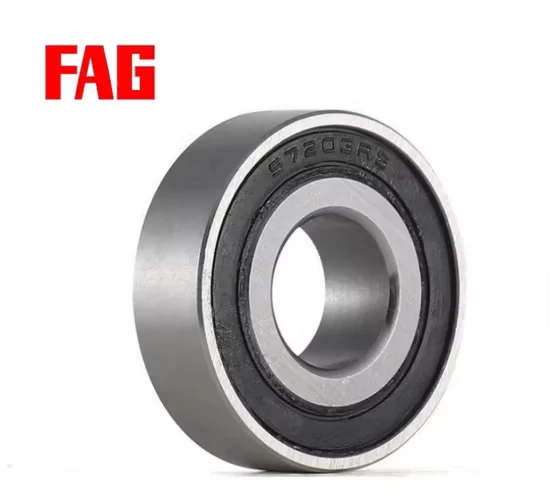
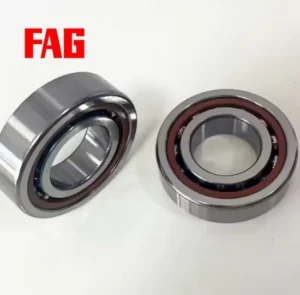
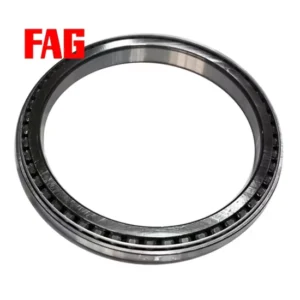
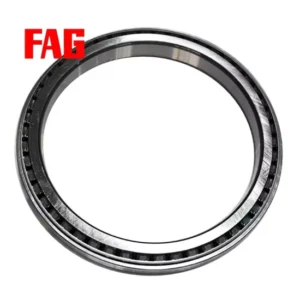
Product Details
About This INA Bearing
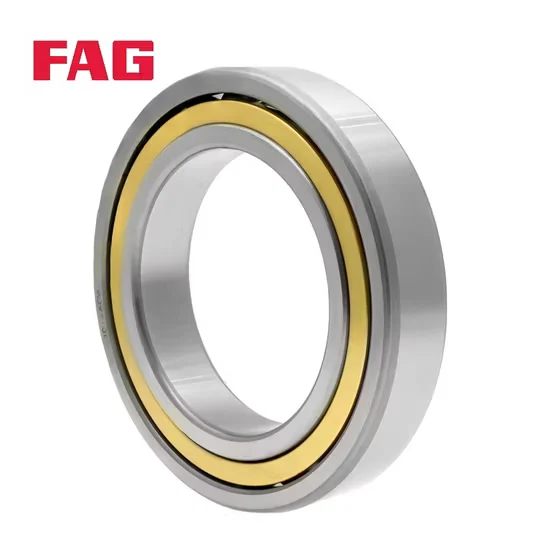
Official App QR Authentication — Every FAG B7220-E-T-P4s-Um spindle bearing shipped includes a scannable QR code linked directly to the manufacturer's verification database.
Technical Specifications
| Parameter | Value |
|---|---|
| Designation | FAG B7220-E-T-P4s-Um |
| Bearing Type | Single-Row Angular Contact Ball Bearing |
| Precision Class | P4s |
| Contact Angle | 25° |
| Material Options | Bearing steel variants available |
| Origin | Jiangsu China |
| Certification | ISO |
Application Suitability
| Industry | Typical Applications |
|---|---|
| Power Generation | High-speed turbine generator spindles |
| Machine Tools | Precision CNC milling and grinding spindle assemblies |
| Fluid Machinery | High-speed pump drive shafts |
| Precision Equipment | Optical measuring instrument rotary tables |
Why Spindle Vibration Spikes Destroy Precision Before the Bearing Fails
Micro-vibrations from incorrect contact angles cause catastrophic spindle runout long before physical fatigue occurs.
During my early field service years in Nigeria, I dispatched a standard bearing instead of the specified precision variant to a local machine tool plant. The high-speed operation triggered severe vibration, instantly scrapping the main spindle. Sourcing an authentic FAG B7220-E-T-P4s-Um spindle bearing prevents these hidden dynamic imbalances. Procurement engineers often overlook how minor suffix deviations alter the internal load distribution, leading to catastrophic runout before physical fatigue even begins.
Matching P4s Tolerances to High-Speed Rotary Demands
Maintaining tight dimensional accuracy is non-negotiable for high-frequency rotation. The P4s precision class of this FAG B7220-E-T-P4s-Um spindle bearing ensures minimal radial and axial runout during continuous operation. Our engineering team cross-references these tight tolerances against your specific housing fits to prevent thermal binding. This proactive alignment guarantees stable rotary performance across demanding manufacturing setups.
Navigating Thermal Expansion and Axial Thrust in Spindles
High-speed spindles generate immense internal friction, demanding careful management of thermal expansion and axial loads. The 25° contact angle provides optimized axial load capacity to counteract thrust forces during heavy milling or pumping operations. Inadequate lubrication or incorrect preload can lead to rapid temperature spikes, degrading the lubricant film. Proper sealing and oil-air lubrication strategies are essential to maintain stability and prevent premature cage wear under extreme rotational speeds.
Decoding the Internal Geometry and Precision Markings
The 25° contact angle, designated by the E suffix, strikes a critical balance between radial rigidity and axial thrust capacity. This geometry is specifically engineered to handle the combined loads typical in power generation and machine tool spindles. The P4s precision class guarantees tighter dimensional and running accuracy compared to standard P4 grades, ensuring the spindle maintains its centerline at high RPMs. Selecting the correct internal clearance and cage design is vital; our technical team verifies these parameters against the official catalog to ensure exact OEM replacement compatibility.
The Catastrophic Price of Suffix Misinterpretation
Installing a bearing with mismatched internal geometry leads to unplanned downtime and catastrophic damage to adjacent spindle components. A wrong contact angle or precision grade causes uneven load sharing, accelerating surface fatigue and raceway spalling. According to failure mode classifications, these installation and selection errors void equipment warranties and necessitate complete assembly rebuilds. The financial impact extends far beyond the component cost, encompassing lost production hours and scrapped workpieces.
Securing Traceability and Exact Suffix Alignment
We eliminate the risk of receiving counterfeits or mismatched variants by providing complete factory batch traceability for every single order. Our procurement specialists meticulously verify the exact suffix combinations, ensuring the contact angle and precision class match your machine's OEM requirements perfectly. We maintain massive spot inventory, allowing flexible consolidation shipments that significantly reduce your sourcing costs compared to direct official channels. Furthermore, our cross-brand equivalent model consultation ensures you receive the correct technical support and global shipping consolidation for urgent maintenance requirements.
Documentation & Authenticity
- Official app QR code authentication verifying the genuine FAG origin of each unit.
- Original factory batch traceability documentation linking the bearing to its production run.
- Running accuracy inspection reports confirming P4s dimensional tolerances before dispatch.
- Material certification validating the chemical composition of the bearing steel rings.
- Certificate of Conformity detailing the exact ISO quality assurance standards met.
Storage, Handling & Mounting
- Store the P4s precision bearing in its original unopened packaging to prevent humidity-induced corrosion on the raceways.
- Use clean, lint-free gloves during handling to avoid transferring skin acids to the high-precision steel surfaces.
- Maintain strict temperature control in the storage area to prevent thermal distortion of the tight P4s tolerances.
- Follow the manufacturer's specified oil-air lubrication protocols, as this open design requires external high-speed spindle oil.
- Verify the exact mounting direction and preload marks to preserve the 25° contact angle load distribution.
Provide Operating Parameters for Technical Verification
To ensure precise selection and L10 life calculation, please share your spindle's radial and axial loads, maximum operating speed, and expected thermal environment. Providing the original equipment manufacturer's part number allows our engineering team to perform a thorough cross-reference check. Detail your housing fit dimensions and lubrication method so we can confirm the optimal internal clearance and cage configuration for your specific application.
Frequently Asked Questions
Q: How can I verify the authenticity of this FAG B7220-E-T-P4s-Um spindle bearing?
A: You can authenticate the bearing by scanning the QR code on the packaging using the manufacturer's official mobile application. This digital verification links directly to the factory database, confirming the genuine origin, production batch, and exact specification match. We also provide original traceability documents with every shipment for additional physical verification.
Q: What does the 25° contact angle mean for my high-speed spindle application?
A: The 25° contact angle, indicated by the E suffix, provides an optimal balance for handling combined radial and axial loads. In high-speed machine tool spindles, this geometry ensures sufficient axial rigidity to counteract cutting thrust forces while maintaining low friction and minimal heat generation during continuous high-RPM operation.
Q: How do unverified suffixes like T and Um affect my cross-reference selection?
A: Unverified suffixes require careful cross-referencing against the manufacturer's latest technical catalog to determine exact cage materials, preload classes, and universal matching dimensions. Our engineering team manually verifies these specific designations to ensure the replacement bearing perfectly aligns with your OEM spindle's original preload and mounting configuration requirements.
Q: What is the difference between ISO P4s and standard P4 precision classes?
A: The P4s class imposes tighter tolerances on running accuracy and dimensional deviations compared to the standard P4 grade. This enhanced precision is critical for high-speed spindles, as it minimizes radial runout and vibration, ensuring superior surface finish on machined parts and significantly extending the operational lifespan of the spindle assembly.
Q: Which lubrication practices are recommended for these high-speed precision bearings?
A: High-speed spindle applications typically require oil-air or oil-mist lubrication systems to manage friction heat effectively. It is essential to use high-purity synthetic spindle oils with precise metering to maintain a stable lubricant film, prevent cage wear, and avoid thermal expansion that could compromise the tight P4s running clearances.