



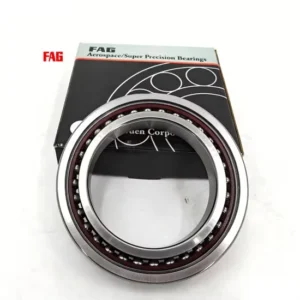
Product Details
About This INA Bearing
Full Traceability Guaranteed — Every spindle bearing ships with verifiable batch records linking directly to the manufacturer's production facilities.
Technical Specifications
| Parameter | Value |
|---|---|
| Designation | FAG B71906-C-T-P4s-Um |
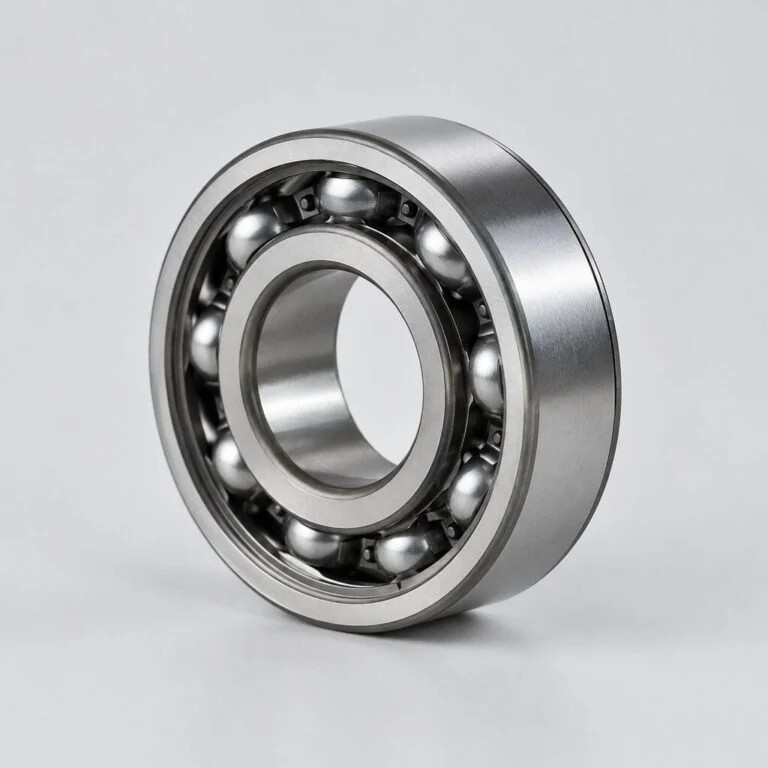
| Bearing Type | Angular Contact Ball Bearing |
| Bore Diameter (d) | 30 mm |
| Outside Diameter (D) | 47 mm |
| Width (B) | 9 mm |
| Precision Class | P4 (ISO) |
| Contact Angle | 15° (C) |
| Material | Steel |
| Origin | Jiangsu China |
Note: Suffixes T, P4s, and Um are unverified and require official catalog confirmation.
Application Suitability
| Industry | Typical Applications |
|---|---|
| Machine Tool Manufacturing | High-speed motorized spindles and precision grinding heads |
| Industrial Automation | Robotics joint actuators requiring tight rotational tolerances |
| Fluid Handling | High-speed centrifugal pumps demanding low vibration operation |
Why Spindle Vibration Ruins More Than Just Surface Finish
When sourcing a FAG B71906-C-T-P4s-Um angular contact ball bearing, engineers often focus solely on dimensional tolerances while overlooking thermal displacement during high-speed operation.
Thermal growth at extreme RPMs compromises the very precision the bearing was selected to maintain.
In my years resolving field complaints across the Middle East, I have seen perfectly machined spindles fail because the bearing selection ignored heat generation at operational speeds. A slight mismatch in contact angle or preload causes localized overheating, leading to catastrophic seizure rather than gradual wear. This is why verifying the exact 15° contact angle and precision class is non-negotiable for high-speed applications.
Aligning Super Precision Specs with Machining Demands
The 15° contact angle inherent in the C-suffix design optimizes the load distribution for high-speed, light-to-moderate radial loads typical in CNC milling spindles. By minimizing friction-induced heat, this specific FAG B71906-C-T-P4s-Um angular contact ball bearing helps maintain tight dimensional stability during continuous cutting cycles. Our technical team cross-checks these application parameters against your specific machine tool requirements to prevent premature fatigue.
Navigating High-Speed Thermal and Lubrication Hurdles
Spindle environments subject bearings to extreme centrifugal forces that can starve the contact zones of lubricant if the grease base oil viscosity is mismatched. Elevated rotational speeds also generate significant internal heat, which alters the internal clearance and can lead to excessive preload if the thermal expansion of the shaft and housing is not accounted for. Furthermore, microscopic contamination from coolant mist or metallic dust drastically accelerates raceway wear, making the integrity of the sealing or shielding arrangement critical for sustained accuracy.
Decoding the 15° Contact Angle and Precision Tiers
The C suffix designates a 15° contact angle, which is the standard configuration for high-speed spindle applications where axial loads are relatively low but rotational velocity is extreme. This geometry reduces the sliding friction between the rolling elements and the raceways, directly lowering operating temperatures. Regarding precision, the P4 class ensures that the dimensional and running accuracies meet the stringent requirements of ISO standards for machine tool spindles, minimizing runout and vibration. Selecting the correct FAG B71906-C-T-P4s-Um angular contact ball bearing configuration is essential, as standard industrial grades would introduce unacceptable radial runout at these operational speeds, degrading the surface finish of the machined parts.
The Cascading Financial Impact of Incorrect Spindle Bearings
Installing a bearing with an incorrect contact angle or inadequate precision class rarely results in a simple, isolated failure. Instead, it triggers a cascade of unplanned downtime, scrapped production batches due to poor surface finish, and potentially catastrophic damage to the spindle housing itself. According to established failure analysis frameworks, improper internal clearance management under thermal load is a leading cause of premature seizure, which voids equipment warranties and necessitates complete spindle rebuilds rather than simple component replacement.
Securing Authentic Spindle Components Through Rigorous Verification
Sourcing genuine super precision components requires more than just matching a part number; it demands strict verification of the internal geometry and material traceability. We specifically check the 15° contact angle and P4 precision runout limits on these spindle bearings to ensure they match the exact OEM specifications, avoiding the common pitfall of receiving standard industrial grades disguised as precision parts. Our supply chain provides complete batch traceability back to the manufacturer's production facilities, ensuring that every unit meets the stringent demands of high-speed machining without the risk of counterfeit or downgraded alternatives.
Documentation & Authenticity
- Certificate of Conformity verifying the P4 precision class and 15° contact angle specifications.
- Original batch traceability records linking the steel material to the manufacturer's production facilities.
- Dimensional and running accuracy inspection reports confirming ISO compliance before dispatch.
- Anti-counterfeit packaging verification to ensure the internal geometry remains uncontaminated.
Storage, Handling & Mounting
- Store the 15° contact angle bearings in their original, unopened packaging to prevent humidity-induced corrosion on the precision steel raceways.
- Maintain a stable, climate-controlled environment to avoid thermal shock that could alter the P4 precision tolerances before mounting.
- Use lint-free cleanroom gloves when handling the exposed rolling elements to prevent skin oils from degrading the high-speed spindle lubricant.
- Follow strict induction heating protocols for the inner ring to preserve the tight dimensional tolerances required for machine tool spindles.
Engineering Data Required for Spindle Bearing Validation
To ensure the selected configuration perfectly matches your high-speed machining environment, please provide the exact radial and axial load profiles, maximum operational RPM, and anticipated thermal gradients. Sharing the specific OEM machine tool model and spindle housing dimensions allows our engineering team to perform a comprehensive L10 life calculation and verify the optimal preload arrangement for your application.
Frequently Asked Questions
Q: How does the 15° contact angle benefit high-speed spindle operations?
A: The 15° contact angle, designated by the C suffix, minimizes sliding friction and centrifugal forces on the rolling elements. This geometry significantly reduces internal heat generation, allowing the bearing to sustain extreme RPMs while maintaining the tight dimensional stability required for precision CNC machining and high-speed pumping applications.
Q: What documentation proves the P4 precision class of this bearing?
A: We provide a comprehensive dimensional and running accuracy inspection report alongside the Certificate of Conformity. These documents verify that the radial runout and bore tolerances strictly comply with ISO standards for P4 precision, ensuring the bearing meets the exacting requirements of machine tool spindles before it leaves our facility.
Q: Why is batch traceability critical for super precision spindle bearings?
A: Super precision components are highly susceptible to material inconsistencies that can cause premature failure under high-speed thermal loads. Full batch traceability links the specific steel material back to the manufacturer's production facilities, guaranteeing metallurgical integrity and protecting your equipment warranty against failures caused by unverified or counterfeit parts.
Q: How should I handle the bearing during installation to protect its precision?
A: Always keep the bearing in its original packaging until the exact moment of mounting to prevent dust contamination. Use lint-free gloves and avoid applying direct force to the rolling elements or raceways, as even microscopic debris or impact damage can compromise the P4 precision tolerances and cause severe vibration at high speeds.