
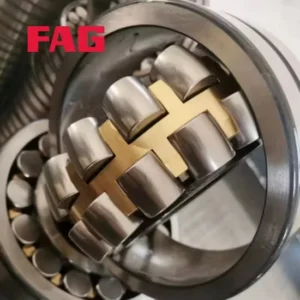
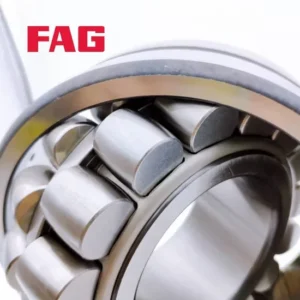
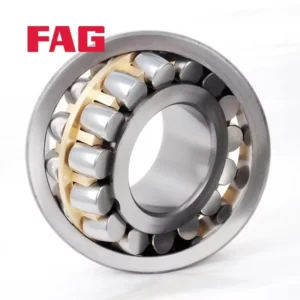
Product Details
About This INA Bearing
Unified Multi-Brand Sourcing — Consolidate your FAG 23238-E1 spherical roller bearing orders with mixed-brand heavy machinery components through a single verified supply channel.
Technical Specifications
| Parameter | Value |
|---|---|
| Designation | FAG 23238-E1 |
| Bearing Type | Spherical Roller Bearing |
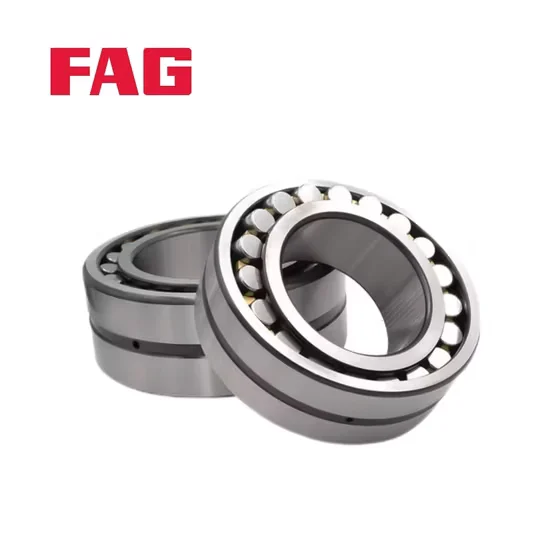
| Arrangement | Double Row |
| Material | Chrome Steel Gcr15 |
| Cage Material | Steel Cage / Brass Cage / Nylon Cage options |
| Precision Class | P0 / P2 / P4 / P5 / P6 options |
| Origin | Jiangsu China |
Application Suitability
| Industry | Typical Applications |
|---|---|
| Mining & Aggregates | Vibrating screens and primary jaw crushers |
| Metallurgy & Steel | Continuous casting roll tables and rolling mill guides |
| Pulp & Paper | Paper machine dryer section felt rolls |
Why Standard Clearance Fails in Steel Mill Continuous Casters
Thermal expansion inside high-heat zones rapidly eliminates internal operating clearance.
When specifying a FAG 23238-E1 spherical roller bearing for continuous casting roll tables, overlooking thermal dynamics leads to catastrophic seizure. I have witnessed production lines halt entirely because standard clearance selections could not accommodate the intense radiant heat from molten steel. The resulting thermal expansion compresses the rolling elements against the raceway, triggering premature failure.
Matching Self-Aligning Geometry to Heavy Vibratory Loads
The double-row self-aligning architecture inherently compensates for shaft deflection and housing misalignment common in vibrating screens. By integrating this FAG 23238-E1 spherical roller bearing into crusher eccentric shafts, operators maintain stable load distribution even under severe shock loading. Our engineering team routinely cross-references these specific dimensional envelopes to ensure seamless integration into legacy heavy-duty equipment.
Navigating Extreme Contamination and Lubrication Starvation
In aggregate processing and steel milling, airborne particulate and water ingress constantly threaten raceway integrity. Selecting the appropriate cage material and ensuring adequate lubrication pathways are critical to prevent abrasive wear. While open designs allow for high-volume grease purging to expel contaminants, sealed variants demand strict adherence to relubrication intervals. Misjudging the operating temperature envelope will also degrade the lubricant film, accelerating surface fatigue and compromising the structural integrity of the rolling elements. Furthermore, improper sealing arrangements in dusty environments allow fine silica to infiltrate the cage pockets, drastically increasing friction and operational heat.
Decoding Internal Geometry and Cage Material Selection
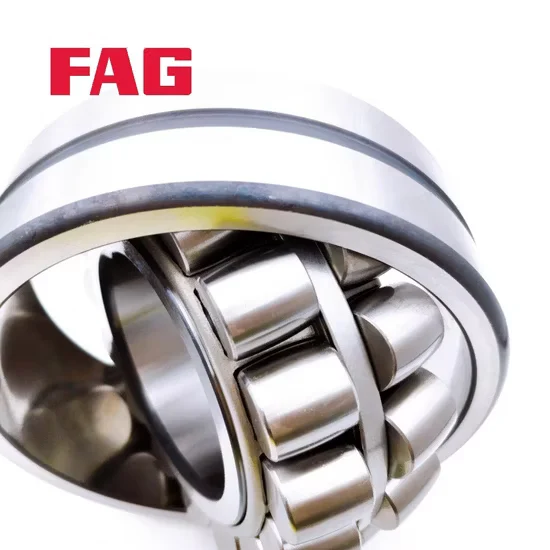
The internal architecture features optimized roller profiles and a floating center rib to maximize load capacity and accommodate axial displacement. For high-vibration environments like vibrating screens, a machined brass cage provides superior durability and resistance to sudden acceleration forces. Conversely, pressed steel cages offer a cost-effective solution for steady-state, moderate-speed applications such as conveyor pulleys. The unverified E1 suffix in the base designation typically indicates an enhanced internal design, though buyers must verify exact cage and clearance codes against the manufacturer's current catalog. Selecting the correct radial internal clearance is mandatory when operating at elevated temperatures to prevent the thermal collapse of the oil film.
The Financial Impact of Incorrect Clearance and Cage Selection
Specifying a standard clearance bearing for a high-temperature application guarantees unplanned downtime and severe collateral damage to shafts and housings. Similarly, utilizing a pressed steel cage in a high-shock crusher environment often results in cage fracture and sudden mechanical lock-up. These failures void equipment warranties and escalate maintenance expenses far beyond the initial component cost. Adhering to established life calculation frameworks prevents these costly miscalculations during the procurement phase. Replacing a seized bearing often requires cutting the shaft or destroying the housing, multiplying the financial burden and extending the production outage significantly.
Securing Traceable Heavy-Duty Components from a Single Source
Procuring heavy machinery bearings requires absolute certainty regarding origin and metallurgical integrity. We supply fully traceable components with complete documentation, eliminating the risk of counterfeit parts entering critical load paths. Our massive spot inventory covers thousands of standard and special part numbers, enabling rapid dispatch for emergency maintenance. Furthermore, our technical team provides precise cross-brand equivalent model consultation, ensuring you receive the exact dimensional and performance match when original part numbers are superseded. We handle global shipping consolidation, allowing you to mix various bearing sizes in a single container shipment.
Documentation & Authenticity
- Certificate of Conformity verifying the metallurgical composition of the chrome steel rings.
- Original manufacturer batch traceability codes linking the bearing to its specific production run.
- Official application QR verification tools to confirm authenticity before installation.
- Dimensional and running accuracy inspection reports validating the selected precision class.
- Material test certificates confirming the heat treatment hardness of the rolling elements.
Storage, Handling & Mounting
- Store the double-row assembly in its original vapor-phase inhibitor packaging to prevent raceway corrosion.
- Utilize induction heating for mounting cylindrical bore variants, strictly controlling the thermal expansion limit.
- Maintain strict cleanliness protocols when handling open cage designs to prevent particulate ingestion.
- Verify the drive-up distance and residual internal clearance when mounting tapered bore versions with adapter sleeves.
- Apply the recommended initial grease fill volume to ensure proper lubrication film formation during startup.
Providing Operational Data for Technical Verification
To ensure the selected configuration perfectly matches your machinery, please share your specific radial and axial load profiles alongside operating speeds and ambient temperatures. Supplying the original equipment manufacturer part number allows our engineers to perform a precise cross-reference check. Detailing the housing design and shaft sealing arrangement helps us recommend the optimal clearance class and cage material for your application.
Frequently Asked Questions
Q: How do I verify the authenticity of this FAG 23238-E1 spherical roller bearing?
A: Authenticity is confirmed through official manufacturer QR code scanning and comprehensive batch traceability documentation. We provide original certificates of conformity and material inspection reports with every shipment. Procuring from verified global supply channels ensures you receive genuine components with full warranty support, eliminating the severe risks associated with counterfeit heavy-duty bearings.
Q: What are the operational differences between standard and expanded clearance classes?
A: Standard clearance suits normal temperature and load conditions, while expanded clearance classes provide additional internal space to accommodate thermal expansion and tight interference fits. In high-heat environments like steel mill continuous casters, standard clearance can collapse under thermal growth, causing the bearing to seize. Selecting the correct expanded clearance prevents this catastrophic failure mode.
Q: How do I choose the correct cage material for high-vibration applications?
A: Machined brass cages offer superior strength and fatigue resistance, making them ideal for vibrating screens and crushers experiencing severe shock loads and rapid acceleration. Pressed steel cages are lighter and more cost-effective for steady-state operations with moderate vibrations. Evaluating the specific dynamic forces and operating temperatures of your machinery dictates the optimal cage selection.
Q: What cross-reference considerations apply when replacing legacy equipment bearings?
A: When replacing older bearings, you must verify the exact dimensions, internal clearance class, and cage design against the current manufacturer catalog, as suffix meanings and internal geometries may have evolved. Our engineering team cross-references equivalent models across premium global brands to ensure the replacement meets the original load and speed requirements without compromising equipment reliability.
Q: What are the recommended relubrication intervals for harsh industrial environments?
A: Relubrication frequency depends heavily on operating speed, ambient temperature, and contamination levels. In dusty mining or steel mill environments, frequent grease purging is necessary to expel ingested particulates and maintain a protective film. We provide application-specific lubrication guidance based on your operational parameters to prevent premature wear and extend the service interval.