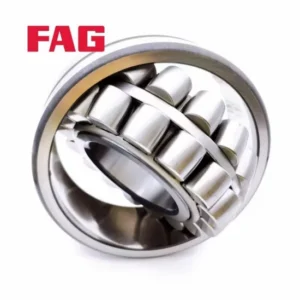
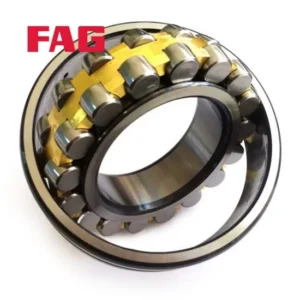
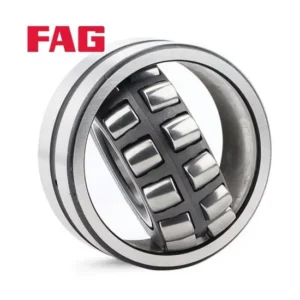
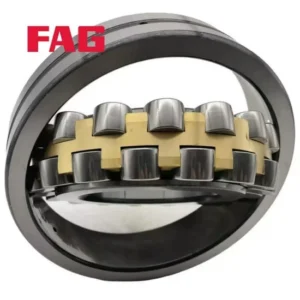
Product Details
About This INA Bearing
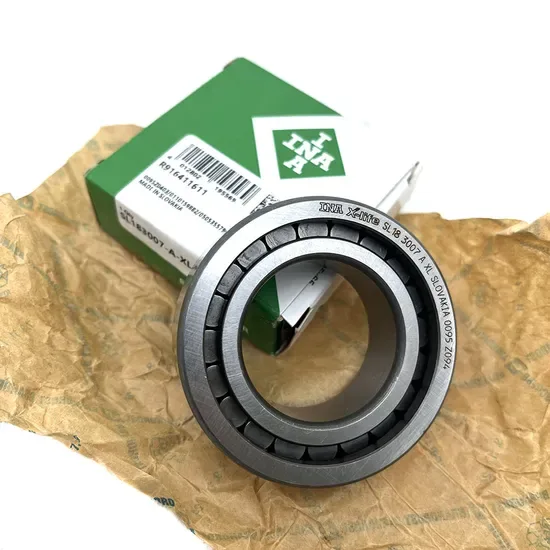
Cross-Reference Alignment — verifying radial clearance, cage design, and dimensional parity across equivalent OEM part numbers before dispatch.
Technical Specifications
| Parameter | Value |
|---|---|
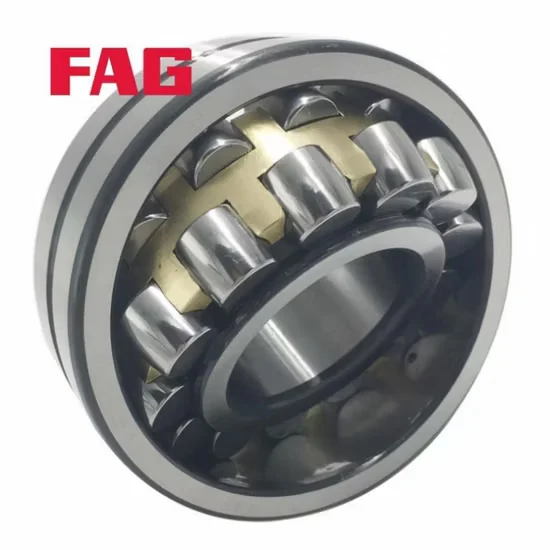
| Designation | FAG 22316-E1-C3 |
| Bearing Type | Spherical Roller Bearing |
| Structure | Double Row, Self-Aligning |
| Main Material | Chrome Steel Gcr15 |
| Clearance Class | C3 |
| Bore Type | Cylindrical |
Note: The "1" in the E1 suffix designation is retained as per manufacturer nomenclature; specific internal design variations require official catalog confirmation.
Application Suitability
| Industry | Typical Applications |
|---|---|
| Mining | Vibrating screen exciter mechanisms |
| Construction | Crusher eccentric shaft assemblies |
| Steel Manufacturing | Continuous caster roll guides |
| Pulp & Paper | Dryer section felt roll bearings |
When Thermal Expansion Turns a Spherical Roller Bearing Into a Brake
Ignoring the clearance suffix on a FAG 22316-E1-C3 spherical roller bearing transforms a high-capacity component into a mechanical lock under thermal stress.
Matching internal radial clearance to the operational temperature gradient prevents catastrophic raceway seizure in vibratory equipment.
During a grueling maintenance shutdown at a Johannesburg gold mine, I witnessed a massive vibrating screen tear itself apart because a standard clearance bearing was installed in an exciter housing that routinely exceeded ambient temperatures. The thermal expansion rapidly consumed the internal clearance, causing the rollers to bind and the cage to disintegrate within hours of startup. When sourcing replacement parts for heavy-duty screening decks, assuming a standard clearance will suffice is a dangerous gamble that consistently ends in unplanned downtime, sheared shafts, and massive financial losses.
Matching Exciter Dynamics with Internal Geometry
The internal profile of this FAG 22316-E1-C3 spherical roller bearing is engineered to accommodate the severe misalignment and heavy radial shock loads inherent to mineral processing equipment. Our technical team cross-references the exact housing tolerances and shaft deflection characteristics of your specific crusher or screen model to ensure the self-aligning capability is fully utilized without inducing edge loading on the rollers.
Navigating Shock Loads and Thermal Gradients in Heavy Machinery
Vibrating screens and crushers subject bearings to extreme cyclic radial loads combined with moderate axial thrust from uneven material feed. The operating environment often introduces significant thermal gradients between the hot inner ring and the cooler outer housing, which directly compresses the internal clearance. Adequate lubrication flow is absolutely critical to flush out abrasive mineral dust while carrying away the frictional heat generated by the rolling elements. Without the correct initial clearance class, the thermal expansion of the shaft will rapidly eliminate the operating clearance, leading to excessive friction, extreme localized temperatures, and premature cage failure.
Decoding the E1 and C3 Suffixes for Vibratory Equipment
The nomenclature of this bearing holds the key to its survival in harsh environments. The "E" suffix indicates an enhanced internal design with optimized roller profiles and a reinforced cage, significantly increasing the dynamic load rating compared to older standard designs. The "C3" radial internal clearance is the critical parameter here; it provides the necessary thermal allowance for the inner ring to expand when mounted on a hot shaft inside an enclosed exciter housing. While the "1" in the E1 designation denotes a specific internal structural variation, its exact geometrical implications must be verified against the current manufacturer catalog to ensure compatibility with legacy equipment. Selecting a standard clearance instead of C3 for this specific application will inevitably result in severe preload conditions once the machinery reaches its normal operating temperature.
The Cascade Effect of Incorrect Clearance Selection
Installing a bearing with inadequate internal clearance in a high-temperature vibratory application initiates a rapid and destructive degradation cycle. As the clearance reaches zero, the rolling elements begin to slide rather than roll, generating massive amounts of frictional heat that further exacerbates the thermal expansion. This cascade effect leads to severe raceway smearing, cage disintegration, and ultimately, the welding of the rollers to the inner ring. The resulting catastrophic failure not only destroys the bearing itself but frequently scores the shaft and cracks the heavy cast housing, turning a simple component replacement into a major structural rebuild.
Securing Traceable Inventory for Critical MRO Replacements
Sourcing genuine components for heavy machinery requires more than just matching the part number printed on the box. We maintain massive spot inventory of these specific high-clearance variants because we know from field experience that substituting a standard clearance part in an emergency will destroy the equipment. Our procurement channels ensure complete batch traceability, protecting your operation from the devastating consequences of counterfeit bearings that lack the precise metallurgical heat treatment required for shock loads. Furthermore, our engineering team provides dedicated cross-reference consultation to verify that the cage material and clearance class perfectly align with your original equipment manufacturer's specifications before the parts leave our warehouse.
Documentation & Authenticity
- Original manufacturer batch traceability certificates verifying the C3 clearance classification.
- Material inspection reports confirming the chrome steel heat treatment protocols.
- Dimensional inspection data validating the enhanced E1 internal geometry tolerances.
- Official brand authentication QR codes for immediate on-site verification upon delivery.
- Certificate of Conformity detailing the specific production facility and date code.
Storage, Handling & Mounting
- Retain the original vapor-phase inhibitor packaging until installation to prevent micro-corrosion on the exposed chrome steel raceways.
- Use induction heaters with automatic demagnetization to mount the cylindrical bore inner ring without damaging the C3 clearance tolerances.
- Verify the shaft and housing dimensional tolerances prior to pressing, as excessive interference fit will consume the critical C3 radial clearance.
- Apply the specified grease volume to the housing cavity, ensuring adequate space for thermal expansion during the initial run-in phase.
- Align the outer ring carefully during installation to utilize the self-aligning capability without forcing the rollers against the guide flanges.
Providing Operational Parameters for L10 Life Verification
To ensure the FAG 22316-E1-C3 spherical roller bearing delivers its maximum theoretical service life, our engineering team requires specific operational data from your facility. Please provide the exact radial and axial load profiles, the maximum operating temperature of the shaft, and the vibratory frequency of the equipment. With these parameters, we can perform a comprehensive L10 life calculation and confirm that the C3 clearance and E1 internal design are the optimal configuration for your specific application.
Frequently Asked Questions
Q: How do I verify the authenticity of the FAG bearing and avoid counterfeit products?
A: Counterfeit bearings often lack the precise heat treatment necessary for heavy shock loads. We supply every unit with original manufacturer batch traceability documentation and official QR authentication codes. Upon delivery, your maintenance team can scan the packaging to verify the production facility, date code, and specific C3 clearance classification directly through the brand's official verification application, ensuring complete peace of mind before installation.
Q: What are the critical alignment checks when cross-referencing clearance and cage types?
A: When cross-referencing equivalent models, you must ensure the radial internal clearance and cage design match the original specifications exactly. A standard clearance substitute will fail under thermal expansion in vibrating screens. Our technical team verifies the C3 clearance class and the reinforced cage structure against your OEM equipment manual, ensuring the replacement can withstand the specific misalignment and shock load profiles of your machinery without premature degradation.
Q: How do I interpret the E1 and C3 suffix codes for specific application needs?
A: The E suffix indicates an enhanced internal design with optimized roller profiles for higher load capacity, while the C3 denotes a larger than normal radial internal clearance. This specific combination is critical for vibrating screens and crushers where shaft temperatures rise significantly during operation. The C3 clearance accommodates this thermal expansion, preventing the rollers from binding and ensuring smooth operation under heavy radial shock loads.
Q: What are the recommended procedures for mounting cylindrical bore bearings in exciter housings?
A: Cylindrical bore bearings should be mounted using controlled induction heating, strictly limiting the temperature to prevent altering the metallurgical properties of the chrome steel. It is crucial to monitor the interference fit, as pressing the inner ring onto an oversized shaft will reduce the critical C3 internal clearance. Always measure the remaining radial clearance after mounting to ensure it remains within the manufacturer's specified operational limits.