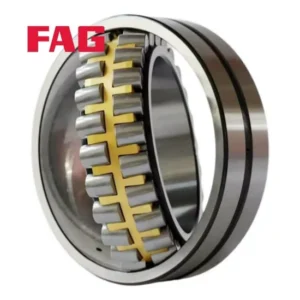
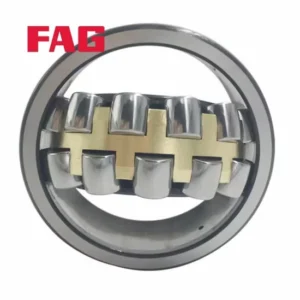
Product Details
About This INA Bearing
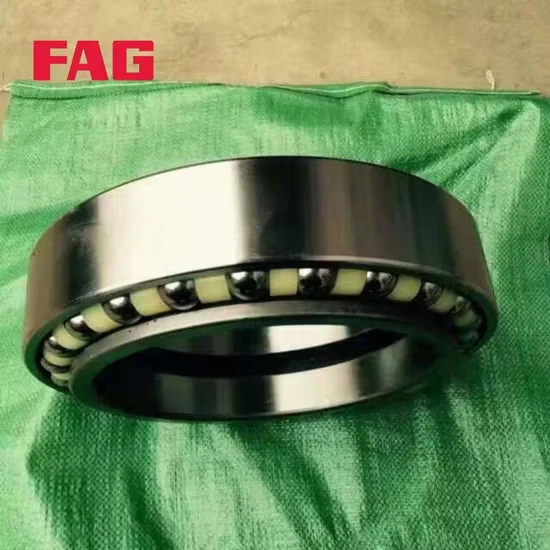
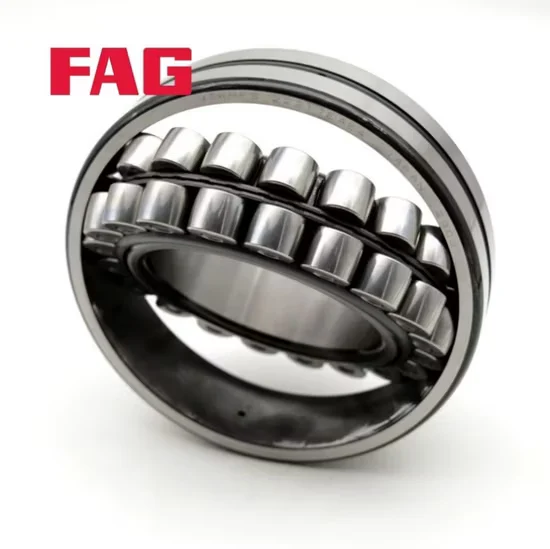
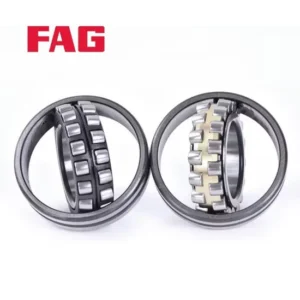
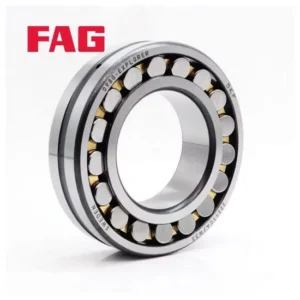
Mixed-Brand Consolidation — Source the FAG 22228-E1-K-C3 spherical roller bearing alongside other premium lines in a single shipment without juggling multiple vendors.
Technical Specifications
| Parameter | Value |
|---|---|
| Designation | 22228-E1-K-C3 |
| Bearing Type | Spherical Roller Bearing |
| Structure | Double Row, Self-Aligning |
| Material | Chrome Steel Gcr15 |
| Bore Type | 1:12 Tapered Bore |
| Clearance Class | C3 |
| Origin | Jiangsu China |
Note: E1 is an unverified suffix — requires manufacturer catalog confirmation.
Application Suitability
| Industry | Typical Applications |
|---|---|
| Mining & Quarrying | Vibrating screens, jaw crushers, heavy-duty conveyors |
| Metallurgy & Steel Mills | Continuous casters, rolling mill roll necks, cooling beds |
| Construction & Heavy Equipment | Excavator slewing mechanisms, concrete batch plant mixers |
Why Thermal Expansion Destroys Spherical Roller Bearings Before Overload Does
Internal clearance dictates survival in high-heat environments.
During my field service years in Nigeria, a cement plant kiln fan failed catastrophically because a standard clearance bearing was installed instead of a C3 variant. The intense heat caused thermal expansion that eliminated internal play, leading to seizure and prolonged downtime. The maintenance crew had to replace the entire shaft assembly, costing weeks of lost production and severe financial penalties. Selecting the correct FAG 22228-E1-K-C3 spherical roller bearing prevents this exact scenario by accommodating operational heat and maintaining the necessary lubricant film thickness. Procurement engineers must prioritize thermal dynamics over static load ratings when specifying components for high-temperature zones to avoid repeating these costly mistakes.
Aligning the Component with Heavy-Duty Demands
Heavy machinery requires components that tolerate both shock loads and shaft deflections without compromising operational stability. The FAG 22228-E1-K-C3 spherical roller bearing addresses these challenges through its self-aligning geometry, which effortlessly compensates for minor housing bore misalignments. Our engineering team provides cross-reference alignment to ensure the selected clearance and cage designs match your specific vibrating screen or crusher parameters. By analyzing the exact vibration frequencies and load vectors, we prevent premature fatigue and ensure the component delivers reliable performance throughout its intended service life in harsh mining conditions.
Managing Misalignment and Thermal Stress in Rotating Equipment
Rotating shafts in mining equipment frequently experience deflection under heavy radial loads, creating uneven stress distributions across the rolling elements. Self-aligning structures compensate for this misalignment, preventing destructive edge loading on the raceways. Furthermore, elevated temperatures degrade lubricant viscosity, demanding careful attention to relubrication intervals and grease selection. Proper clearance selection ensures the bearing maintains an optimal lubricant film even when thermal growth occurs between the shaft and the housing. Ignoring these thermal and dynamic factors inevitably accelerates wear and triggers unexpected equipment shutdowns, making proactive specification critical.
Decoding the Tapered Bore and Clearance Specifications
The "K" suffix indicates a 1:12 tapered bore, allowing secure mounting on adapter sleeves or tapered shafts. This design simplifies installation and enables precise adjustment of internal clearance during the mounting process. The "C3" designation provides greater than normal internal clearance, which is absolutely essential for applications experiencing significant temperature differentials between the inner and outer rings. Double-row construction maximizes radial load capacity while permitting slight angular misalignment without binding. Chrome steel material ensures high fatigue resistance under continuous heavy loading conditions. Understanding these specific suffix codes prevents costly procurement errors and ensures the component performs exactly as engineered for demanding environments.
The Operational Toll of Incorrect Clearance Selection
Installing a standard clearance bearing in a high-temperature application inevitably leads to premature failure and severe operational disruptions. As the inner ring expands under thermal stress, the internal clearance vanishes, generating excessive friction and localized heat. This thermal runaway results in catastrophic damage to the raceways, cage, and rolling elements, forcing complete assembly replacement. Following failure analysis frameworks like ISO 15243 helps maintenance teams identify these smearing and seizure patterns early. Avoiding these hidden costs requires strict adherence to specified clearance classes during the initial procurement phase.
Securing Authentic Components Through Verified Supply Chains
Procuring genuine components requires strict adherence to traceability protocols and rigorous suffix verification. We verify every suffix, ensuring you receive the exact C3 clearance rather than a mislabeled standard part that could cause thermal seizure in critical equipment. Our massive spot inventory covers thousands of part numbers, enabling rapid dispatch for urgent maintenance requirements across global sites. We offer competitive sourcing costs compared to direct official channels without sacrificing authenticity or documentation. Complete traceability documentation accompanies every shipment, providing peace of mind for critical installations in demanding industrial environments.
Documentation & Authenticity
- Certificate of Conformity verifying the exact C3 clearance class.
- Original factory batch tracing for complete supply chain transparency.
- Official app QR code verification to confirm genuine manufacturing origin.
- Material inspection reports validating Chrome Steel Gcr15 composition.
- Dimensional inspection confirming 1:12 tapered bore tolerances.
Storage, Handling & Mounting
- Store the tapered bore bearing in original packaging to prevent corrosion on the machined inner ring surface.
- Use clean gloves when handling to avoid contaminating the self-aligning raceways before installation.
- Drive the adapter sleeve carefully to achieve the correct residual C3 clearance without over-tightening.
- Apply recommended lubricant generously to the double-row rolling elements during initial mounting.
Preparing Your Technical Parameters for Quotation
To ensure precise selection, share your operational parameters including radial and axial loads, rotational speed, and ambient temperatures. Providing the OEM equipment number allows our team to perform cross-reference verification against existing installations. We will evaluate these details to confirm the L10 life and recommend optimal mounting practices for your specific application. Supplying exact housing dimensions and shaft tolerances helps us validate the adapter sleeve fit and guarantee the residual clearance remains within the C3 specification after mounting, ensuring long-term reliability.
Frequently Asked Questions
Q: How can I verify the authenticity of this component before installation?
A: You can authenticate the bearing by scanning the QR code on the packaging using the manufacturer's official mobile application. Additionally, we provide original factory batch tracing documents and a Certificate of Conformity. This ensures the internal clearance and tapered bore specifications strictly match the original design requirements.
Q: What precautions should I take when cross-referencing equivalent models?
A: When cross-referencing to other brands, ensure the internal clearance, cage material, and bore type perfectly align. A standard clearance equivalent will fail in high-heat applications designed for C3. Always verify the 1:12 tapered bore designation and confirm the exact suffix codes to avoid mismatched dimensional tolerances during installation.
Q: What is the practical difference between standard CN and C3 clearance?
A: Standard CN clearance suits normal operating temperatures and loads. C3 clearance provides extra internal space to accommodate thermal expansion of the shaft and housing. In heavy-duty applications like vibrating screens or kiln fans, this extra space prevents the bearing from seizing when operational heat causes the inner ring to expand significantly.
Q: How does the K suffix affect the mounting process?
A: The K suffix designates a 1:12 tapered bore, meaning the inner ring is mounted on a tapered shaft or adapter sleeve. This allows installers to drive the bearing axially to achieve the precise residual internal clearance. It simplifies mounting and disassembly compared to cylindrical bore designs, especially in heavy machinery.