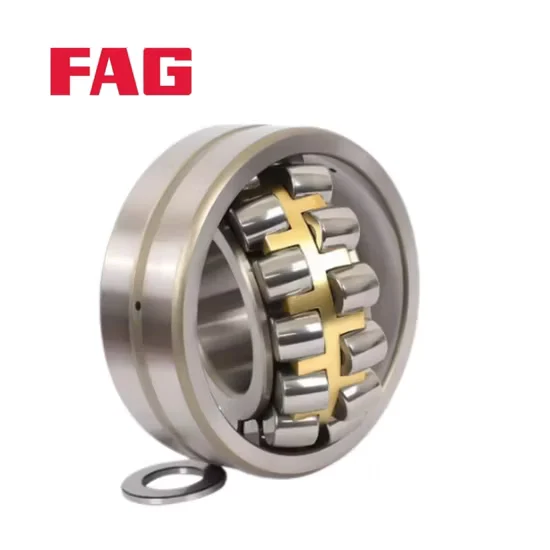
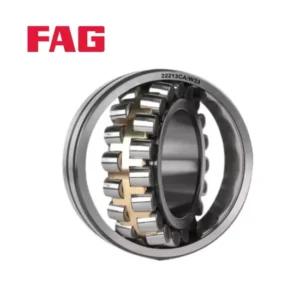
Product Details
About This INA Bearing
Cross-reference alignment verified — We validate clearance, cage type, and dimensional tolerances against OEM specs before dispatching this exact designation.
Technical Specifications
| Parameter | Value |
|---|---|
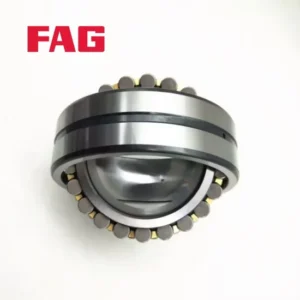
| Designation | FAG 22220-E1-a-XL-Ma-T41A |
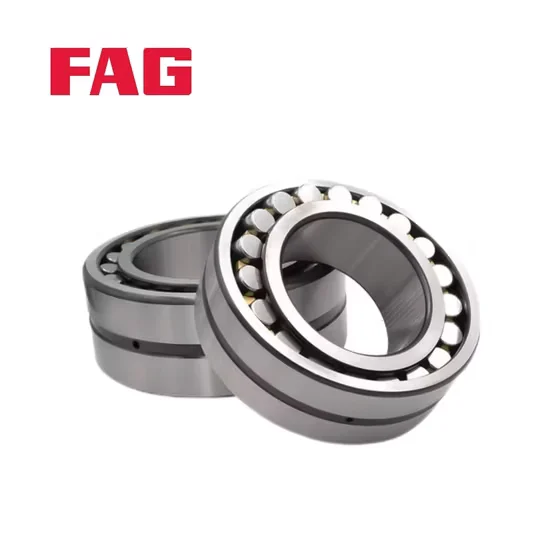
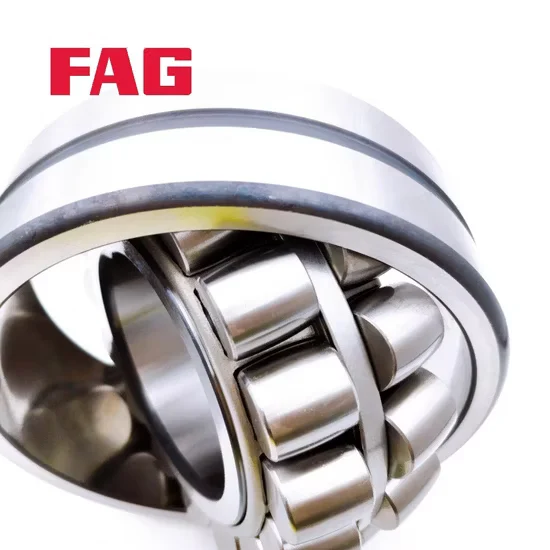
| Bearing Type | Spherical Roller Bearing |
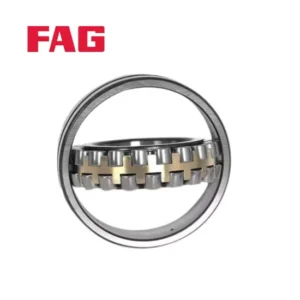
| Structure | Double Row, Self-Aligning |
| Main Material | Chrome Steel Gcr15 |
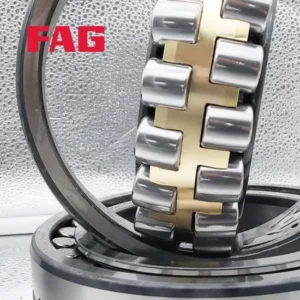
| Cage Material | Machined brass cage, outer ring guided (Ma) |
Note: Suffixes E1, a, XL, and T41A are unverified in standard public catalogs and require direct manufacturer catalog confirmation for exact engineering definitions.
Application Suitability
| Industry | Typical Applications |
|---|---|
| Mining & Construction | Vibrating screen exciter mechanisms and heavy-duty crusher main shafts |
| Metallurgy & Steel | Continuous casting equipment oscillation points and rolling mill gearboxes |
| Pulp & Paper | Paper machine dryer cylinder bearings and press section roll supports |
Why Standard Clearances Destroy Vibrating Screen Performance
Selecting the correct FAG 22220-E1-a-XL-Ma-T41A spherical roller bearing prevents catastrophic cage failure under extreme oscillation. Standard internal clearances rapidly collapse when high-frequency vibration combines with friction-induced thermal expansion.
Early in my career handling export documentation in Ningbo, a mining client requested a standard 22220 spherical roller bearing for their vibrating screens. I overlooked the critical T41A suffix requirement and shipped a standard C3 clearance variant instead. Within months, the intense vibration and elevated operating temperatures caused the internal clearance to vanish, leading to a seized cage and massive unplanned downtime. That failure mode is well documented in vibration screen bearing analysis. Today, I scrutinize every suffix to ensure the internal geometry perfectly matches the dynamic thermal profile of the equipment.
Matching the Machined Brass Cage to High-Vibration Loads
The machined brass cage design inherent in this FAG 22220-E1-a-XL-Ma-T41A spherical roller bearing provides exceptional resistance to the severe accelerations found in mineral processing. Unlike pressed steel alternatives, the solid brass construction maintains structural integrity when subjected to continuous shock loads. Our global sourcing network ensures these specific heavy-duty variants remain in spot inventory, bypassing typical multi-week lead times for urgent MRO replacements.
Managing Thermal Expansion and Shock Loads in Mineral Processing
Vibrating screens generate intense radial forces combined with high-frequency axial shocks, demanding a bearing that accommodates both mechanical stress and thermal growth. As the equipment runs, friction heats the inner ring faster than the housing, gradually reducing the initial internal clearance. If the starting clearance is insufficient, the rolling elements bind against the raceways. Proper lubrication intervals are equally critical; heavy vibration tends to throw grease away from the load zone, necessitating high-adhesion lubricants applied at strict intervals to prevent metal-to-metal contact.
Decoding the Suffix String for Heavy-Duty Reliability
The Ma suffix explicitly designates a machined brass cage guided by the outer ring, a configuration engineered to handle the severe misalignment and shock loads typical in crushing and screening. This outer-ring guidance prevents the cage from dragging on the inner ring during high-speed oscillations, significantly reducing wear. The double row, self-aligning structure effectively compensates for shaft deflection and housing misalignment, protecting the rolling elements from edge loading. Furthermore, these components are available in high-purity Chrome Steel Gcr15 or alternative alloy variants to ensure extended fatigue life under heavy and shock loads, providing a reliable foundation for continuous industrial operations.
The Hidden Financial Impact of Incorrect Suffix Selection
Substituting a standard industrial bearing for a dedicated vibrating screen variant inevitably leads to premature failure and catastrophic damage to adjacent drivetrain components. When a cage fractures under high-frequency oscillation, the resulting debris scores the raceways and can lock the entire shaft assembly. According to ISO 15243 frameworks, such failures are classified as surface fatigue and structural breakdown caused by inappropriate internal geometry. The resulting warranty voidance and extended production halts far exceed the initial procurement savings of an incorrect substitute.
Securing Authentic Traceability for Critical MRO Replacements
Procuring specialized variants requires strict verification to avoid counterfeit or mislabeled inventory entering your maintenance stores. We specialize in identifying the exact cage and clearance combinations that OEMs specify for vibrating equipment, preventing the dangerous mismatch of standard cages in high-shock environments. Every shipment includes complete batch traceability documentation, ensuring the metallurgical composition meets original design parameters. Our technical team cross-validates the specific suffix requirements against your equipment manuals before dispatch. We also offer cross-brand equivalent model consultation if the exact original part number faces global allocation constraints.
Documentation & Authenticity
- Certificate of Conformity confirming the exact Ma cage and material specifications.
- Original manufacturer batch traceability records linked to the specific production heat number.
- Official app QR code verification for validating the authenticity of the physical packaging.
- Dimensional and running accuracy inspection reports confirming tolerance compliance prior to dispatch.
Storage, Handling & Mounting
- Store the double row bearing in its original moisture-barrier packaging to prevent corrosion on the exposed bearing steel raceways.
- Use induction heating for the inner ring mounting, strictly monitoring temperature to preserve the machined brass cage integrity.
- Apply clean gloves when handling the outer ring guided Ma cage to prevent acidic skin oils from initiating surface pitting.
- Ensure the self-aligning outer ring is properly seated in the housing to allow full angular compensation during operation.
Engineering Data Required for Precision Cross-Referencing
To guarantee optimal service life, please share your specific radial and axial load profiles, operating temperatures, and shaft speed parameters. This data allows our engineering team to verify the internal clearance suitability and calculate the expected fatigue life for your exact vibrating screen application. Providing the original OEM equipment serial number also enables precise cross-reference validation against historical build specifications.
Frequently Asked Questions
Q: How can I verify the authenticity of this specific bearing variant?
A: You can authenticate the bearing by scanning the official manufacturer QR code on the packaging using their verified mobile application. Additionally, we provide complete batch traceability documentation and a Certificate of Conformity that confirms the exact material and cage specifications match the original factory production records.
Q: What are the cross-reference considerations for clearance variants?
A: When substituting variants like C3 or C4 clearance models, it is crucial to evaluate the operating temperature differential between the inner ring and outer housing. Our technical team reviews your specific thermal expansion data to ensure the selected clearance prevents internal binding under high-frequency vibrating screen conditions.
Q: Why is the Ma cage preferred for vibrating screen applications?
A: The machined brass cage guided by the outer ring offers superior structural strength against the severe accelerations and shock loads inherent in mineral processing. This specific guidance method prevents cage wear during high-speed oscillations, ensuring reliable rolling element separation and significantly extending the operational lifespan of the bearing.
Q: What lubrication practices are recommended for this open bearing design?
A: For open spherical roller bearings in high-vibration environments, we recommend using high-adhesion greases formulated to resist centrifugal throw-off. Establishing strict relubrication intervals based on your specific operational hours and contamination exposure is essential to maintain a protective film between the rolling elements and the raceways.