
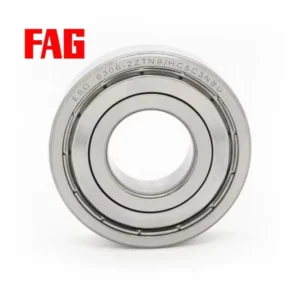

Product Details
About This INA Bearing
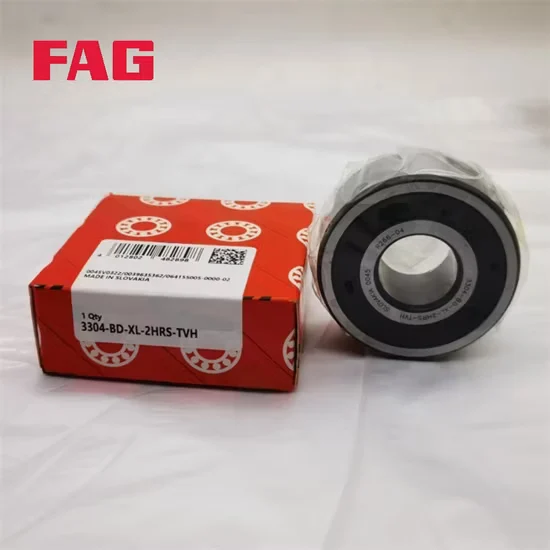
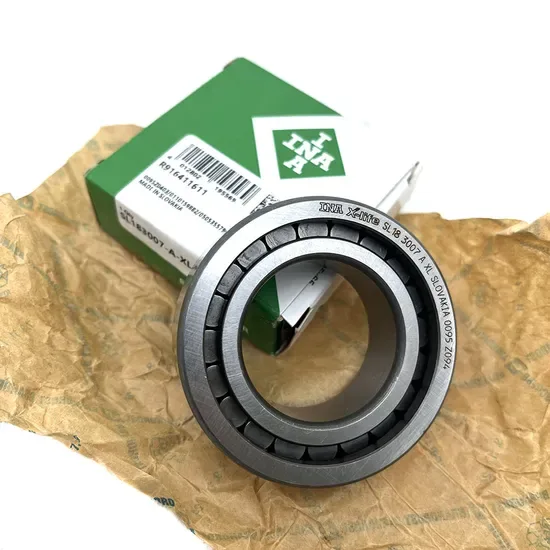
Authentic FAG Verification — Scan the official QR code on the packaging to confirm the batch origin of this spindle bearing before installation.
Technical Specifications
| Parameter | Value |
|---|---|
| Designation | FAG HS71926-C-T-P4s-UL |
| Bearing Type | Angular Contact Ball Bearing |
| Precision Class | P4s |
| Contact Angle | 15° |
| Seal or Shield Type | Open |
| Material | Steel |
| Origin | Jiangsu China |
Application Suitability
| Industry | Typical Applications |
|---|---|
| Machine Tool Manufacturing | High-speed CNC milling and turning center spindles |
| Precision Engineering | Internal grinding spindle assemblies for cylindrical grinders |
| Robotics | High-accuracy rotary joints requiring minimal runout |
Why Spindle Seizures Happen Despite P4s Precision in the FAG HS71926-C-T-P4s-UL angular contact ball bearing
Thermal expansion from improper preload matching destroys internal clearances long before the steel fatigues.
I learned this the hard way years ago in a Suzhou bearing grinding workshop, later transitioning to machine tool spindle applications. We once fitted an HS719 series set into a five-axis CNC without double-checking the exact preload suffix. The high-speed operation generated excessive heat, leading to a complete spindle seizure within hours. Misinterpreting these subtle designation details causes catastrophic downtime that no amount of precision grinding can prevent, ultimately scrapping expensive aerospace components and damaging the machine's reputation. The financial impact of a seized spindle extends far beyond the replacement part, encompassing lost production hours and secondary damage to the machine housing.
Matching the 15° Contact Angle to CNC Milling Loads
When configuring a high-speed machining center, the 15° contact angle of this FAG HS71926-C-T-P4s-UL angular contact ball bearing provides an optimal balance. It handles the combined radial and axial cutting forces typical in milling operations while minimizing friction heat. Our engineering team cross-references these specific load profiles to ensure the open design integrates perfectly with your spindle's oil-air lubrication circuit. This precise matching prevents the localized thermal growth that often compromises surface finish quality during prolonged heavy-cutting cycles.
Overcoming Thermal Growth and Lubrication Starvation
High-speed spindles demand rigorous thermal management, as centrifugal forces and friction rapidly elevate internal temperatures. An open bearing design eliminates seal friction but relies entirely on the machine's external oil-jet or oil-air system to prevent starvation. If the lubrication interval is miscalculated, the 15° contact angle cannot compensate for the localized heat spikes that degrade the raceway surface. Proper installation alignment is equally critical to avoid uneven load distribution across the rolling elements, which accelerates fatigue and induces premature vibration.
Decoding the P4s Tolerance and Open Cage Configuration
The P4s precision class guarantees exceptionally tight dimensional and running accuracy, which is mandatory for minimizing vibration at high RPMs. The 15° contact angle (denoted by the C suffix) ensures the bearing sustains axial thrust from tool engagement without excessive ball skidding. Because the bearing features an open design, it avoids the speed limitations imposed by rubber seals, allowing the cage to operate efficiently within the spindle's customized lubrication environment. This configuration is essential for maintaining dimensional stability during prolonged heavy-cutting cycles, ensuring the final machined parts meet strict geometric tolerances. Maintaining this precision requires strict adherence to mounting protocols, as even minor contamination can compromise the P4s running accuracy.
The Financial Impact of Ignoring Preload and Precision Specs
Selecting a standard P4 instead of P4s, or mismatching the preload arrangement, leads to premature spindle runout and scrapped workpieces. According to ISO 15243 frameworks, incorrect internal clearance often manifests as smearing or false brinelling on the raceways. This unplanned downtime not only halts production but also voids the machine tool warranty, resulting in massive financial losses that far exceed the initial component cost. Ignoring these precise specifications inevitably forces facilities into reactive maintenance cycles rather than planned spindle rebuilds.
Securing Traceable Spindle Bearings Without the Premium Markup
Sourcing authentic high-precision components requires more than just a part number match. We verify the exact P4s tolerance and 15° contact angle against the manufacturer's original batch documentation, ensuring you receive genuine stock rather than relabeled alternatives. Our massive spot inventory covers thousands of standard and special part numbers, allowing us to consolidate mixed-brand spindle packages for your facility. Furthermore, we provide cross-reference technical support to validate equivalent models like the B719 series, ensuring your maintenance schedule never stalls due to supply chain delays or obsolete part numbers.
Documentation & Authenticity
- Certificate of Conformity confirming P4s dimensional and running accuracy tolerances.
- Original batch traceability records linking the bearing to the manufacturer's production facilities.
- Official QR verification labels for authenticating the FAG HS71926-C-T-P4s-UL angular contact ball bearing packaging.
- Material inspection reports validating the steel composition for high-speed spindle applications.
Storage, Handling & Mounting
- Store the open-type bearing in its original moisture-barrier packaging until the exact moment of spindle assembly.
- Use lint-free cleanroom gloves to prevent skin oils from compromising the P4s precision raceway finish.
- Follow the manufacturer's specified heating protocols for the spindle housing to maintain the 15° contact angle preload.
- Keep matched sets sealed together; opening them prematurely destroys the factory alignment marks required for proper load sharing.
Provide Your Spindle Parameters for Technical Validation
To ensure this bearing perfectly matches your CNC machining center, please share the specific radial and axial cutting loads, maximum operating RPM, and spindle housing dimensions. Our engineering team will use these parameters to verify the L10 life and confirm the correct preload arrangement for your exact application. Supplying the original OEM equipment serial number also allows us to perform a precise cross-reference check against your current setup, guaranteeing integration without modifying the existing spindle housing.
Frequently Asked Questions
Q: How do I verify the authenticity of this P4s spindle bearing?
A: You can authenticate the bearing by scanning the official QR code on the packaging using the manufacturer's verification app. We also provide original batch traceability documentation and a Certificate of Conformity that confirms the P4s precision class and 15° contact angle specifications before shipment.
Q: What does the 15° contact angle mean for my CNC machine spindle?
A: The 15° contact angle, indicated by the C suffix, provides an ideal balance for high-speed CNC spindles. It efficiently supports the combined radial and axial loads generated during milling operations while minimizing internal friction and heat generation, which is critical for maintaining machining accuracy.
Q: How should I lubricate this open-type angular contact bearing?
A: Since this bearing features an open design without integrated seals, it requires an external lubrication system. You must strictly use the spindle's built-in oil-air or oil-jet lubrication circuit, ensuring the flow rate and interval are precisely calibrated to prevent starvation at high rotational speeds.
Q: What do the unverified suffixes in the designation mean?
A: Suffixes like HS, T, and UL in the designation often refer to specific cage materials, preload levels, or internal design variations that require confirmation via the manufacturer's current catalog. We cross-reference these exact suffixes to ensure the replacement matches your exact original spindle configuration.
Q: Can I use B719 series bearings as a cross-reference replacement?
A: The B719 series shares similar dimensional and precision characteristics, but direct substitution requires careful verification. Our technical team will compare the exact contact angle, preload class, and cage design of your current setup to ensure the cross-reference model delivers identical performance in your specific CNC application.