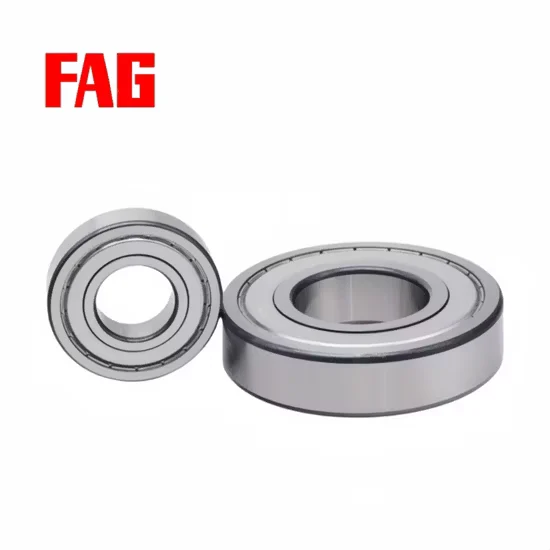
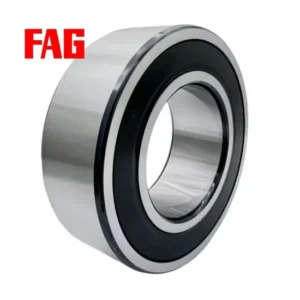
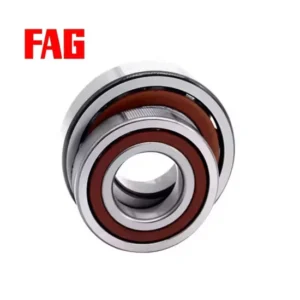
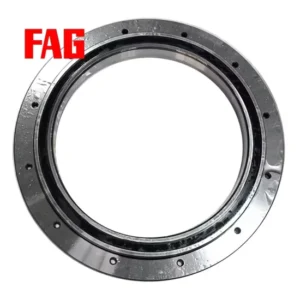
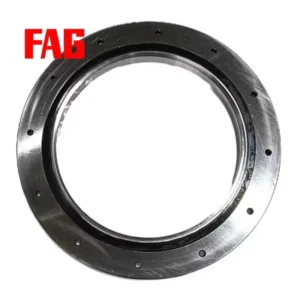
Product Details
About This INA Bearing
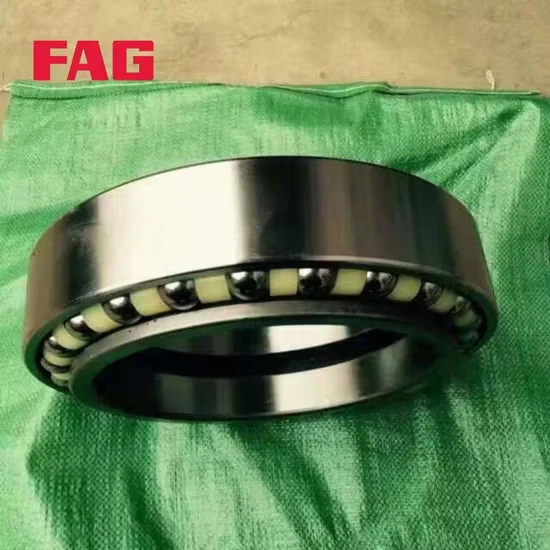
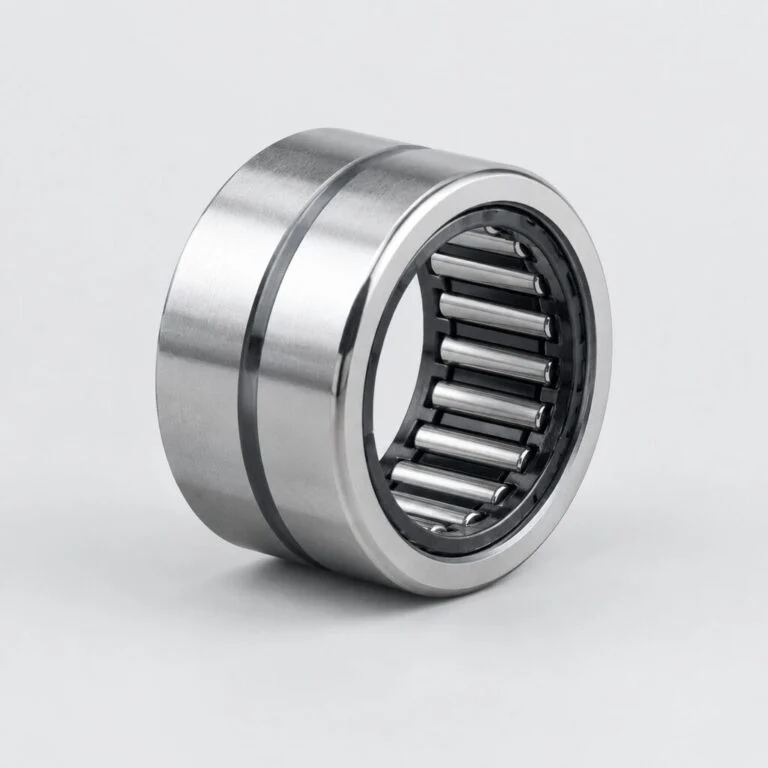
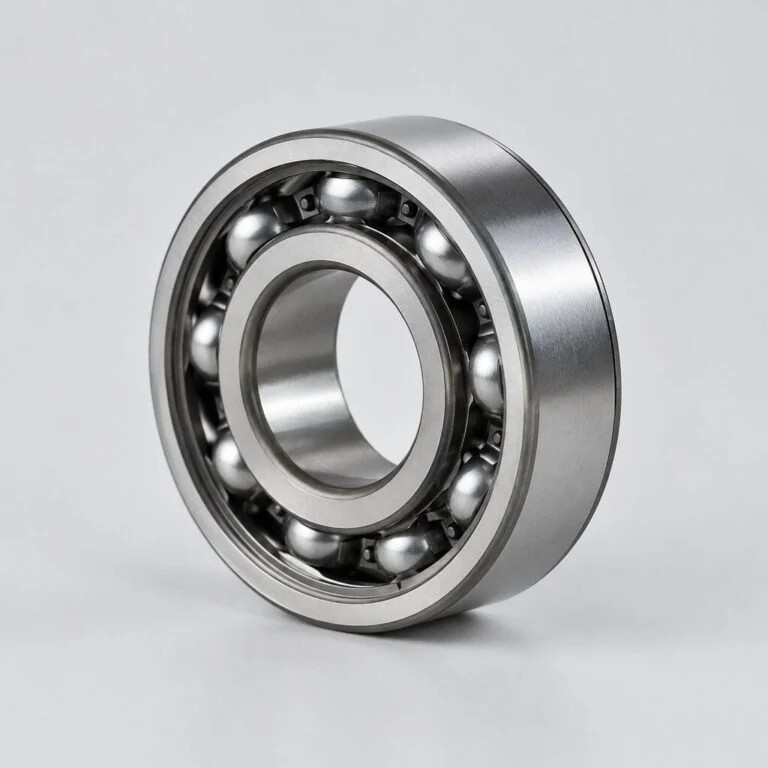
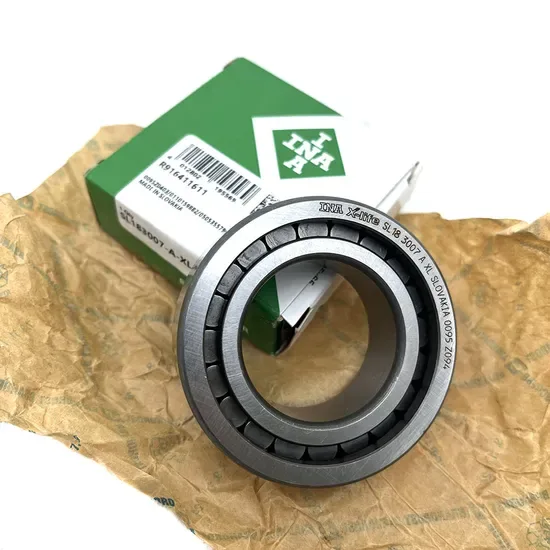
Unified Sourcing Across Brands — Consolidate this FAG spindle bearing with other premium lines in a single shipment without juggling multiple suppliers.
Technical Specifications
| Parameter | Value |
|---|---|
| Designation | FAG HS71922-E-T-P4s-UL |
| Bearing Type | Angular Contact Ball Bearing |
| Precision Class | P4s (ISO) |
| Contact Angle | 25° |
| Material | Bearing steel |
| Arrangement | Single-row |
| Origin | Jiangsu, China |
T and UL are unverified suffixes requiring manufacturer catalog confirmation for exact preload and cage specifics.
Application Suitability
| Industry | Typical Applications |
|---|---|
| Machine Tool Manufacturing | High-frequency motorized spindles and precision grinding heads |
| Precision Equipment | High-speed pump shafts and robotic joint actuators |
Why Spindle Seizures Happen Even With a FAG HS71922-E-T-P4s-UL Angular Contact Ball Bearing
Mismatched preload settings during assembly will destroy even the most precise spindle bearings within hours.
When rebuilding high-speed CNC spindles, ignoring the exact preload class often leads to catastrophic thermal expansion and complete mechanical failure. I have personally witnessed perfectly good machining setups fail in under two hours simply because a heavy preload was forced onto a configuration requiring light preload, causing immediate seizure and burning out the entire bearing set. The immense friction generated by incorrect clamping forces rapidly exceeds the thermal dissipation capacity of the spindle housing. This localized overheating breaks down the lubrication film, leading to metal-to-metal contact and irreversible damage to the raceways.
Matching Precision to High-Frequency Machining Demands
The genuine FAG HS71922-E-T-P4s-UL angular contact ball bearing provides the exact dimensional stability needed for tight-tolerance milling and complex contouring operations. Our supply chain ensures that every unit ships with complete traceability, allowing maintenance teams to verify the exact manufacturing batch before it ever touches the spindle housing. By securing components through authorized channels, fabrication facilities eliminate the risk of installing counterfeit or out-of-spec parts that compromise machining accuracy. This rigorous verification process protects the integrity of the entire production line, ensuring that high-value workpieces are not scrapped due to unexpected spindle runout or vibration.
Managing Thermal and Load Challenges in Spindle Operations
High-speed machining generates immense centrifugal forces and localized heat, demanding a contact angle that balances radial and axial loads effectively under dynamic conditions. The 25° contact angle optimizes this load distribution, preventing excessive stress on the raceways during aggressive cutting cycles where thrust forces peak unpredictably. Proper lubrication management is equally critical, as oil-air systems must maintain a precise film thickness without causing churning losses that add unwanted heat to the spindle assembly. Furthermore, the sealing arrangement must prevent microscopic coolant mist and metallic swarf from infiltrating the bearing interior, which would otherwise act as an abrasive lapping compound. Maintaining this delicate balance between load capacity, thermal management, and contamination exclusion dictates the operational lifespan of the spindle.
Decoding the Engineering Behind the Suffixes
The P4s precision class guarantees exceptionally tight tolerances for both radial and axial runout, which is non-negotiable for achieving fine surface finishes on hardened metals. The 25° contact angle, denoted by the E suffix, provides a stiffer axial response compared to 15° alternatives, making it highly effective for handling the severe thrust loads generated during heavy milling and drilling operations. Single-row arrangements offer the flexibility to build custom tandem or back-to-back pairs, provided the mounting preload is strictly matched to the manufacturer's specifications for that exact configuration. Understanding these specific designations prevents technicians from making arbitrary substitutions that might fit physically but fail dynamically under operational loads. Every suffix dictates a specific mechanical behavior, and overlooking these details inevitably compromises the spindle's high-speed capabilities.
The Cascading Impact of Preload and Precision Errors
Installing a bearing with the wrong internal clearance or mismatched preload class inevitably triggers unplanned downtime and catastrophic spindle damage that extends far beyond the bearing itself. According to failure analysis frameworks like ISO 15243, excessive preload directly accelerates surface fatigue, smearing, and severe thermal degradation of the rolling elements. This not only ruins the bearing but often scores the expensive spindle shaft and damages the housing bore, voiding equipment warranties and requiring a complete, costly assembly replacement. The financial impact of such an error includes not just the replacement parts, but the lost production time and the potential scrapping of high-value workpieces being machined when the seizure occurs.
Securing Authentic Spindle Components Through Verified Channels
Sourcing precision spindle bearings requires absolute certainty in origin, specification accuracy, and supply chain integrity. We provide original factory documentation for every FAG HS71922-E-T-P4s-UL angular contact ball bearing, completely eliminating the risk of counterfeit parts that frequently plague the industrial MRO market. Our technical team cross-checks the exact suffix combinations against your machine tool's OEM manual to prevent the costly preload mismatches that cause early failures and thermal seizures. Furthermore, we consolidate mixed-brand orders efficiently, allowing you to source this specific FAG unit alongside other required maintenance parts from different manufacturers in one consolidated logistics flow. This comprehensive approach reduces administrative overhead and ensures all critical spindle rebuild components arrive simultaneously, minimizing machine downtime.
Documentation & Authenticity
- Certificate of Conformity verifying the P4s precision grade and original FAG manufacturing origin.
- Batch traceability records linking the specific bearing serial number to the factory production run.
- Dimensional and running accuracy inspection reports confirming tight runout tolerances prior to dispatch.
- Official manufacturer verification tools to authenticate the product packaging and anti-counterfeit labels.
Storage, Handling & Mounting
- Keep the single-row bearing in its original moisture-proof packaging until the exact moment of spindle assembly.
- Use lint-free cleanroom gloves when handling the P4s precision raceways to prevent microscopic corrosion from skin contact.
- Strictly verify the preload marking and pairing configuration before applying any axial clamping force during installation.
- Ensure the induction heater is calibrated correctly if heating the inner ring, avoiding thermal degradation of the bearing steel.
Engineering Support for Spindle Rebuilds
To ensure optimal spindle performance and longevity, please share your specific radial and axial load profiles, operating speeds, and target machining tolerances with our technical team. Providing the exact OEM machine tool model number allows our engineering specialists to verify the required preload class and cross-reference the correct pairing arrangement for your specific application. This thorough technical review prevents dangerous assembly errors and guarantees the selected configuration perfectly matches your high-speed machining environment. By supplying these operational parameters, you receive a validated selection recommendation backed by extensive application engineering expertise, ensuring a reliable and predictable spindle rebuild outcome.
Frequently Asked Questions
Q: How does the P4s precision class differ from standard P4 in spindle applications?
A: The P4s designation indicates enhanced running accuracy and tighter dimensional tolerances compared to standard P4. This superior precision minimizes vibration at high rotational speeds, which is critical for achieving fine surface finishes in CNC milling and grinding operations where microscopic runout causes visible chatter marks.
Q: What is the practical difference between a 25° and 15° contact angle for machine tool spindles?
A: A 25° contact angle offers higher axial rigidity, making it better suited for applications with significant thrust loads during heavy cutting. Conversely, a 15° angle provides higher radial rigidity and allows for slightly higher speed limits, making it preferable for high-speed, light-load grinding spindles.
Q: How should single-row angular contact bearings be paired and preloaded during installation?
A: Single-row bearings must be mounted in specific arrangements like back-to-back or face-to-face, with preload strictly matching the manufacturer's specification. Applying incorrect preload, such as forcing a heavy preload on a light-preload setup, generates excessive friction and heat, leading to rapid thermal expansion and spindle seizure.
Q: What steps can I take to verify the authenticity of this FAG bearing before installation?
A: You can authenticate the bearing by scanning the official QR code on the packaging using the manufacturer's designated mobile application. Additionally, cross-checking the batch number on the bearing ring against the provided Certificate of Conformity ensures the component is a genuine original product.