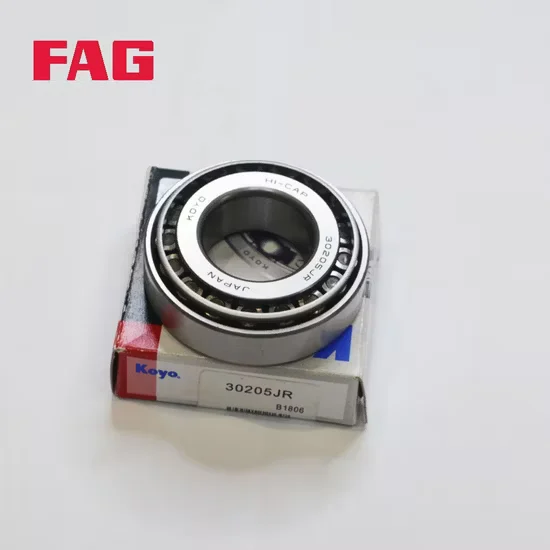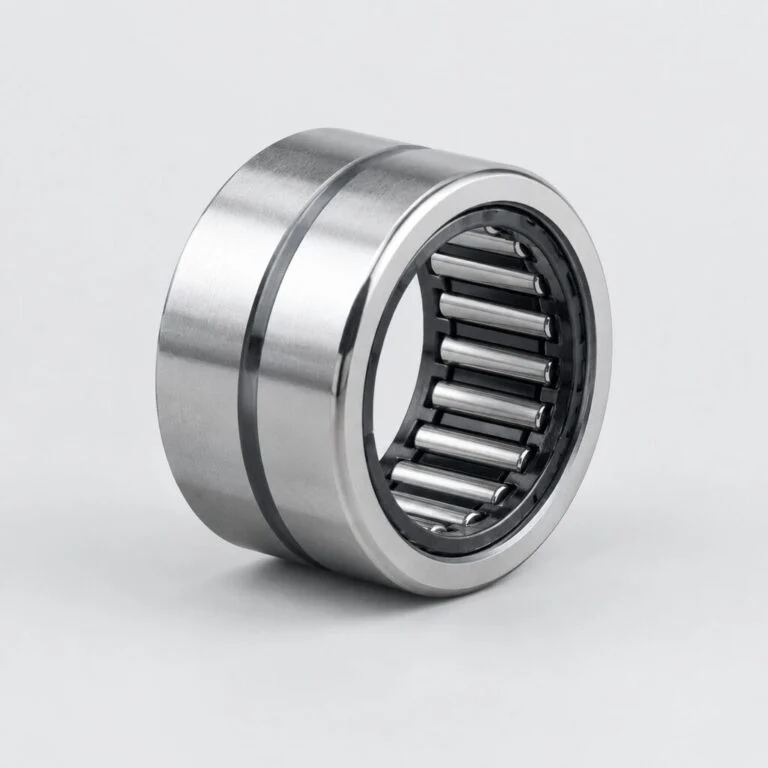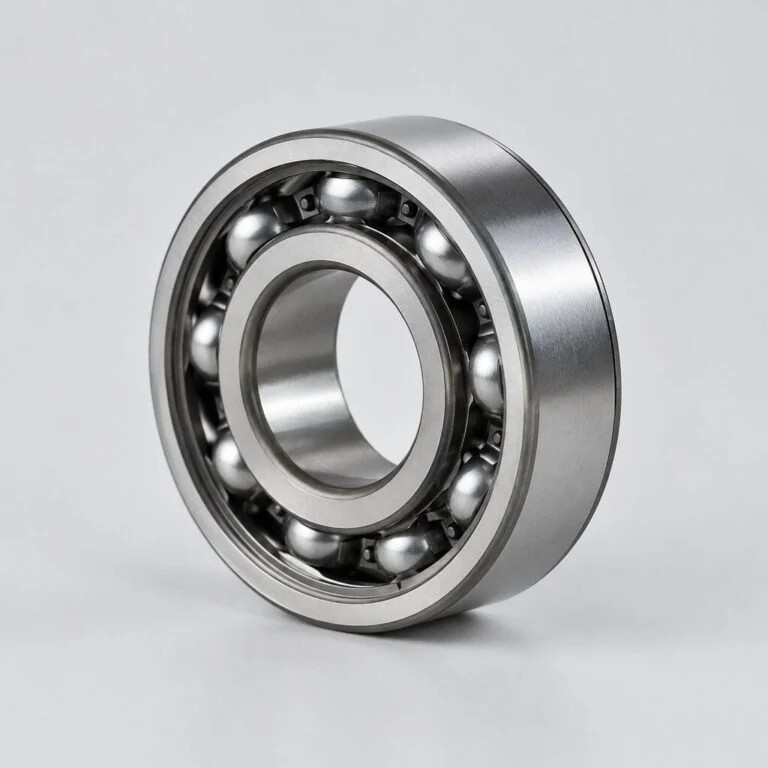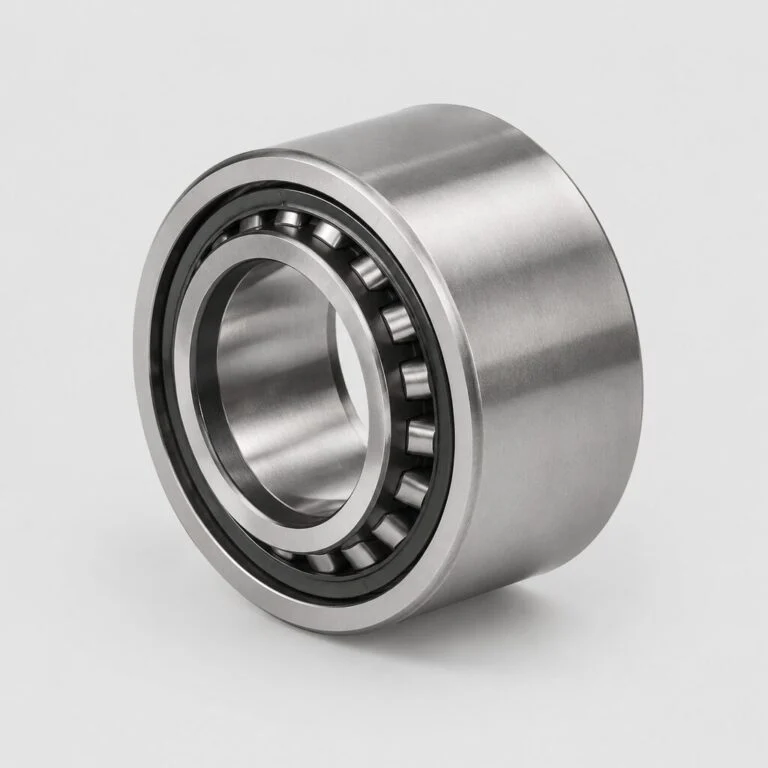
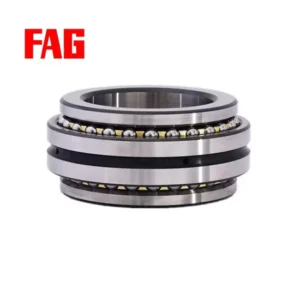


Product Details
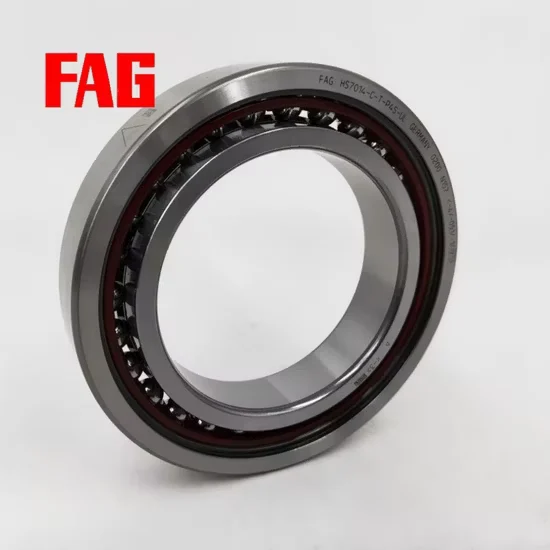
About This INA Bearing
Cross-reference alignment verified — We match HCB70 and B70 series equivalents to ensure dimensional interchangeability for your spindle rebuilds.
Technical Specifications
| Parameter | Value |
|---|---|
| Designation | HS7018-E-T-P4s-UL |
| Bearing Type | Single-Row Angular Contact Ball Bearing |
| Precision Class | P4s |
| Contact Angle | 25° |
| Material | Available in hybrid ceramic or standard steel variants |
| Origin | Jiangsu China |
| HS Code | 8482800000 |
| Certification | ISO |
Application Suitability
| Industry | Typical Applications |
|---|---|
| Machine Tool Manufacturing | High-speed motorized spindles and milling head assemblies |
| Industrial Pumping | High-speed centrifugal pump shaft supports |
| Robotics & Automation | Precision rotary joints and articulated arm pivots |
Why Standard Steel Fails in High-Speed Spindles Before the FAG HS7018-E-T-P4s-UL angular contact ball bearing Reaches Its Limit
Frictional heat from steel rolling elements causes thermal expansion that destroys spindle preload long before fatigue limits are reached.
Years ago in a Suzhou workshop, I watched a five-axis spindle seize at high rotational speeds because standard steel balls generated excessive heat, turning the cage completely blue and welding the rolling elements to the raceway. Upgrading to hybrid ceramic rolling elements immediately stabilized the thermal growth and saved the machining center from a total rebuild. When sourcing a FAG HS7018-E-T-P4s-UL angular contact ball bearing, ignoring the thermal mismatch between the rolling elements and the steel races leads to catastrophic downtime. Many maintenance engineers overlook how rapidly internal clearance vanishes when frictional heat outpaces the cooling system, assuming that standard precision grades are sufficient for modern high-speed cutting tools. The transition to hybrid designs is not just a luxury but a fundamental requirement for maintaining dimensional stability under continuous thermal stress.
Matching Hybrid Construction to Spindle Demands
The FAG HS7018-E-T-P4s-UL angular contact ball bearing utilizes ceramic rolling elements to drastically reduce centrifugal forces and frictional heat at extreme rotational speeds. This material option keeps the spindle centerline exceptionally stable during heavy milling cuts, preventing chatter marks on the finished workpiece and extending tool life. Our engineering team frequently cross-references HCB70 series equivalents to ensure your machine tool maintains tight dimensional tolerances without requiring a complete housing redesign or costly structural modifications. By utilizing our massive spot inventory and global shipping consolidation services, we supply these critical components exactly when your production schedule demands them, minimizing the risk of extended machine idle time.
Managing Thermal and Load Challenges in Precision Machining
High-speed spindles subject bearings to intense combined radial and axial loads while generating immense internal heat from aggressive cutting forces and rotational friction. If the contact angle and preload are not perfectly matched to the specific milling operations, the bearing will skid, smearing the raceway and wearing prematurely. Lubrication breakdown at elevated temperatures further accelerates cage degradation, making proper grease selection and non-contact sealing critical for long-term reliability in contaminated workshop environments. Without adequate thermal management and precise installation procedures, the precision class degrades rapidly, leading to unacceptable surface finishes and frequent tool breakage.
Decoding the P4s Precision and 25° Contact Angle
The P4s precision class ensures exceptionally tight dimensional and running accuracy, which is absolutely mandatory for minimizing vibration and noise in high-frequency milling applications. A 25° contact angle provides an optimal balance between axial rigidity for deep plunge cutting and radial capacity for heavy side milling operations. The single-row design allows for highly flexible paired arrangements, such as back-to-back or face-to-face configurations, depending on the specific moment load requirements and stiffness needs of the spindle. We always verify these configuration codes against the manufacturer's catalog to avoid mismatched preload states that could compromise the entire assembly and void the equipment warranty.
The Hidden Toll of Mismatched Preload and Precision
Installing a bearing with incorrect preload or lower precision in a high-speed spindle results in severe unplanned downtime and costly scrapped workpieces that ruin profit margins. According to ISO 281 frameworks, improper internal clearance drastically reduces the calculated fatigue life under combined loading conditions, accelerating subsurface fatigue. A premature spindle failure not only destroys the bearing itself but can also cause catastrophic damage to the expensive spindle housing, motor rotor, and precision tooling interfaces. Relying on unverified suppliers often leads to these hidden costs, as counterfeit or misgraded bearings fail silently under load, leaving maintenance teams scrambling for emergency replacements.
Securing Authentic Spindle Bearings Without the Official Channel Premium
Sourcing genuine high-precision spindle bearings often involves inflated costs and typical multi-week lead times from direct official channels, which disrupts tight manufacturing schedules. We maintain massive spot inventory covering thousands of part numbers, ensuring your urgent maintenance requirements are met immediately without halting production lines. Our cross-brand equivalent model consultation helps you find reliable alternatives like the HCB70 series when specific FAG part numbers are constrained by global supply chain disruptions. Every shipment includes complete traceability documentation, and our flexible MOQ accommodates everything from single-unit emergency spares to full container consolidations for large-scale global project orders, backed by long-term after-sales technical support. Furthermore, our competitive sourcing cost compared to direct official brand channels allows you to allocate more budget toward preventative maintenance rather than emergency part procurement.
Documentation & Authenticity
- Certificate of Conformity verifying the P4s precision tolerance before dispatch
- Original factory batch traceability records linked to the specific production run
- Official app QR code validation for confirming batch authenticity on site
- Material inspection reports confirming the hybrid ceramic rolling element composition
- Dimensional and running accuracy inspection reports matching ISO standards
Storage, Handling & Mounting
- Keep the original packaging sealed to protect the P4s precision surfaces from ambient humidity
- Use clean lint-free gloves when handling to prevent sweat corrosion on the steel races
- Follow the manufacturer's specified heating methods for the inner ring to avoid thermal shock to the ceramic balls
- Maintain the factory arrangement marks when mounting paired sets to preserve the intended preload
- Store away from direct sunlight and vibration sources to prevent false brinelling of the single-row raceways
Engineering Review for Your Spindle Application
To ensure optimal selection and avoid costly installation errors, please share your spindle's detailed radial and axial load profiles, maximum operating speed, and target temperature range. Providing the original OEM equipment number allows our technical team to perform a precise cross-reference check against the HCB70 or B70 series equivalents. We will then conduct a comprehensive life calculation and recommend the exact preload arrangement and lubrication strategy for your specific machining duties, ensuring smooth integration into your existing equipment and maximizing the operational lifespan of the spindle assembly.
Frequently Asked Questions
Q: How do I verify the authenticity of this FAG spindle bearing?
A: You can verify authenticity by scanning the official manufacturer app QR code printed on the packaging. We also provide complete factory batch traceability documentation and material inspection reports. This ensures the hybrid ceramic components and P4s precision class meet original equipment specifications without relying on third-party guesswork.
Q: What precautions should I take when cross-referencing HCB70 series equivalents?
A: When substituting standard steel B70 series with hybrid ceramic HCB70 equivalents, you must recalculate the preload and stiffness values. Ceramic rolling elements have different elastic moduli, which alters the contact mechanics. Our engineering team provides cross-reference alignment support to ensure the replacement maintains the required spindle rigidity and thermal stability.
Q: How does P4s precision differ from standard P4 under ISO standards?
A: The P4s class represents a specialized precision tier optimized for high-speed machine tool spindles, offering tighter running accuracy and dimensional tolerances than standard P4. This enhanced precision minimizes vibration and heat generation at extreme RPMs. We verify these specific tolerance bands through dimensional inspection reports before shipping any high-precision units.
Q: What do the unverified suffixes in the designation mean?
A: Certain configuration codes like HS, T, and UL in the designation require direct confirmation from the manufacturer's current catalog, as suffix meanings can evolve. We always cross-check these unverified suffixes against official technical documentation to ensure the bearing's cage material, preload, and sealing match your exact spindle design requirements.
Q: How do I select the correct contact angle for my high-speed spindle?
A: A 25° contact angle offers an excellent balance of axial rigidity and radial capacity for most milling spindles. However, the final choice depends on your specific cutting forces and speed requirements. Share your operational load data with us, and we will evaluate whether this angle or a 15° alternative better suits your application.