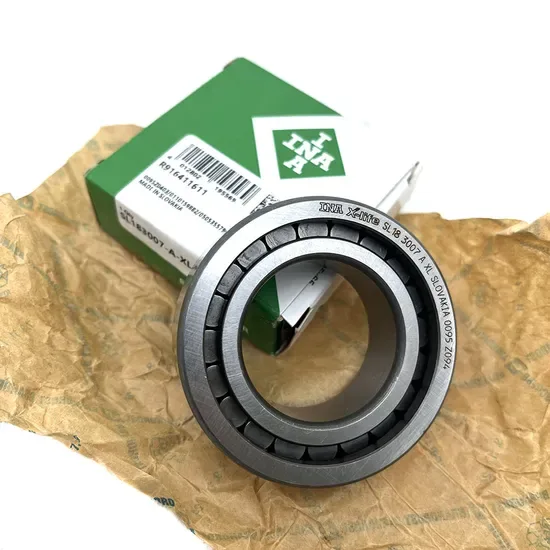
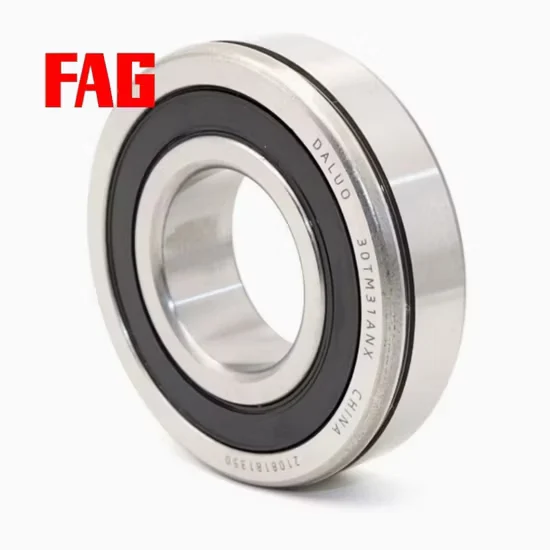
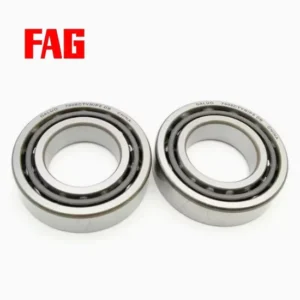
Product Details
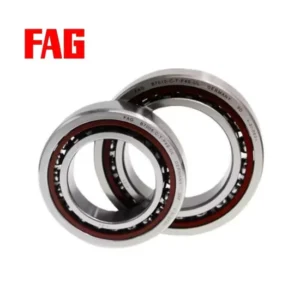
About This INA Bearing
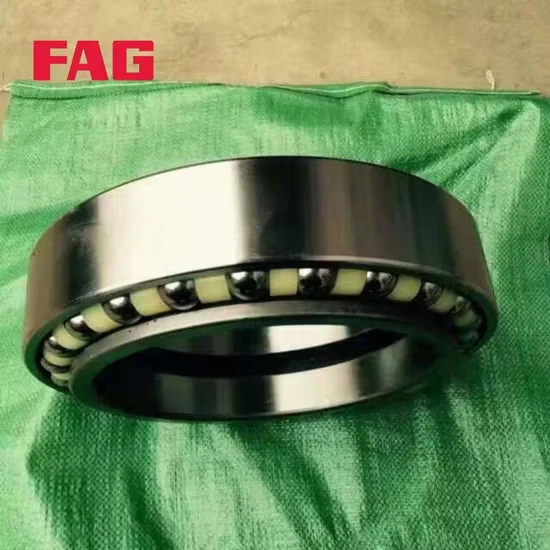
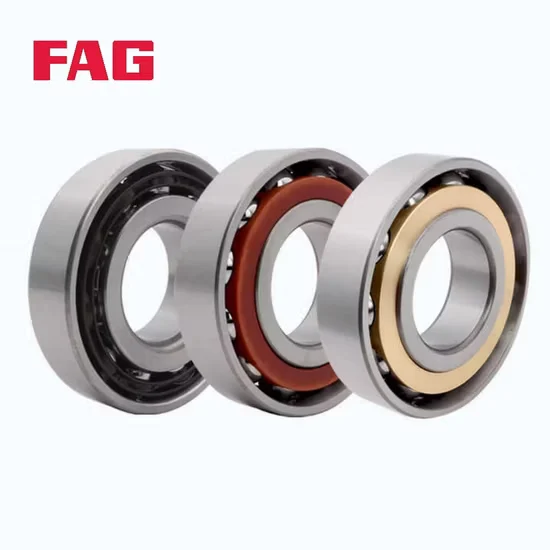
Cross-Reference Alignment — Verifying clearance, cage material, and precision class ensures exact substitution for spindle applications.
Technical Specifications
| Parameter | Value |
|---|---|
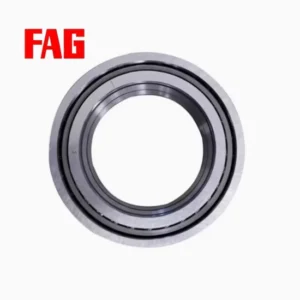
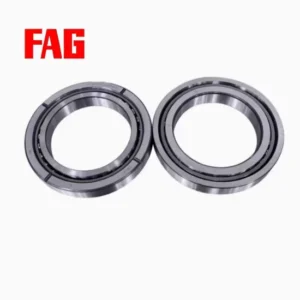
| Designation | FAG HS7012-E-T-P4s-UL |
| Bearing Type | Angular Contact Ball Bearing |
| Bore Diameter (d) | 60 mm |
| Outside Diameter (D) | 95 mm |
| Width (B) | 18 mm |
| Precision Class | P4s |
| Contact Angle | 25° |
| Material | Bearing Steel |
| Arrangement | Single-Row |
Note: HS, T, and UL suffixes require manufacturer catalog confirmation for exact preload and cage specifics.
Application Suitability
| Industry | Typical Applications |
|---|---|
| Machine Tool Manufacturing | High-speed motorized spindles and precision grinding heads |
| Industrial Automation | Multi-axis robotic joint actuators requiring high rigidity |
| Fluid Machinery | High-speed pump shafts with combined radial and axial loads |
Why Spindle Vibration Often Traces Back to Suffix Misinterpretation
When replacing a FAG HS7012-E-T-P4s-UL angular contact ball bearing, ignoring suffix nuances causes catastrophic runout.
Matching the exact contact angle and preload class is non-negotiable for high-speed rotating assemblies.
Early in my career shipping to Dubai, a minor oversight in preload suffixes led to severe spindle vibration at the customer's site, ultimately ruining a batch of aerospace components. Precision transmission systems simply do not tolerate guesswork or generic substitutions. Selecting the correct P4s tolerance band prevents unplanned downtime, protects the integrity of the entire machining center, and ensures the spindle maintains its geometric accuracy under heavy cutting forces. Field experience consistently shows that vibration issues almost always trace back to compromised running accuracy or mismatched internal clearances during the initial assembly phase.
Aligning Precision Tolerances with Spindle Dynamics
The FAG HS7012-E-T-P4s-UL angular contact ball bearing delivers the tight dimensional accuracy required for modern CNC spindles operating at extreme rotational speeds. Our engineering team cross-references your existing setup to confirm that the 25° contact angle perfectly balances the axial thrust generated during heavy milling and turning operations. This proactive verification eliminates the trial-and-error approach that often delays critical maintenance schedules and causes secondary damage to the spindle housing. By validating the exact preload configuration against the machine tool builder's original specifications, we ensure the bearing provides the necessary rigidity without generating excessive friction heat.
Navigating Thermal Growth and Lubrication Boundaries
High-speed spindle environments generate significant friction heat, which directly impacts internal clearance, lubricant degradation, and overall dimensional stability. A 25° contact angle optimizes axial load capacity, but it also demands precise oil-air or oil-jet lubrication to manage thermal expansion effectively across the raceways. Inadequate cooling or incorrect grease selection rapidly accelerates wear, leading to premature spalling and loss of machining accuracy. Furthermore, maintaining strict cleanliness during installation prevents particulate contamination that instantly compromises the P4s running accuracy. The interaction between the cage material and the lubrication system is equally critical, as centrifugal forces at high RPMs dictate how well the rolling elements are guided and separated.
Decoding the Engineering Behind the Designation
The P4s precision class guarantees exceptionally tight tolerances for both inner and outer ring dimensions, ensuring minimal radial runout and axial displacement at extreme RPMs. The 25° contact angle, designated by the 'E' suffix, provides a stiffer axial response compared to 15° alternatives, making it highly suitable for combined load scenarios typical in multi-axis machining centers. Single-row configurations inherently produce less friction heat than multi-row setups, supporting higher speed limits and reducing the thermal load on the spindle cooling system. The specialized cage design minimizes centrifugal forces and maintains stable rolling element guidance, preventing skidding during rapid acceleration or deceleration phases. Proper preload application is absolutely critical; incorrect preload leads to either excessive heat generation that degrades the lubricant or a dangerous loss of rigidity that causes chatter marks on the workpiece.
The Cascading Impact of Dimensional Inaccuracies
Installing a bearing with incorrect running accuracy or mismatched preload triggers a devastating chain reaction of mechanical failures throughout the spindle assembly. The resulting vibration accelerates cutting tool wear, ruins surface finish quality on the workpiece, and ultimately causes irreversible damage to the precision ground spindle shaft. Such premature failures lead to extensive unplanned downtime, expensive secondary repairs, and immediate voidance of the machine tool warranty. Relying on verified traceability and strict adherence to the original equipment manufacturer's specifications prevents the catastrophic costs associated with counterfeit, relabeled, or improperly stored precision components.
Securing Authentic Components Through Verified Channels
Sourcing genuine precision bearings requires much more than just checking a part number; it demands rigorous supply chain validation and deep technical expertise. We provide complete batch traceability documentation for every P4s spindle bearing, ensuring the metallurgical and dimensional integrity perfectly matches the manufacturer's original production records. Our technical team actively verifies cross-reference alignments, specifically checking cage materials, contact angles, and preload classes that generic distributors frequently overlook or misinterpret. By maintaining massive spot inventory across premium global brands, we eliminate the typical multi-week lead times that halt production during urgent spindle rebuilds. Furthermore, our competitive sourcing structure offers significant cost advantages over direct official channels without ever compromising on authenticity or technical support.
Documentation & Authenticity
- Certificate of Conformity verifying the P4s tolerance band and material grade.
- Original batch traceability records linking the bearing to the manufacturer's production facilities.
- Official app QR authentication confirming the anti-counterfeiting label integrity.
- Dimensional and running accuracy inspection reports specific to high-speed spindle requirements.
- Material certification detailing the chemical composition of the bearing steel rings.
Storage, Handling & Mounting
- Store the P4s precision bearing in its original, unopened packaging to prevent humidity-induced micro-corrosion on the raceways.
- Maintain a stable, climate-controlled environment away from direct sunlight to preserve the rust preventative coating on the precision ground raceways.
- Use lint-free cleanroom gloves during handling to avoid transferring skin acids that compromise the high-speed cage material.
- Apply induction heating strictly to the inner ring only, monitoring the temperature to prevent thermal degradation of the P4s dimensional stability.
- Keep the bearing sealed until the exact moment of mounting to prevent airborne particulate contamination in the spindle assembly.
Engineering Support for Spindle Rebuilds
To ensure optimal performance and longevity, please share your spindle's detailed operational parameters, including maximum RPM, specific radial and axial load profiles, and the current lubrication method. Providing the original equipment manufacturer's part number or the machine tool's serial number allows our team to perform a precise cross-reference verification. This comprehensive technical review guarantees the selected configuration aligns perfectly with your specific rigidity, thermal management, and surface finish requirements, preventing costly installation errors.
Frequently Asked Questions
Q: What does the 'E' suffix indicate on this specific angular contact ball bearing?
A: The 'E' suffix designates a 25° contact angle, which optimizes the bearing's axial load-carrying capacity. This angle is crucial for machine tool spindles that experience significant thrust loads during heavy cutting operations, providing a stiffer and more stable rotational platform compared to standard 15° alternatives.
Q: How does P4s precision differ from standard P4 or P5 classes?
A: P4s represents a specialized, highly restricted tolerance class specifically engineered for high-speed machine tool spindles. It enforces tighter limits on radial runout, bore diameter, and outer ring tolerances than standard P4 or P5 grades, ensuring minimal vibration and superior surface finish quality during precision machining.
Q: Can I substitute this bearing with a different brand's equivalent?
A: Cross-brand substitution is possible but requires strict verification of three critical parameters: exact dimensional tolerances, matching contact angles, and identical preload classes. Our engineering team performs comprehensive cross-reference alignments to ensure the alternative bearing delivers the same rigidity and thermal performance required by your spindle.
Q: What lubrication method is recommended for high-speed spindle applications?
A: High-speed spindles typically require oil-air or oil-jet lubrication to effectively manage friction heat and flush away wear particles. While some sealed variants use high-performance grease, open designs operating at extreme RPMs rely on continuous external oil circulation to maintain the bearing's thermal stability and extend its operational lifespan.
Q: How can I verify the authenticity of the received precision bearings?
A: Every genuine bearing is accompanied by original batch traceability documents and features an anti-counterfeiting label. You can verify authenticity by scanning the official manufacturer's QR code via their dedicated mobile application, which confirms the production origin and validates that the component has not been tampered with or relabeled.