

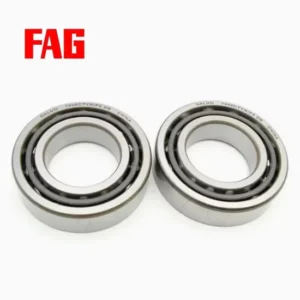
Product Details
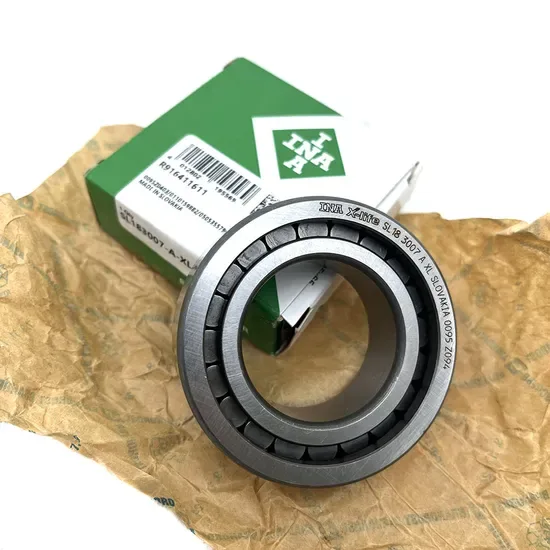
About This INA Bearing
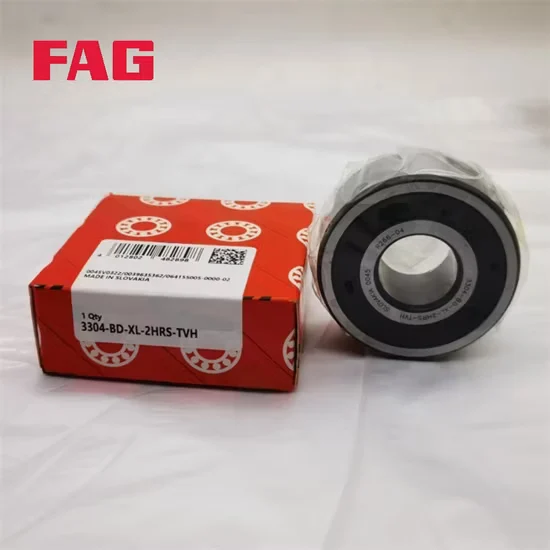
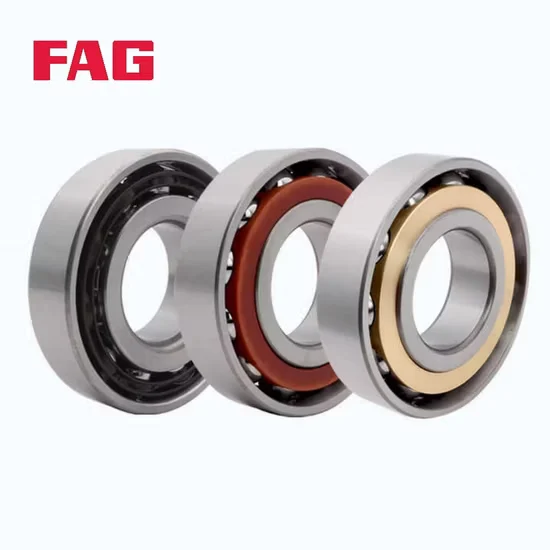
Official App QR Verification — Every FAG HS7005-C-T-P4s-UL angular contact ball bearing ships with a scannable origin tag linked directly to the manufacturer's authentication database.
Technical Specifications
| Parameter | Value |
|---|---|
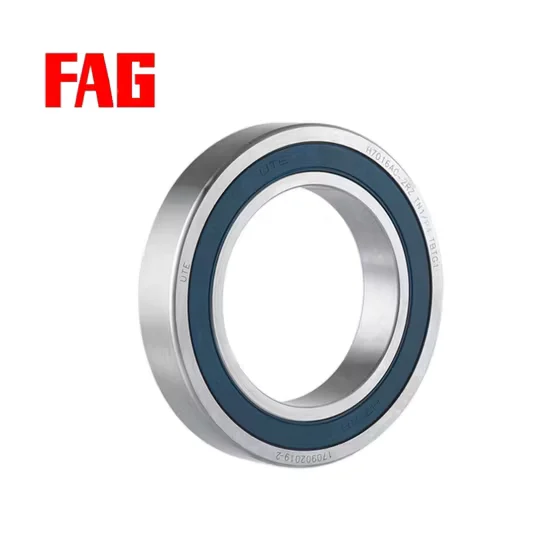
| Designation | FAG HS7005-C-T-P4s-UL |
| Bearing Type | Angular Contact Ball Bearing |
| Precision Class | P4s (ISO) |
| Contact Angle | 15° |
| Material | Steel |
| Origin | Jiangsu China |
| Certification | ISO |
Application Suitability
| Industry | Typical Applications |
|---|---|
| Machine Tool Manufacturing | High-speed precision motorized spindles |
| Industrial Automation | High-accuracy robotic joint actuators |
| Fluid Machinery | High-speed pump shaft support systems |
Why Standard Tolerances Destroy Precision Spindles Before the Steel Fails
Micro-vibrations from P0 class bearings cause thermal runaway long before fatigue limits are reached.
Back when I was doing aftermarket installations in Nigeria, I watched a mining equipment spindle seize up simply because the maintenance crew forced standard P0 bearings into a high-precision housing. The resulting vibration spiked the operating temperature, welding the inner ring to the shaft in a matter of hours. When sourcing a FAG HS7005-C-T-P4s-UL angular contact ball bearing, skipping the exact precision match turns a premium component into a very expensive bottleneck. Micro-vibrations from mismatched tolerances cause thermal runaway long before fatigue limits are reached, destroying the entire spindle cartridge and requiring complete machine teardowns.
Matching the 15° Contact Angle to High-RPM Spindle Dynamics
The 15° contact angle designated by the C suffix is specifically engineered to handle the combined axial thrust and radial loads typical in high-speed milling and grinding spindles. By optimizing the load distribution across the rolling elements, this FAG HS7005-C-T-P4s-UL angular contact ball bearing minimizes internal friction heat generation during continuous cutting operations. Our cross-brand equivalent consultation ensures that when you replace legacy spindle setups, the dynamic stiffness and thermal displacement remain perfectly aligned with your OEM machining tolerances. Selecting the correct contact angle is critical because a steeper angle would increase friction and limit the maximum achievable RPM, while a shallower angle would fail to support the necessary axial cutting forces.
Managing Thermal Expansion and Lubrication Breakdown in Machining Centers
High-speed spindle operations generate intense localized heat, which directly impacts internal clearance and lubricant film thickness across the raceways. If the grease degrades or the thermal expansion outpaces the bearing's internal clearance design, the rolling elements will skid rather than roll, leading to rapid raceway smearing and catastrophic spindle failure. Maintaining the correct preload and ensuring the lubrication interval matches the operational RPM is critical to preventing these destructive failure modes. Furthermore, the accumulation of microscopic metallic debris from the machining process can easily contaminate the lubricant, accelerating abrasive wear and compromising the P4s running accuracy if proper sealing protocols are not strictly followed.
Decoding the P4s Precision and Material Selection for Spindle Rigidity
The P4s precision class guarantees exceptionally tight dimensional and running accuracy, which is non-negotiable for eliminating chatter marks on finished workpieces and maintaining strict geometric tolerances. While the standard material is high-purity bearing steel, variants are available in ceramic or stainless steel options for specialized environments requiring electrical insulation or enhanced corrosion resistance. The steel construction provides the necessary elastic modulus to maintain spindle rigidity under heavy cutting forces, ensuring that the 15° contact angle performs exactly as calculated under peak dynamic loads. Achieving this level of precision requires advanced manufacturing techniques, including superfinishing of the raceways and rigorous sorting of the rolling elements to ensure uniform load sharing across the entire bearing assembly.
The Hidden Downtime Costs of Ignoring Spindle Bearing Traceability
Installing unverified or mismatched precision bearings inevitably leads to unplanned downtime, scrapped production batches, and catastrophic damage to the expensive spindle housing. According to established failure analysis frameworks, a significant share of premature spindle failures stems from incorrect clearance selection or counterfeit components that lack true P4s running accuracy. Relying on fully traceable components prevents warranty voidance and protects the massive capital investment tied up in your multi-axis CNC machinery. When a spindle fails unexpectedly, the cost of the replacement bearing is negligible compared to the lost production time, the expense of emergency repair labor, and the potential damage to the machine tool's structural alignment.
Securing Authentic P4s Spindle Bearings Through Verified Channels
We source every FAG HS7005-C-T-P4s-UL angular contact ball bearing through authorized channels, providing complete traceability documentation that proves its origin and material pedigree. Because the P4s tolerance band is incredibly narrow, our technical selection support includes verifying the exact preload and clearance requirements against your specific spindle housing dimensions to prevent installation-induced errors. We maintain massive spot inventory for urgent maintenance requirements, ensuring your production line does not stall while waiting for typical multi-week lead times from direct official brand channels. Our ISO-compliant quality assurance guarantees that the physical dimensions match the catalog specifications before the box is ever opened, and our long-term after-sales technical support provides ongoing failure analysis and application guidance to maximize your spindle uptime.
Documentation & Authenticity
- Certificate of Conformity verifying the P4s precision grade and 15° contact angle specifications.
- Original factory batch traceability linking the specific bearing serial number to the production date.
- Official app QR verification tag for instant authentication of the FAG HS7005-C-T-P4s-UL angular contact ball bearing.
- Material inspection reports confirming the metallurgical composition of the high-purity steel rings.
- Dimensional and running accuracy inspection reports validating the tight P4s tolerances prior to dispatch.
Storage, Handling & Mounting
- Keep the P4s precision bearing in its original vacuum-sealed packaging to prevent microscopic dust from compromising the raceway finish.
- Store the steel components in a climate-controlled environment to prevent condensation and surface corrosion before mounting.
- Use lint-free cleanroom gloves when handling the 15° contact angle bearing to avoid transferring acidic skin oils to the polished surfaces.
- Follow the manufacturer's specified induction heating protocols for the inner ring to preserve the P4s dimensional stability during installation.
- Verify the spindle housing bore tolerances with a calibrated air gauge before pressing the outer ring to avoid inducing artificial preload.
Engineering Data Required for Spindle Bearing Verification
To ensure the selected bearing perfectly matches your machining center, please provide the exact radial and axial load profiles, maximum operational RPM, and continuous operating temperature range. Sharing the OEM equipment model number allows our engineering team to perform a precise cross-reference check and validate the L10 life calculation for your specific application. If your spindle operates in a high-contamination or high-humidity environment, detail those conditions so we can recommend the appropriate sealing or external lubrication configuration. Providing comprehensive operational data enables us to identify potential thermal expansion issues and recommend the optimal preload strategy to maintain spindle rigidity throughout the entire machining cycle.
Frequently Asked Questions
Q: What does the P4s precision class indicate for this spindle bearing?
A: The P4s designation refers to a specific high-precision tolerance class defined under ISO standards, ensuring exceptionally tight dimensional and running accuracy. This level of precision is mandatory for high-speed machine tool spindles to prevent vibration, minimize thermal displacement, and achieve superior surface finishes on machined parts without premature fatigue.
Q: How does the 15° contact angle affect spindle performance?
A: The 15° contact angle, indicated by the C suffix, optimizes the bearing for high-speed applications by reducing internal friction and centrifugal forces on the rolling elements. It provides an ideal balance between axial rigidity and high-RPM capability, making it the standard choice for precision milling and grinding spindle assemblies.
Q: Can I cross-reference this bearing with other international brands?
A: Yes, we provide comprehensive cross-brand equivalent model consultation to align this bearing with SKF, NSK, or NTN alternatives if necessary. However, when substituting, we strictly verify that the replacement matches the exact P4s precision class, 15° contact angle, and preload configuration to maintain your spindle's original dynamic stiffness.
Q: What are the unverified suffixes in the designation, and how are they handled?
A: The HS, T, and UL suffixes are currently unverified and require manufacturer catalog confirmation to determine their exact cage material, preload, or sealing specifications. We always cross-check these specific suffix codes directly with the manufacturer's latest technical documentation before finalizing your order to ensure absolute compatibility.
Q: How should I determine the correct lubrication for this high-speed bearing?
A: Lubrication selection depends on your spindle's maximum RPM, operating temperature, and whether it uses an oil-air or grease system. Please share your specific spindle parameters, and our technical team will recommend the exact grease type, fill volume, and relubrication intervals to prevent film breakdown and ensure long-term reliability.