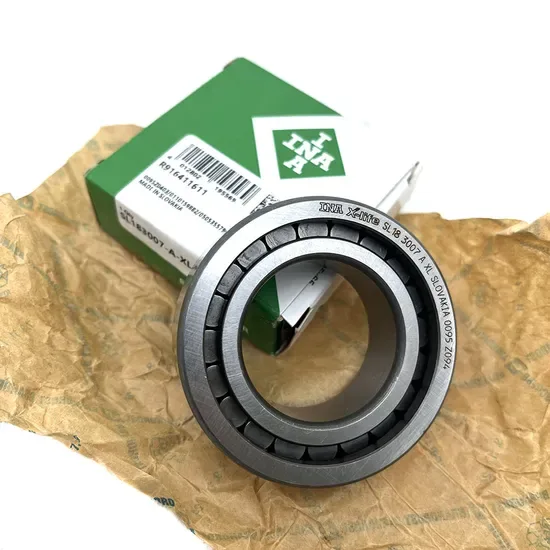
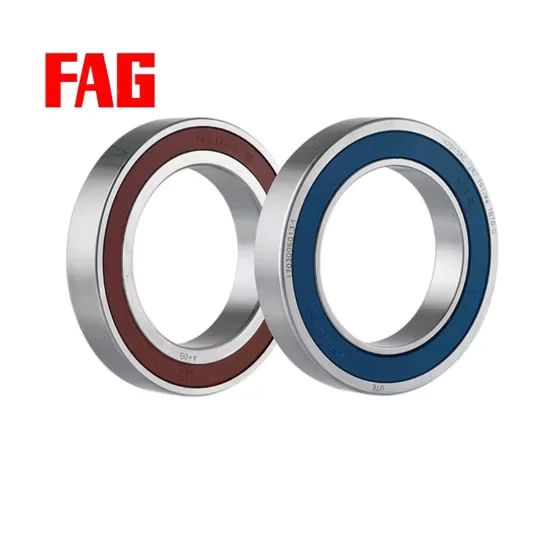

Product Details
About This INA Bearing
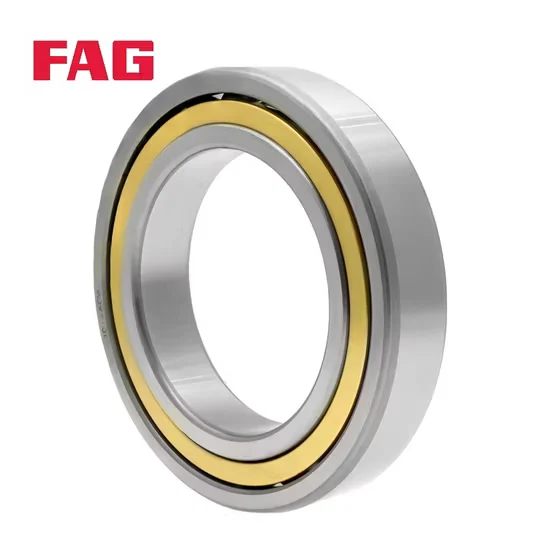
Official App Verification — Every FAG HS7004-E-T-P4s-UL angular contact ball bearing ships with a scannable QR code for instant authenticity confirmation via the manufacturer's official application.
Technical Specifications
| Parameter | Value |
|---|---|
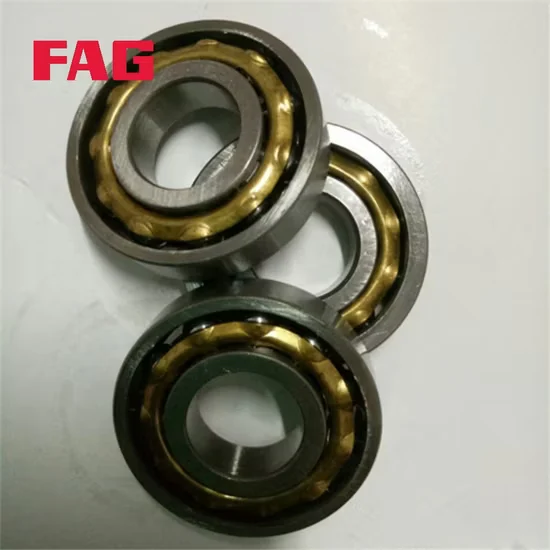
| Designation | FAG HS7004-E-T-P4s-UL |
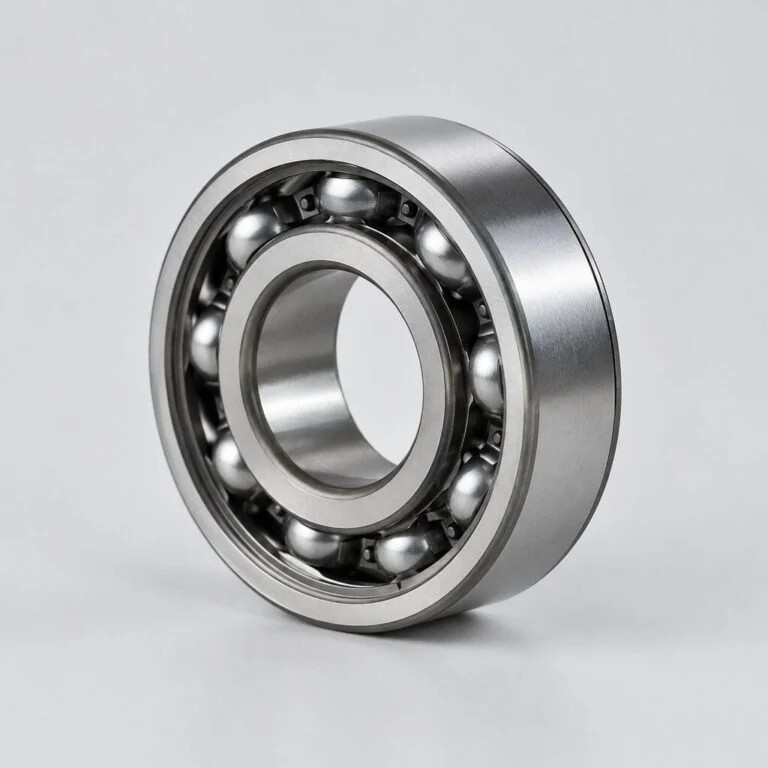
| Bearing Type | Angular Contact Ball Bearing |
| Precision Class | P4s |
| Contact Angle | 25° |
| Material | Steel |
| Number of Rows | Single |
| Origin | Jiangsu China |
Application Suitability
| Industry | Typical Applications |
|---|---|
| Machine Tool Manufacturing | High-speed motorized spindles for CNC milling and grinding centers |
| Precision Engineering | Rotary tables and indexing heads requiring tight runout control |
| Fluid Machinery | High-speed pumps demanding reliable axial thrust capacity |
Why Spindle Vibration Spikes When Ignoring the FAG HS7004-E-T-P4s-UL angular contact ball bearing Suffix Code
Substituting a precision spindle bearing with a standard grade inevitably triggers catastrophic thermal seizure under high RPMs.
Early in my career servicing machine tools in Nigeria, a facility replaced a precision spindle component with a standard tolerance alternative to cut costs. Within hours, the high-speed operation generated massive vibration and severe overheating, leading to complete shaft lockup. Such unplanned downtime completely destroys production schedules and damages expensive tooling. Matching the exact precision class and contact angle is non-negotiable for high-speed machining environments. Attempting to save marginally on initial procurement costs by ignoring strict suffix specifications inevitably triggers catastrophic thermal events that halt the entire production line.
Matching Target Operating Conditions for Precision Spindles
Sourcing the correct FAG HS7004-E-T-P4s-UL angular contact ball bearing requires strict alignment between the machine's operational demands and the component's internal geometry. Our engineering team provides comprehensive cross-reference consultation, ensuring that equivalent models from the B70 or Hcb70 series perfectly match your required clearance and cage specifications. This technical selection support prevents mismatched configurations that compromise surface finish quality during high-speed milling operations. By thoroughly analyzing your specific spindle housing dimensions and anticipated thermal expansion, we guarantee the selected component integrates flawlessly into your existing machinery without requiring extensive housing modifications.
Operational Challenges and Performance Demands in High-Speed Machining
High-speed spindles subject components to intense combined loads, where centrifugal forces drastically alter internal contact stresses and lubricant film thickness. At elevated rotational speeds, standard grease lubrication often fails to dissipate friction heat, necessitating precise oil-air or oil-mist lubrication systems to maintain thermal stability. Furthermore, microscopic contamination from machining coolants can rapidly degrade raceway surfaces if the sealing arrangement is inadequate for the specific environmental exposure. Proper installation preload is equally critical, as incorrect axial clamping forces will immediately distort the inner ring and spike operating temperatures. Neglecting these intricate thermal and mechanical interactions guarantees premature degradation of the precision raceways.
Decoding the Core Engineering Specifications
The P4s precision class dictates exceptionally tight dimensional and running accuracy, significantly reducing radial and axial runout compared to standard P5 or P4 grades. This enhanced tolerance is essential for maintaining tight surface finish tolerances during continuous high-speed cutting cycles. The 25° contact angle, designated by the E suffix, optimizes the component's axial load-carrying capacity while maintaining sufficient radial rigidity for typical spindle configurations. Constructed from high-purity steel, the single-row design minimizes internal friction and heat generation, which is vital when operating near the kinematic limits of the lubricant. Such precise geometric control ensures the spindle maintains its dynamic stiffness even under aggressive cutting feeds.
The Hidden Costs of Incorrect Precision Selection
Deploying an incorrectly specified component in a precision spindle inevitably results in premature failure and catastrophic damage to the entire spindle assembly. When running accuracy falls short of P4s requirements, the resulting vibration accelerates tool wear and produces unacceptable surface finishes on machined parts. According to failure analysis frameworks, improper internal clearance or mismatched contact angles directly cause localized stress concentrations and early fatigue spalling. Ultimately, the cost of replacing a seized spindle far outweighs the initial investment in correctly specified, fully traceable precision components. The resulting scrap rates and delayed deliveries severely impact overall manufacturing profitability.
Why Procure Your Spindle Bearings Through Our Supply Chain
We maintain massive spot inventory covering thousands of standard and special part numbers, ensuring urgent maintenance requirements for spindle rebuilds are met without typical multi-week lead times. Because specific suffix combinations dictate precise preload and cage requirements, our technical team rigorously verifies these exact meanings against the official manufacturer catalog before finalizing bulk orders. We provide flexible MOQ options, accommodating everything from single-unit emergency spare-part orders to full container consolidation shipments for large-scale machine tool builders. Every shipment includes complete traceability documentation, guaranteeing that the exact precision class reaches your facility without unauthorized substitutions. This rigorous verification process eliminates the risk of receiving mismatched components that could compromise your high-speed operations.
Documentation & Authenticity
- Official app QR code validation confirming the genuine origin of every P4s precision unit.
- Dimensional and running accuracy inspection reports verifying strict P4s tolerance compliance.
- Original material certificates tracing the high-purity steel back to the specific heat batch.
- Factory preload pairing marks documented to ensure correct mounting sequence for matched sets.
Storage, Handling & Mounting
- Keep the original factory packaging sealed until mounting to protect the P4s precision raceways from microscopic dust contamination.
- Use clean, lint-free gloves when handling the single-row steel components to prevent moisture-induced corrosion on the highly polished surfaces.
- Verify the exact axial preload requirements dictated by the specific suffix combination before applying clamping forces during spindle assembly.
- Store the 25° contact angle units horizontally in a climate-controlled environment to prevent localized brinelling from static loads.
Technical Inquiry and Selection Guidance
To ensure precise model validation, please provide your spindle's operational parameters, including maximum RPM, radial and axial loads, and operating temperature ranges. Sharing the original OEM equipment number allows our engineering team to perform accurate cross-reference checks against the B70 and Hcb70 series. We will then conduct a comprehensive L10 life calculation and recommend the optimal preload configuration for your specific high-speed machining application.
Frequently Asked Questions
Q: How do I verify the authenticity of this spindle bearing using official tools?
A: Every genuine unit features a unique data matrix code printed on the packaging. By scanning this code with the manufacturer's official mobile application, you can instantly verify the production batch, confirm the P4s precision class, and ensure the component has not been diverted through unauthorized channels. This digital traceability is crucial for preventing counterfeit parts from entering critical high-speed spindle assemblies.
Q: What does the P4s precision class mean compared to standard ISO equivalents?
A: The P4s designation indicates a specialized precision level that exceeds standard P4 tolerances, specifically targeting the stringent running accuracy required for machine tool spindles. While standard ISO classes define general dimensional boundaries, P4s focuses heavily on minimizing radial and axial runout under operational loads. This tighter control directly translates to improved surface finish quality and reduced vibration during high-speed milling and grinding operations.
Q: How should I interpret the unverified T and UL suffixes for my spindle?
A: These specific suffixes dictate critical internal configurations, such as cage material, contact angle variations, or specific universal preload levels. Because manufacturer nomenclature evolves, we strongly recommend consulting our technical team to decode these exact designations against the latest official catalog. Confirming these details ensures the replacement component perfectly matches the original factory preload and rigidity requirements of your specific spindle design.
Q: What cross-reference considerations apply when substituting B70 or Hcb70 series bearings?
A: When evaluating equivalent models from the B70 or Hcb70 series, you must meticulously align the internal clearance, contact angle, and cage material with your original specifications. Hybrid ceramic variants like the Hcb70 series offer different thermal expansion characteristics and speed capabilities compared to standard steel models. Our engineering team analyzes your specific load and speed profiles to ensure the substituted series maintains the required spindle rigidity and operational lifespan.