
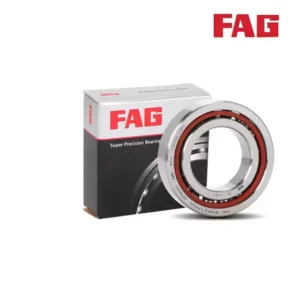
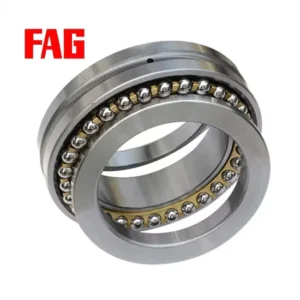
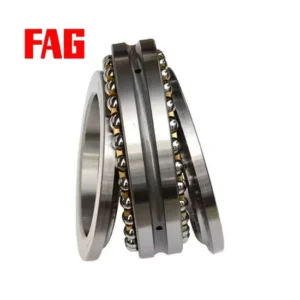
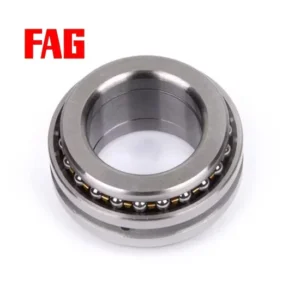
Product Details
About This INA Bearing
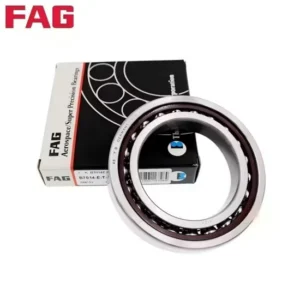
Authenticity via QR scan — Every FAG B7222-C-T-P4s-UL angular contact ball bearing we supply includes factory packaging with verifiable QR codes for immediate app authentication.
Technical Specifications
| Parameter | Value |
|---|---|
| Designation | FAG B7222-C-T-P4s-UL |
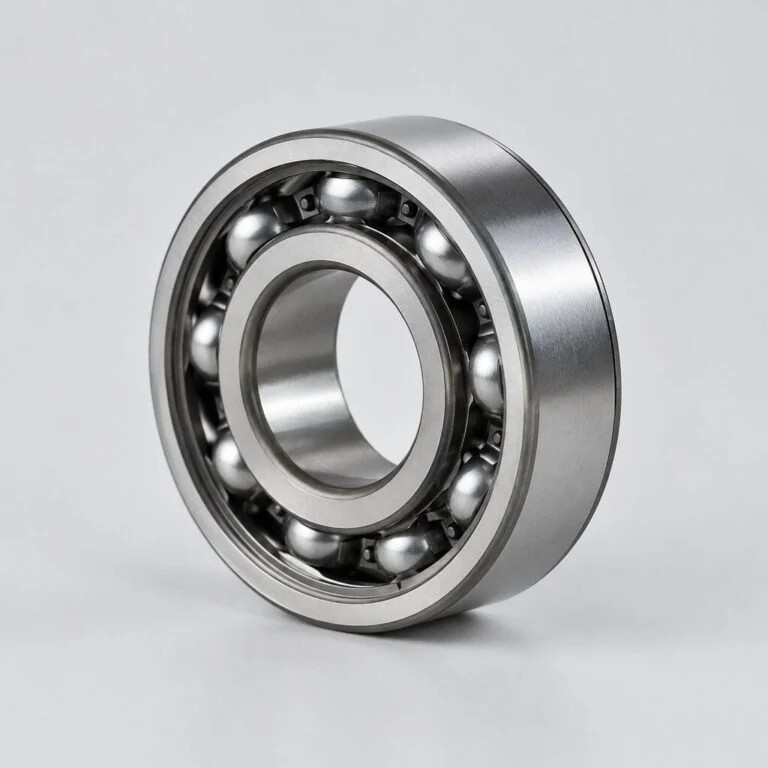
| Bearing Type | Angular Contact Ball Bearing |
| Bore Diameter (d) | 110 mm |
| Outside Diameter (D) | 200 mm |
| Width (B) | 38 mm |
| Precision Class | P4s |
| Contact Angle | 15° |
| Material | Steel |
| Certification | ISO |
Application Suitability
| Industry | Typical Applications |
|---|---|
| Woodworking & Metalworking | CNC router spindles, high-speed milling machines |
| Precision Manufacturing | Robotics joints, high-speed pumps, precision equipment |
Why Spindle Vibration Ruins Tolerances Before the FAG B7222-C-T-P4s-UL angular contact ball bearing Fails
Micro-vibrations from mismatched preload degrade surface finish long before catastrophic bearing seizure occurs.
When upgrading CNC router spindles, machinists often focus solely on runout specifications while ignoring the thermal expansion characteristics of the bearing arrangement. A slight deviation in preload causes excessive friction heat, leading to thermal growth that pushes the spindle out of alignment. This silent degradation results in scrapped parts and unplanned downtime, highlighting why precise matching is non-negotiable. Furthermore, the high rotational speeds inherent in routing operations amplify any microscopic imbalance. If the internal geometry is not perfectly suited for the application, the resulting chatter marks will immediately compromise the workpiece quality. Maintaining strict control over the installation environment and verifying the exact preload class are essential steps to prevent these hidden costs.
Matching Precision to High-Speed Routing Demands
The FAG B7222-C-T-P4s-UL angular contact ball bearing is engineered to maintain strict dimensional stability under the continuous radial and axial loads typical of CNC router spindles. Its 15° contact angle provides an optimal balance between axial rigidity and high-speed capability, reducing friction heat generation during prolonged milling cycles. Our technical team ensures that every unit supplied meets the exacting requirements of precision equipment, preventing the costly trial-and-error often associated with aftermarket replacements. By prioritizing the correct internal clearance and precision grade, we help manufacturing facilities achieve the tight tolerances required for modern aerospace and automotive component machining. This level of technical oversight ensures that the spindle operates smoothly throughout its entire expected service life.
Navigating Thermal and Contamination Challenges
Spindle environments subject bearings to extreme rotational speeds and fine particulate contamination from cutting operations. Elevated temperatures can alter internal clearance, making the initial preload selection critical for maintaining operational stability. Proper lubrication intervals and the use of high-quality spindle oil or grease are essential to prevent premature wear. Furthermore, the absence of integrated seals in this open design necessitates robust external labyrinth sealing to keep abrasive dust away from the rolling elements. Without adequate external protection, microscopic wood or metal particles can infiltrate the raceway, acting as lapping compound and rapidly accelerating surface fatigue. Regular monitoring of spindle temperature and vibration signatures is therefore highly recommended to catch lubrication breakdowns early.
Decoding the Suffix Architecture
The "C" designation confirms a 15° contact angle, which is specifically optimized for high-speed spindle applications where minimizing friction heat is paramount. The "P4s" precision class indicates tightened tolerances for both dimensional and running accuracy, ensuring minimal runout at the tool tip. This specific configuration allows for flexible back-to-back or face-to-face mounting without requiring custom shimming. Understanding these suffix nuances is vital, as substituting a standard precision bearing for a P4s grade will inevitably lead to unacceptable tool deflection during heavy cutting passes. The exact pairing specifications are strictly aligned with the manufacturer's high-speed spindle guidelines to guarantee operational stability.
The Financial Impact of Incorrect Preload Selection
Installing a bearing with the wrong preload class leads to either excessive slip or severe skidding, both of which trigger premature failure. According to ISO 15243 frameworks, inadequate preload often manifests as smearing on the raceways, eventually causing catastrophic damage to the spindle housing. Such errors not only void warranty claims but also result in extensive unplanned downtime and the replacement of adjacent mechanical components. The financial burden extends far beyond the cost of the replacement part, encompassing lost production time, expedited shipping fees for emergency spares, and the labor required to teardown and rebuild the entire spindle assembly.
Securing Traceability for Critical Spindle Components
Sourcing high-precision components requires more than just matching part numbers; it demands rigorous verification of the supply chain. We provide complete batch traceability documentation for every FAG B7222-C-T-P4s-UL angular contact ball bearing, ensuring you receive genuine manufacturer products. Our cross-reference consultation helps verify that the P4s precision and 15° contact angle perfectly align with your OEM specifications. Additionally, our flexible consolidation shipping allows you to combine this specific spindle bearing with other maintenance parts in a single shipment, optimizing your procurement logistics. By maintaining massive spot inventory of critical machine tool bearings, we significantly reduce the lead times that typically plague maintenance departments waiting for direct factory allocations.
Documentation & Authenticity
- Certificate of Conformity verifying P4s tolerance grades for this specific batch.
- Original manufacturer batch traceability records linking the bearing to its production date.
- Official app QR code authentication support to confirm genuine FAG origin.
- Dimensional and running accuracy inspection reports confirming 15° contact angle alignment.
Storage, Handling & Mounting
- Keep the universal matched set in its original factory packaging until mounting to preserve the precise preload alignment marks.
- Use clean, lint-free gloves when handling the P4s precision raceways to prevent microscopic corrosion from skin moisture.
- Employ induction heating for the inner ring installation to avoid mechanical force damage to the 15° contact angle geometry.
- Store in a climate-controlled environment to prevent thermal shock that could alter the tight P4s dimensional tolerances.
Engineering Review for Spindle Integration
To ensure optimal performance, please provide your CNC router's maximum operating speed, typical radial and axial cutting loads, and the specific spindle housing dimensions. Sharing the OEM equipment model number allows our engineering team to perform a precise cross-reference check and verify the L10 life calculation. This technical review guarantees that the selected configuration perfectly matches your machining tolerances and lubrication setup. We also evaluate the existing sealing arrangement to recommend any necessary upgrades, ensuring the new bearing is fully protected against the specific contaminants present in your workshop environment.
Frequently Asked Questions
Q: How do I verify the authenticity of the FAG B7222-C-T-P4s-UL angular contact ball bearing?
A: Every genuine unit features a unique QR code on the packaging that can be scanned using the official manufacturer app. This digital verification confirms the production batch, origin, and P4s precision class, protecting your CNC router spindle from the severe risks associated with counterfeit high-precision bearings.
Q: What does the 15° contact angle mean for my CNC router spindle?
A: The "C" suffix indicates a 15° contact angle, which is specifically designed for high-speed operations. This geometry reduces friction heat generation and provides the necessary axial rigidity for precision routing, ensuring superior surface finishes compared to larger contact angle alternatives.
Q: Why is cross-referencing critical when replacing this spindle bearing?
A: Simply matching the basic dimension is insufficient; the precision class, contact angle, and preload arrangement must align perfectly. A mismatch in the P4s tolerance or the universal preload setup can cause severe thermal growth and vibration, leading to premature spindle failure and scrapped parts.
Q: How should I handle the unverified suffixes in the designation?
A: While "C" and "P4s" are standard, suffixes like "B", "T", and "UL" may have specific manufacturer definitions regarding cage material or preload. We recommend consulting the official catalog or our technical team to confirm these details before installation to ensure full compatibility with your spindle housing.