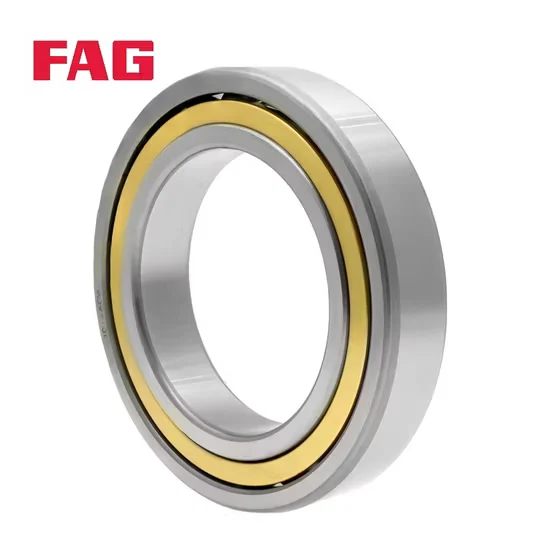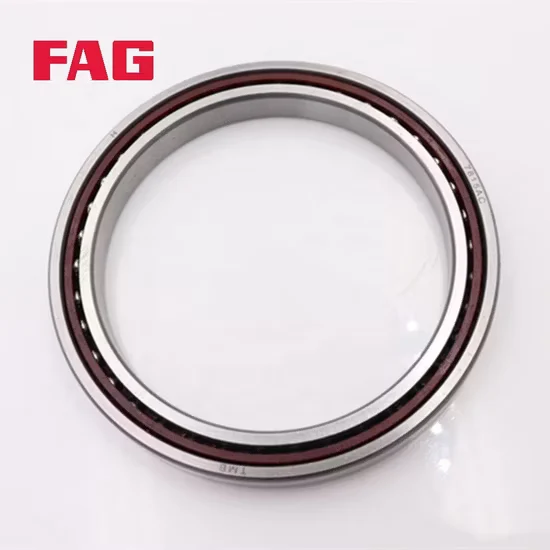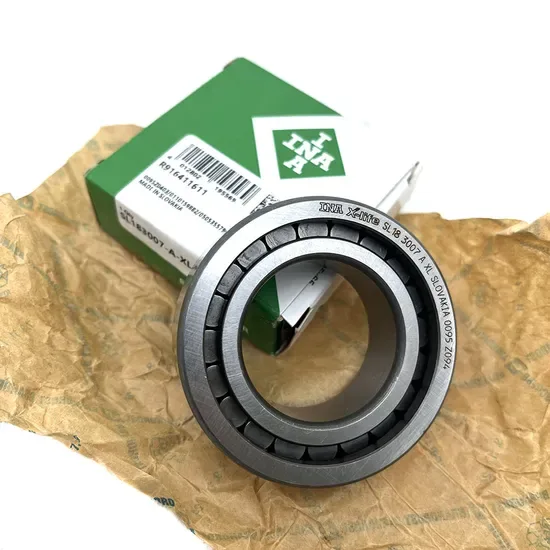
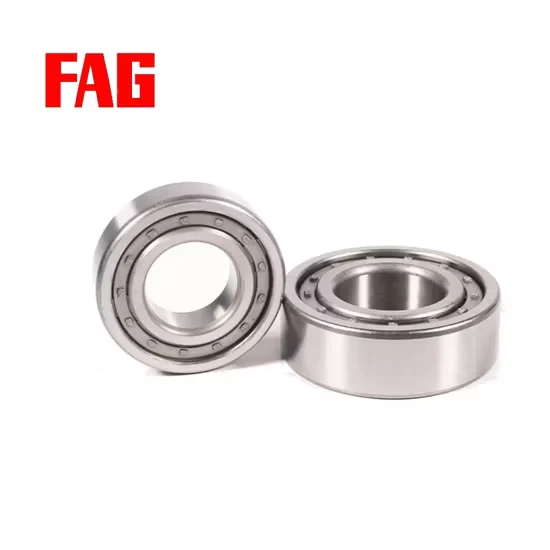
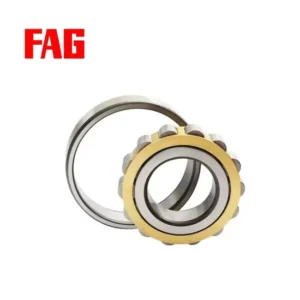
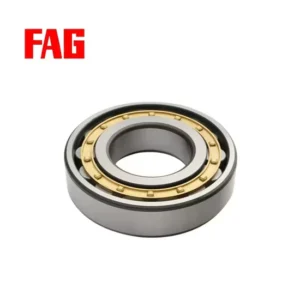
Product Details
About This INA Bearing
Original Factory Batch Traceability — Every B71938-C-T-P4s-UL spindle bearing ships with verifiable lot documentation linking directly to the manufacturer's production records.
Technical Specifications
| Parameter | Value |
|---|---|
| Designation | B71938-C-T-P4s-UL FAG |
| Bearing Type | Angular Contact Ball Bearing |
| Arrangement | Single-Row Bearing |
| Series | B719 |
| Precision Class | P4s |
| Contact Angle | 15° |
| Material | Steel |
| Certification | ISO |
Application Suitability
| Industry | Typical Applications |
|---|---|
| Machine Tool Manufacturing | High-speed milling and grinding spindle assemblies |
| Precision Equipment | Rotary tables and indexing heads requiring tight runout |
| Robotics | High-accuracy joint actuators and end-effector positioning |
Why Spindle Vibration Ruins More Than Just Surface Finish
Tighter dimensional tolerances prevent harmonic resonance at critical RPMs.
When a machine tool spindle operates at high speeds, even microscopic deviations in bearing geometry amplify into destructive vibrations. I have seen shops scrap entire batches of aerospace components because a mismatched precision class caused chatter marks on the workpiece. The resulting surface defects force costly rework and delay critical deliveries. Furthermore, inadequate precision causes excessive vibration that transfers through the machine structure, degrading the accuracy of adjacent axes and compromising the overall capability of the machining center. Selecting the correct FAG B71938-C-T-P4s-UL angular contact ball bearing ensures the rotational accuracy needed to maintain tight geometric tolerances. Without this foundational precision, the entire machining process becomes unpredictable, leading to accelerated tool wear and compromised structural integrity of the finished parts.
Matching Spindle Demands with Exact Bearing Geometry
High-speed machining requires components that perfectly balance structural rigidity with minimal friction heat generation. The 15° contact angle in this specific configuration provides the optimal compromise between axial load capacity and high-RPM thermal stability. By supplying fully traceable units, we eliminate the guesswork that often leads to premature spindle rebuilds and unexpected line stoppages. Every FAG B71938-C-T-P4s-UL angular contact ball bearing we deliver is verified to meet the exacting demands of modern CNC equipment, ensuring that your spindle maintains its machining accuracy throughout extended production runs.
Managing Thermal Expansion and Lubrication Starvation
Spindle assemblies generate significant friction heat during continuous operation, which alters internal clearances and directly affects machining accuracy. If the lubrication film breaks down under extreme centrifugal forces, metal-to-metal contact rapidly degrades the raceways and compromises the bearing's structural integrity. Proper preload settings and precise cage guidance are absolutely essential to maintain oil-air or grease lubrication pathways at elevated rotational speeds. Failing to account for these thermal dynamics results in localized overheating, which permanently alters the steel's metallurgical properties and leads to catastrophic seizure.
Decoding the Suffix Architecture for Spindle Integration
The C suffix confirms the 15° contact angle, which generates less friction heat than higher-angle variants, making it exceptionally well-suited for high-speed rotation. The P4s precision class guarantees tighter dimensional and running accuracy compared to standard grades, ensuring minimal runout in demanding spindle applications where every micron counts. Understanding these specific designations is crucial for achieving the correct preload distribution and avoiding uneven load sharing across the bearing set. Proper interpretation of the complete nomenclature ensures smooth integration into complex machine tool assemblies.
The Financial Impact of Unplanned Spindle Downtime
Installing a bearing with incorrect preload or an incompatible precision class inevitably leads to catastrophic damage to the spindle housing, motor couplings, and expensive cutting tools. The resulting unplanned downtime halts the entire production line, voiding equipment warranties and causing severe financial losses that extend far beyond the cost of a replacement component. Adhering to ISO 281 frameworks for dynamic load rating and life calculation prevents these cascading failures by ensuring the selected bearing can withstand the specific operational stresses of your machinery.
Securing Authentic Precision Components for Critical Assemblies
Counterfeit or mislabeled precision bearings introduce unacceptable risks into high-speed spindles, where even slight deviations cause immediate failure. Early in my career on the shop floor, I watched a standard precision bearing destroy a high-speed spindle simply because the clearance was mismatched. We provide complete traceability documentation for every FAG B71938-C-T-P4s-UL angular contact ball bearing, ensuring you receive genuine products that meet strict OEM specifications. Our technical team offers cross-brand equivalent model consultation and meticulously verifies suffix alignment to prevent mismatched preload configurations that ruin spindle performance. We support flexible MOQs, from single-unit emergency replacements to full container consolidations, backed by long-term after-sales failure analysis.
Documentation & Authenticity
- Certificate of Conformity verifying P4s precision class and dimensional tolerances.
- Original factory batch traceability linking the bearing to specific production records.
- Official app QR verification for authenticating the FAG B71938-C-T-P4s-UL angular contact ball bearing.
- Material inspection reports confirming the steel grade and heat treatment hardness.
- Running accuracy inspection reports validating radial and axial runout before shipment.
Storage, Handling & Mounting
- Keep the factory packaging sealed until mounting to protect the P4s precision surfaces from humidity and dust.
- Use clean, lint-free gloves when handling the bearing to prevent skin oils from corroding the steel raceways.
- Verify the matching marks before installation to ensure correct alignment for paired spindle configurations.
- Apply induction heating strictly within manufacturer limits to avoid altering the dimensional stability of the inner ring.
- Store in a temperature-controlled environment away from direct sunlight to preserve the factory-applied rust preventive coating.
Preparing Your Technical Requirements for Selection Review
To ensure optimal spindle performance and longevity, please share your specific radial and axial load profiles, operating speeds, and thermal conditions. Providing the OEM equipment model number allows our engineering team to conduct a precise cross-reference check and verify the L10 life calculation against your actual duty cycle. This comprehensive technical review guarantees the selected configuration perfectly matches your machining requirements, eliminating the risk of premature failure due to misapplied components.
Frequently Asked Questions
Q: How do I verify the authenticity of this FAG spindle bearing?
A: You can authenticate the bearing by scanning the QR code using the manufacturer's official mobile application. Additionally, we provide original factory batch traceability documents and a Certificate of Conformity that confirm the P4s precision class and genuine origin, ensuring complete transparency for your quality assurance records.
Q: What does the P4s precision class mean for my machine tool spindle?
A: The P4s designation indicates a high-precision standard with tighter dimensional and running accuracy tolerances than standard P4 or P5 grades. This enhanced precision minimizes radial and axial runout, which is critical for maintaining tight geometric tolerances and achieving superior surface finishes in high-speed milling and grinding operations.
Q: How should I interpret the unverified T and UL suffixes?
A: While the C and P4s suffixes confirm the 15° contact angle and precision class, the T and UL designations require direct verification against the manufacturer's current catalog. We recommend consulting our technical team to cross-check the exact cage material and universal flush grinding parameters before finalizing your installation and preload adjustments.
Q: What cross-reference checks are needed when replacing this bearing?
A: When replacing an existing unit, you must conduct a three-way alignment check for clearance, cage material, and precision class. Verify that the physical dimensions and suffix configurations match the original equipment specifications to prevent mismatched preload settings, which could lead to excessive heat generation and premature spindle failure.
Q: How does the 15° contact angle affect high-speed spindle performance?
A: A 15° contact angle generates significantly less friction heat compared to higher-angle variants like 25° or 40°. This thermal efficiency allows the bearing to maintain stable internal clearances and lubrication films at elevated rotational speeds, making it the preferred configuration for high-speed machine tool spindles where thermal expansion must be strictly controlled.