
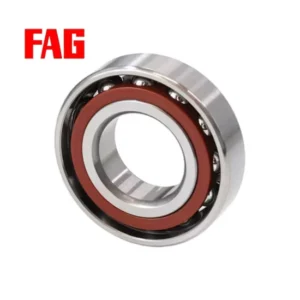
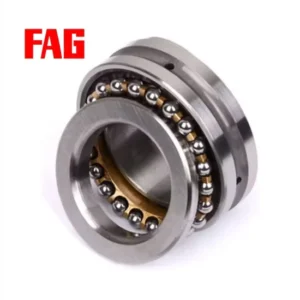
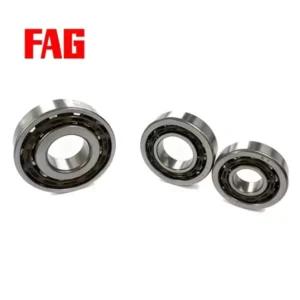
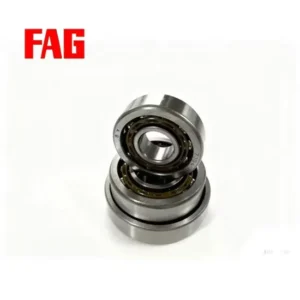
Product Details
About This INA Bearing
Unified Multi-Brand Sourcing — Consolidate this FAG spindle unit with SKF or NSK equivalents in a single shipment to eliminate multi-vendor coordination.
Technical Specifications
| Parameter | Value |
|---|---|
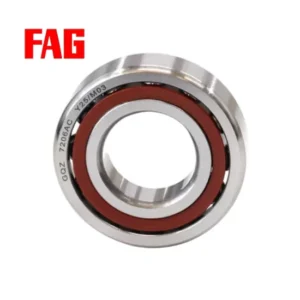
| Designation | FAG B71922-E-T-P4s-Dul |
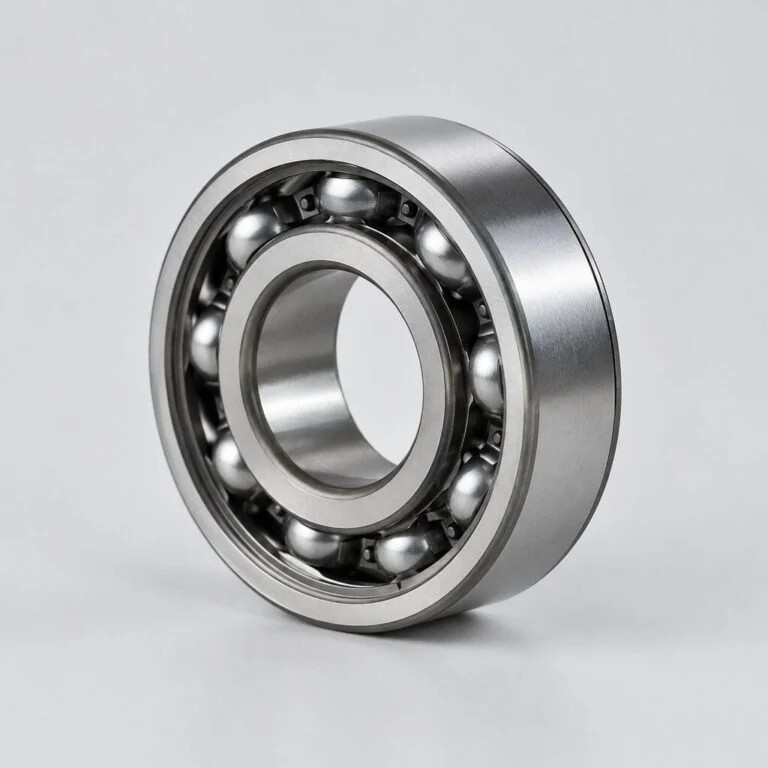
| Bearing Type | Angular Contact Ball Bearing |
| Precision Class | P4s (ISO) |
| Contact Angle | 25° (E suffix) |
| Arrangement | Single-Row |
| Material | Available in standard bearing steel, ceramic, or stainless steel variants |
| Origin | Jiangsu China |
Note: The 'T' and 'Dul' suffixes require manufacturer catalog confirmation for exact cage and pairing/preload definitions.
Application Suitability
| Industry | Typical Applications |
|---|---|
| Power Generation | Gas turbine main shaft support, generator exciter end bells |
| Machine Tools | High-speed milling spindle front and rear journal supports |
| Precision Equipment | Coordinate measuring machine rotary tables |
Thermal Shock Risks During Assembly of the FAG B71922-E-T-P4s-Dul angular contact ball bearing
Direct flame heating destroys the crystalline structure of precision races, causing irreversible dimensional drift and catastrophic runout.
I witnessed this firsthand at an African power plant where maintenance crews used open torches to force-fit a spindle bearing, resulting in severe vibration and immediate unplanned downtime. High-precision components demand strict thermal management during installation to preserve their micron-level tolerances. When the localized heat exceeds the tempering temperature of the bearing steel, the material softens permanently. This structural degradation compromises the 25° contact angle geometry under load, leading to premature fatigue and total system failure. Procurement and maintenance teams must enforce strict induction heating protocols to protect the integrity of these critical power generation assets.
Matching Spindle Rigidity to Power Generation Loads
The FAG B71922-E-T-P4s-Dul angular contact ball bearing delivers the exceptional axial rigidity required for high-speed generator shafts and precision milling spindles. In power generation environments, the equipment must endure continuous rotational forces without compromising the microscopic clearances necessary for smooth operation. By sourcing through our unified supply chain, procurement teams secure matched sets with verified batch traceability, avoiding the catastrophic runout issues caused by mixed-tolerance components. We ensure that every unit supplied meets the exact P4s precision criteria, providing the stable running accuracy that heavy-duty turbine and machine tool applications demand to maintain peak operational efficiency over extended service intervals.
Managing High-Speed Thermal Expansion and Lubrication Starvation
In power generation turbines and high-speed pumps, combined radial and axial loads generate substantial friction heat within the bearing assembly. This thermal buildup rapidly alters internal clearance, making the 25° contact angle absolutely critical for maintaining optimal load distribution across the rolling elements. Proper oil-air or oil-jet lubrication is mandatory to prevent starvation at elevated rotational speeds, while open designs or non-contact seals minimize friction-induced temperature spikes. If the lubrication film breaks down due to excessive thermal expansion, metal-to-metal contact initiates surface distress and micropitting. Engineers must carefully calculate the operating temperature envelope to ensure the selected precision class and internal geometry remain stable throughout the entire duty cycle.
Decoding the 25° Contact Angle and P4s Precision Tiers
The 'E' suffix designates a precise 25° contact angle, striking an optimal balance between axial thrust capacity and radial load support for complex spindle dynamics. Achieving P4s precision means the dimensional and running accuracy strictly adheres to ISO 492 standards, ensuring minimal vibration and acoustic noise at high RPMs. While standard bearing steel is typical for these applications, this configuration is also available in ceramic or stainless steel variants to significantly reduce centrifugal forces or resist corrosive environments. The tighter tolerance bands of the P4s class guarantee that the inner and outer rings maintain perfect concentricity, which is essential for preventing uneven load sharing and subsequent premature spalling in high-precision equipment.
The Cascading Impact of Tolerance Mismatches
Installing a standard P5 bearing instead of a specified P4s unit in a generator spindle leads to microscopic runout, rapidly accelerating seal wear and causing premature lubricant degradation. This cascading failure results in catastrophic damage to the shaft journal, excessive vibration, and ultimately voids the OEM warranty. Such unplanned downtime in a power plant costs significantly more than the initial price difference of the correct precision tier. Furthermore, the resulting misalignment transfers destructive forces to adjacent gearbox components, multiplying the repair scope and extending the outage duration. Strict adherence to the specified precision class is non-negotiable to safeguard the overall reliability of the power generation drivetrain.
Securing Traceability for High-Precision Spindle Orders
Procuring the correct FAG B71922-E-T-P4s-Dul angular contact ball bearing requires more than just matching the part number; the specific pairing and preload configuration must be perfectly aligned to prevent spindle chatter. We provide original factory batch traceability documents and rigorously verify the 25° contact angle specifications before dispatch. Our technical team cross-references OEM equipment manuals to ensure the exact preload arrangement is supplied, eliminating the guesswork that frequently leads to field failures. Because we consolidate mixed-brand orders, you can source this unit alongside other critical MRO components without coordinating multiple vendors. This unified approach ensures that every high-precision bearing arrives with complete documentation, safeguarding your maintenance schedule and operational continuity.
Documentation & Authenticity
- Certificate of Conformity verifying P4s running accuracy and dimensional tolerances.
- Original factory batch traceability linking the specific spindle set to its production date.
- Official manufacturer app QR code authentication to guarantee genuine FAG origin.
- Material inspection reports confirming the metallurgical integrity of the bearing rings.
- Dimensional and running accuracy inspection reports validating the 25° contact angle alignment.
Storage, Handling & Mounting
- Keep the matched set sealed until mounting; opening early risks losing the factory preload pairing marks on this specific arrangement.
- Use induction heaters with strict temperature controls instead of open flames to preserve the P4s raceway metallurgy.
- Store in original vapor-phase inhibitor packaging to prevent microscopic corrosion on the precision-ground raceways.
- Wear lint-free cleanroom gloves during handling to avoid transferring acidic skin oils to the high-speed contact surfaces.
- Maintain a climate-controlled environment to prevent thermal distortion of the tight P4s dimensional tolerances before installation.
Preparing Your Technical Data for Spindle Verification
To ensure the supplied unit perfectly matches your power generation or machine tool application, please share the exact radial and axial load profiles, operating speeds, and thermal conditions. Providing the OEM equipment model number allows our engineering team to perform a precise cross-reference and verify the required preload arrangement against the original specifications. This technical review guarantees the selected configuration will achieve the expected L10 life in your specific operating environment. Additionally, detailing the ambient conditions and sealing requirements helps us recommend the optimal lubrication strategy, ensuring the high-precision assembly performs flawlessly from the moment of installation through its entire service lifecycle.
Frequently Asked Questions
Q: How do I verify the authorized sourcing and batch traceability of this high-precision spindle unit?
A: We supply a Certificate of Conformity alongside original factory batch traceability documents for every order. You can also scan the QR code using the official manufacturer app to authenticate the origin. This ensures the P4s precision components are genuine and fully traceable back to the production facility.
Q: What are the specific tolerance differences between P4s, standard P4, and P2 under ISO standards?
A: Under ISO 492, P4s offers tighter dimensional and running accuracy than standard P4, specifically optimizing radial and axial runout for high-speed spindles. While P2 provides even stricter limits, P4s delivers the optimal balance of precision and cost-effectiveness for most power generation and precision milling applications without over-engineering the assembly.
Q: How do pairing and preload suffixes affect the installation of spindle bearings?
A: The pairing suffix dictates the arrangement and internal preload, which is critical for spindle rigidity. Installing them in the wrong order or losing the factory alignment marks destroys the designed preload, causing severe vibration. Always keep the set sealed and follow the marked sequence during mounting to maintain the specified contact angle geometry.
Q: What are the selection boundaries for 25° versus 15° contact angles in machine tool spindles?
A: A 25° contact angle provides higher axial load capacity and rigidity, making it ideal for heavy-duty milling and power generation shafts with significant thrust loads. Conversely, a 15° angle favors higher limiting speeds and lower friction, suiting light-load, ultra-high-speed grinding spindles where axial forces remain minimal and thermal management is the primary concern.
Q: What assembly tool requirements and heating precautions apply to high-precision angular contact units?
A: Never use open flames or uncontrolled torches, as thermal shock destroys the crystalline structure and ruins P4s tolerances. Always use calibrated induction heaters with strict temperature limits. Additionally, utilize precision mounting sleeves that apply force only to the ring being press-fitted, preventing brinelling and permanent damage to the precision raceways and rolling elements.