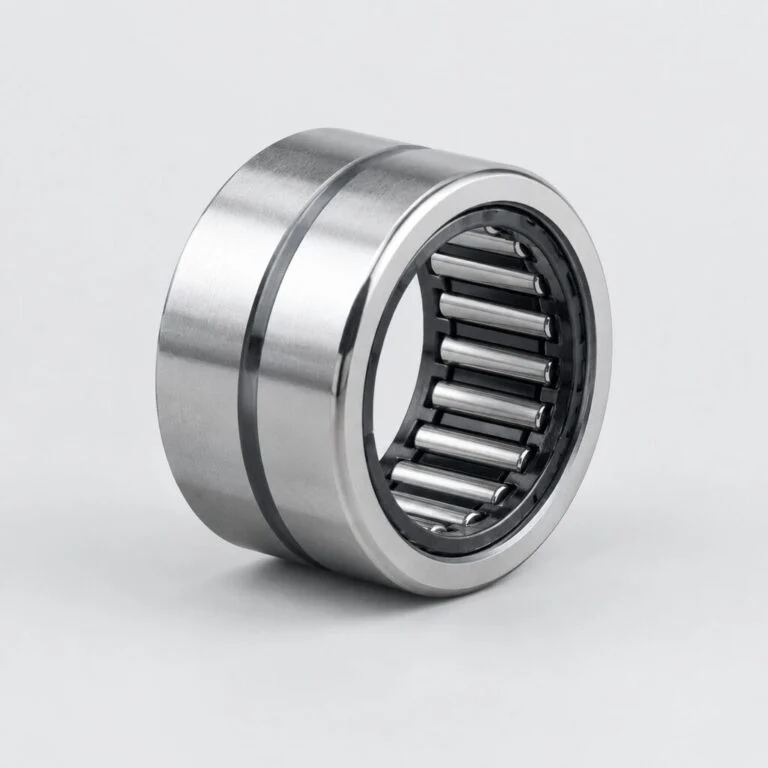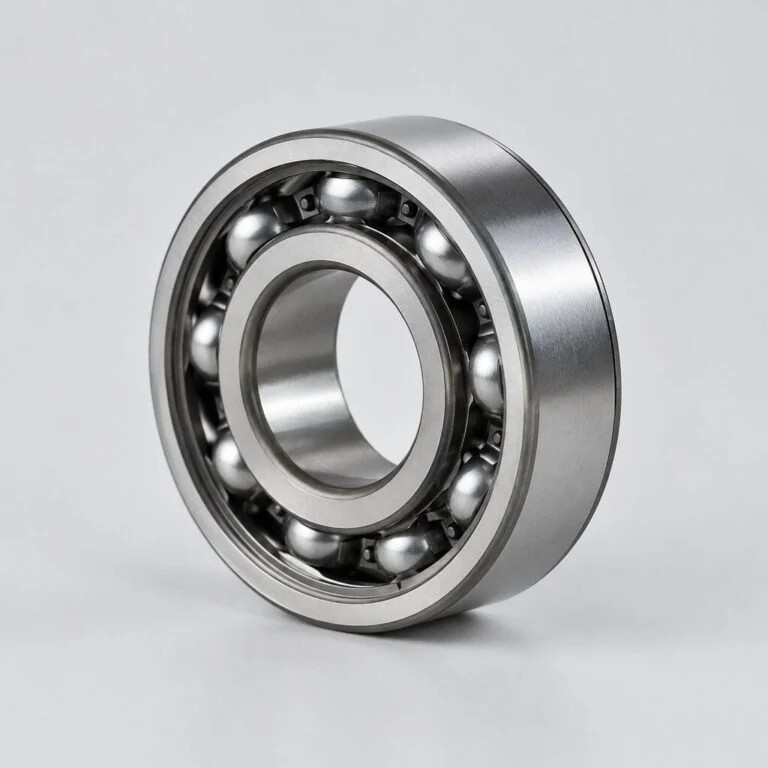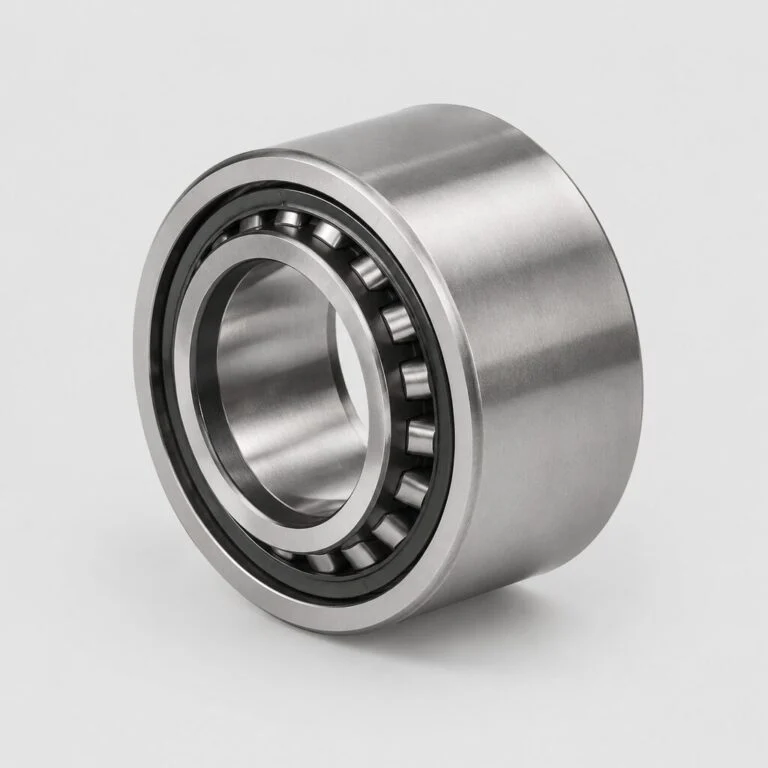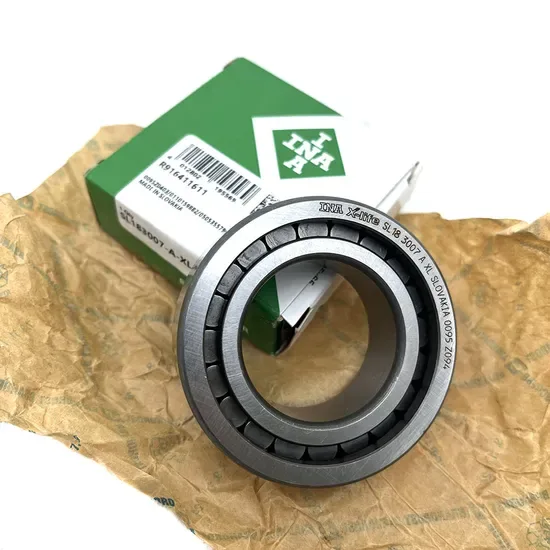


Product Details
About This INA Bearing
Original Batch Traceability — Every unit ships with factory lot documentation to verify its manufacturing origin and precision grade.
Technical Specifications
| Parameter | Value |
|---|---|
| Designation | FAG B71916-E-T-P4s-UL |
| Bearing Type | Angular Contact Ball Bearing |
| Precision Class | P4s |
| Contact Angle | 25° |
| Material Options | Ceramic Ball or Steel variants available |
| Origin | Jiangsu China |
| Certification | ISO compliant |
Application Suitability
| Industry | Typical Applications |
|---|---|
| Machine Tool Manufacturing | High-speed spindle assemblies and precision milling heads |
| Robotics | High-precision joint actuators requiring tight running accuracy |
| Precision Equipment | Optical measuring instruments and coordinate measuring machines |
Why Spindle Seizures Happen Even With P4 Precision
When sourcing a FAG B71916-E-T-P4s-UL angular contact ball bearing, engineers often assume precision class alone guarantees thermal stability.
Thermal expansion from incorrect preload or rolling element material destroys spindle clearances at high RPMs.
I have seen machine tool spindles in Nigerian workshops lock up completely during high-speed operations. The maintenance crew replaced the original ceramic hybrid setup with standard steel balls, ignoring the specific preload requirements. The resulting friction heat expanded the inner ring, eliminating the internal clearance and causing catastrophic seizure. This scenario highlights why understanding the complete designation, rather than just the basic dimension and precision grade, is critical for spindle survival. Relying solely on generic P4 replacements without matching the exact contact angle and preload configuration invites rapid thermal degradation.
Matching Spindle Dynamics With the Right Bearing Configuration
High-speed machining demands exceptional running accuracy and minimal heat generation to maintain tight tolerances on finished parts. The FAG B71916-E-T-P4s-UL angular contact ball bearing addresses these stringent requirements through its specific contact angle and precision grade. Our sourcing network ensures that mixed-brand spindle rebuild kits arrive with matched tolerances, preventing the misalignment issues that plague generic replacements. When a spindle operates at peak RPM, even microscopic deviations in running accuracy translate into visible chatter marks on the workpiece. By securing exact OEM equivalents, we help machining facilities maintain their surface finish standards and avoid costly scrap rates associated with vibration-induced tool wear.
Navigating Thermal and Load Challenges in Milling Heads
Spindle assemblies endure combined radial and axial loads while operating at extreme rotational speeds, creating a highly demanding environment for rolling elements. At these velocities, lubricant shear and rolling friction generate significant heat, which directly impacts internal clearance and preload stability. Selecting the appropriate rolling element material becomes critical, as ceramic options exhibit considerably less thermal expansion than standard steel. Furthermore, maintaining the correct oil-air or grease lubrication interval prevents cage wear and surface fatigue. If the cooling system fails or lubrication degrades, the localized temperature spikes can alter the metallurgical structure of the raceways, leading to premature spalling and loss of dimensional accuracy.
Decoding the Precision and Contact Angle Parameters
The P4s precision class ensures tight dimensional and running accuracy, which is mandatory for minimizing vibration in high-frequency milling operations and achieving superior surface finishes. A 25° contact angle provides an optimal balance, offering sufficient axial rigidity to handle thrust loads from cutting forces while maintaining high-speed capability. When evaluating material options, ceramic ball variants are noticeably lighter and reduce centrifugal forces on the outer ring raceway, extending the fatigue life of the spindle assembly compared to all-steel configurations. This weight reduction also lowers the friction generated at the ball-raceway contact points, which is essential for controlling heat buildup in grease-lubricated spindles. Understanding these specific parameters allows maintenance teams to make informed decisions during spindle rebuilds, ensuring the replacement components can withstand the rigorous demands of modern CNC machining.
The Financial Impact of Spindle Downtime
Installing an incorrect bearing variant leads to premature failure and unplanned downtime that halts entire production lines, disrupting delivery schedules and damaging customer relationships. According to ISO 15243 failure mode classifications, improper preload or material mismatch often manifests as smearing or catastrophic seizure. The resulting costs extend far beyond the replacement part, encompassing lost machining hours, scrapped workpieces, and extensive labor for spindle teardown and rebuild. In severe cases, a seized spindle can damage the motor coupling or the housing bore, turning a routine maintenance task into a major capital repair. Preventing these hidden costs requires strict adherence to the original equipment manufacturer's specifications and a reliable supply chain that guarantees component authenticity.
Securing Authentic Spindle Components Without the Markup
Sourcing genuine precision bearings often involves dealing with complex official channels with extended lead times that delay critical machine repairs. We maintain massive spot inventory covering thousands of part numbers, allowing us to consolidate mixed-brand spindle kits into single shipments to minimize freight costs. Our cross-reference alignment ensures that the precision, clearance, and cage specifications of your requested FAG B71916-E-T-P4s-UL angular contact ball bearing perfectly match the OEM requirements, eliminating the guesswork that causes field failures. By providing complete traceability and technical selection support, we bridge the gap between premium brand quality and flexible procurement needs. This approach enables maintenance managers to secure authentic, high-performance spindle components rapidly, keeping their machining centers operational and productive.
Documentation & Authenticity
- Certificate of Conformity verifying the P4s tolerance grade for this specific batch.
- Original factory lot tracing to confirm the manufacturing date for this P4s precision batch.
- Official app QR verification to authenticate the packaging and specific part number.
- Material inspection reports confirming the ceramic or steel variant supplied.
- Running accuracy inspection confirming P4s dimensional stability before dispatch.
Storage, Handling & Mounting
- Keep the P4s precision bearing in its original vacuum packaging to prevent humidity-induced corrosion on the raceways.
- Use clean, lint-free gloves when handling the ceramic ball variants to avoid skin oils contaminating the surfaces.
- Store the components in a temperature-controlled environment to prevent thermal distortion of the tight tolerance rings.
- Follow the mounting sequence to preserve the 25° contact angle preload and avoid axial misalignment.
- Apply the recommended spindle oil after unsealing to protect the open P4s bearing surfaces.
Preparing Your Technical Requirements for Review
To ensure optimal spindle performance and longevity, please share your specific operating parameters, including radial and axial cutting loads, maximum RPM, and target operating temperature. Providing the OEM machine tool model number allows our engineering team to perform a precise cross-reference check against our extensive database. This data enables us to verify the L10 life calculation and confirm the correct preload arrangement for your specific application. Additionally, detailing the lubrication method and cooling system configuration helps us recommend the most suitable material variant, ensuring the replacement bearing integrates flawlessly into your existing spindle architecture without requiring mechanical modifications.
Frequently Asked Questions
Q: How do I verify the authenticity of the FAG B71916-E-T-P4s-UL angular contact ball bearing?
A: We provide complete traceability documentation, including a Certificate of Conformity and original factory batch tracing. You can also use the official manufacturer app to scan the QR code on the packaging. This multi-layered verification ensures the P4s precision grade and material specifications are genuinely authentic before installation.
Q: What does the 25° contact angle mean for my machine tool spindle?
A: A 25° contact angle offers an excellent compromise between axial load capacity and high-speed performance. It provides sufficient rigidity to handle the thrust forces generated during milling operations while minimizing friction heat. This makes it highly suitable for precision spindle configurations that require stable running accuracy under combined loads.
Q: Should I choose ceramic balls or steel for this application?
A: Ceramic ball variants are noticeably lighter and generate less centrifugal force at high RPMs, which reduces heat and extends fatigue life. Steel variants are highly durable and cost-effective for moderate-speed applications. The final choice depends on your specific spindle speed, cooling method, and the required maintenance intervals for the machine tool.
Q: How do unverified suffixes affect the selection process?
A: Certain suffixes in this designation remain unverified and require manufacturer catalog confirmation to define exact cage materials or preload levels. We always cross-reference these specific suffixes with official technical documentation to ensure the supplied bearing matches your OEM spindle requirements, preventing installation issues or premature thermal failure.