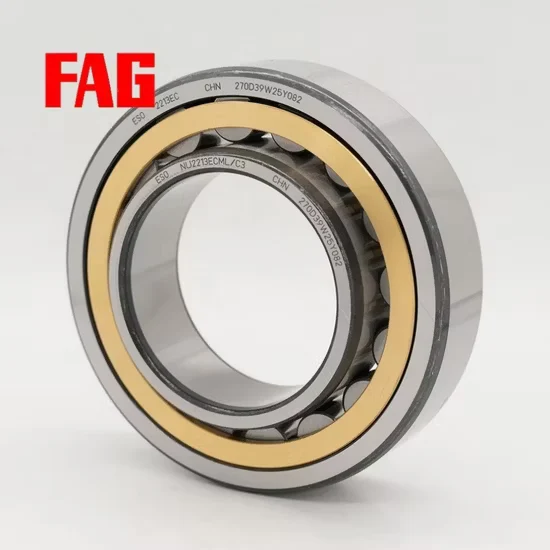
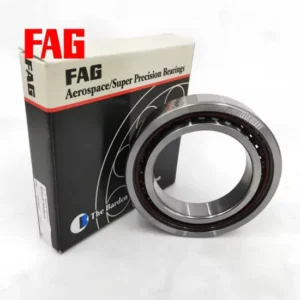



Product Details
About This INA Bearing
Mixed-Brand Sourcing — Consolidate this spindle bearing with other premium lines in a single shipment without juggling multiple vendors.
Technical Specifications
| Parameter | Value |
|---|---|
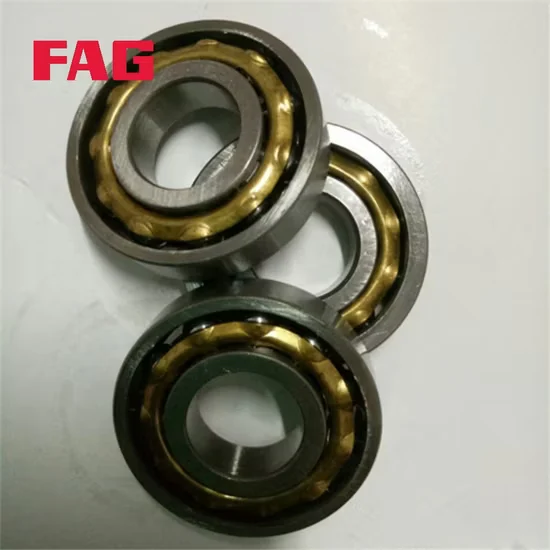
| Designation | FAG B71903-C-T-P4s-Dul |
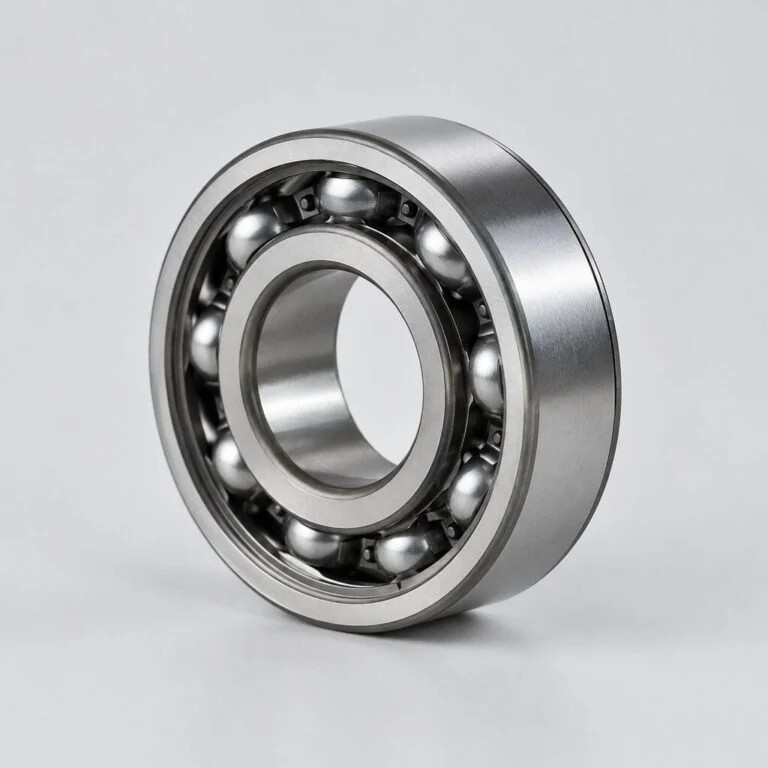
| Bearing Type | Angular Contact Ball Bearing (Spindle Bearing) |
| Series | B719 |
| Precision Class | P4s |
| Contact Angle | 15° (C) |
| Material | Steel |
| Origin | Jiangsu China |
| Certification | ISO |
Note: Suffixes T and Dul are unverified and require manufacturer catalog confirmation.
Application Suitability
| Industry | Typical Applications |
|---|---|
| Machine Tool Manufacturing | Small CNC machine spindles |
| Precision Engineering | High-speed pump shafts |
| Automation & Robotics | Precision equipment rotary joints |
Why Basic Model Substitutions Destroy Small CNC Spindles
Ignoring the full suffix string turns a high-precision component into a vibration source.
In an Ethiopian machining workshop, a client replaced a failed unit with a basic B71903C. During high-speed cutting, the vibration exceeded limits, causing severe tool wear and eventual spindle seizure. Only after strictly matching the FAG B71903-C-T-P4s-Dul angular contact ball bearing did the machine recover its accuracy and surface finish quality. Overlooking precision classes and specific pairing arrangements leads to catastrophic thermal expansion and unplanned downtime.
Aligning Spindle Demands with Bearing Capabilities
Small CNC spindles demand extreme rotational accuracy and thermal stability under continuous operation. The FAG B71903-C-T-P4s-Dul angular contact ball bearing delivers the tight tolerances required for these high-speed environments. Sourcing this exact configuration ensures the spindle maintains its rigidity under combined radial and axial cutting forces, preventing chatter marks on the finished workpiece.
Managing Thermal and Load Challenges in Machining
High-speed milling generates significant friction heat, which directly impacts internal clearance and lubrication effectiveness. A 15° contact angle optimizes the load distribution for these high-rpm scenarios, minimizing heat generation compared to steeper angles. Proper lubrication intervals are critical to prevent grease degradation and subsequent surface distress. Furthermore, maintaining a clean environment during installation prevents particulate contamination that could compromise the P4s precision class and lead to premature fatigue.
Decoding the Suffix String for Spindle Integrity
The "C" designates a 15° contact angle, which is standard for high-speed spindle applications where axial loads are moderate. The "P4s" precision class guarantees exceptionally tight dimensional and running accuracy, crucial for minimizing runout in small CNC machines. Selecting the correct cage material, such as phenolic resin or polyamide, is equally vital to accommodate thermal expansion and reduce friction during continuous high-rpm operation. Understanding these specific design parameters ensures the bearing integrates flawlessly into the spindle housing.
The Hidden Financial Drain of Incorrect Spindle Bearings
Installing a bearing with mismatched precision or incorrect preload arrangements results in unplanned downtime and scrapped workpieces. According to failure analysis frameworks, improper selection is a primary driver of premature fatigue and surface distress. The cost of replacing a seized spindle assembly and recalibrating the machine far exceeds the initial investment in the correct high-precision component, making accurate specification a critical financial safeguard.
Securing Authentic Spindle Components Globally
We maintain massive spot inventory covering thousands of standard and special part numbers, ensuring rapid dispatch for urgent maintenance. Our cross-brand equivalent model consultation helps verify substitutions when specific suffixes are discontinued or backordered. Every FAG B71903-C-T-P4s-Dul angular contact ball bearing ships with complete traceability documentation to guarantee authenticity. We provide flexible minimum order quantities, accommodating both single-unit emergency orders and full container consolidations. Our technical team offers long-term after-sales support for failure analysis and application guidance.
Documentation & Authenticity
- Certificate of Conformity verifying the P4s precision class and material grade.
- Original factory batch traceability linking the bearing to its specific production run.
- Official app QR verification to confirm anti-counterfeiting status upon delivery.
- Dimensional and running accuracy inspection reports validating tight spindle tolerances.
Storage, Handling & Mounting
- Keep the P4s precision bearing in its original packaging to prevent moisture ingress and corrosion.
- Use clean, lint-free gloves during handling to avoid transferring skin oils to the steel surfaces.
- Verify the 15° contact angle orientation marks before mounting to ensure correct load path alignment.
- Store away from direct sunlight and temperature fluctuations to preserve the factory-applied rust preventive coating.
- Follow strict cleanroom protocols during installation to protect the high-speed spindle internals from particulate contamination.
Engineering Review for Spindle Integration
Share your specific radial and axial load profiles, operating speeds, and thermal conditions so our engineers can verify the L10 life calculation. Providing the exact OEM equipment model number allows us to cross-reference the required clearance and preload arrangements. This technical review ensures the selected configuration perfectly matches your small CNC machine's operational demands.
Frequently Asked Questions
Q: How does the P4s precision class differ from standard P4 for spindle applications?
A: The P4s class typically imposes tighter tolerances on running accuracy and dimensional stability compared to standard P4. This enhanced precision minimizes spindle runout and vibration at high rotational speeds, which is critical for achieving fine surface finishes in small CNC machining operations.
Q: What does the 15° contact angle mean for my CNC spindle load capacity?
A: A 15° contact angle, denoted by the C suffix, optimizes the bearing for high-speed operation with moderate axial loads. It generates less friction heat than a steeper angle, making it ideal for small CNC spindles where thermal expansion must be strictly controlled.
Q: How can I verify the authenticity of this FAG spindle bearing?
A: Authenticity is confirmed through original factory batch traceability documents and official app QR code verification. We supply genuine products with complete documentation, allowing you to cross-check the manufacturing origin and precision grade directly against the manufacturer's anti-counterfeiting database before installation.
Q: What information do you need to cross-reference an obsolete spindle bearing?
A: Please provide the original equipment manufacturer's part number, the exact machine model, and the current bearing's physical dimensions. Our engineering team will analyze the load requirements and precision needs to identify the correct equivalent model or recommend a suitable upgrade path.