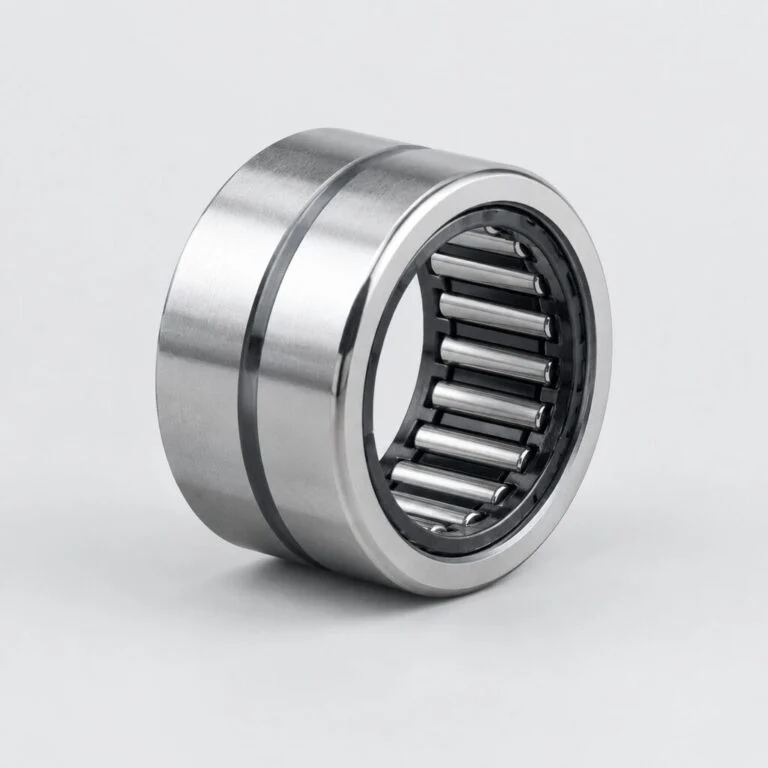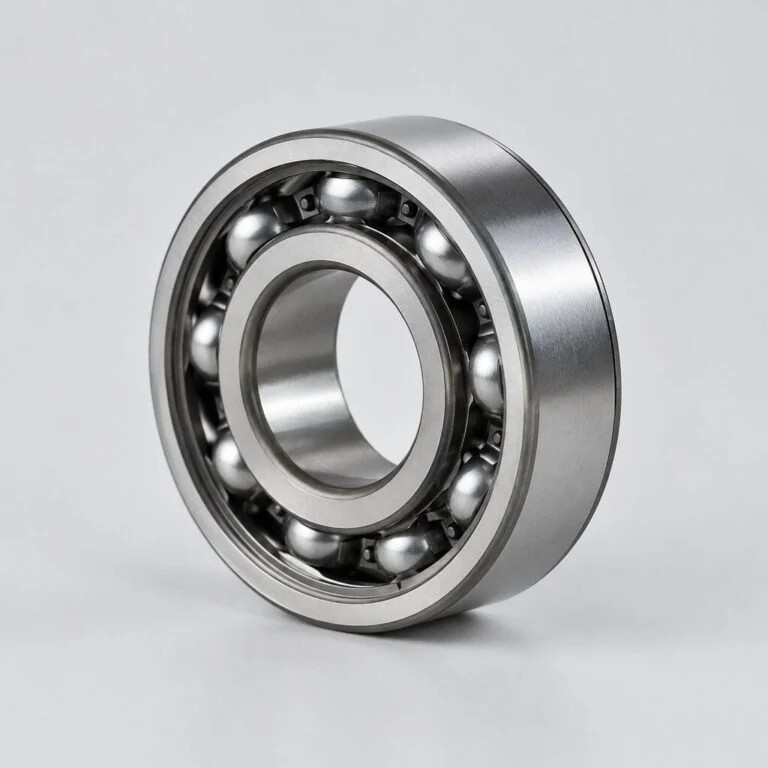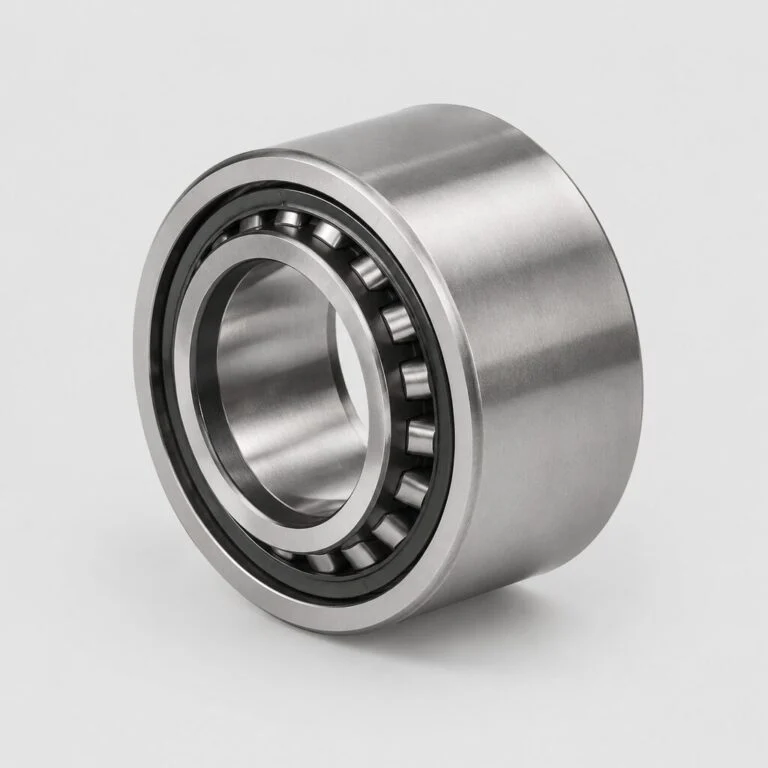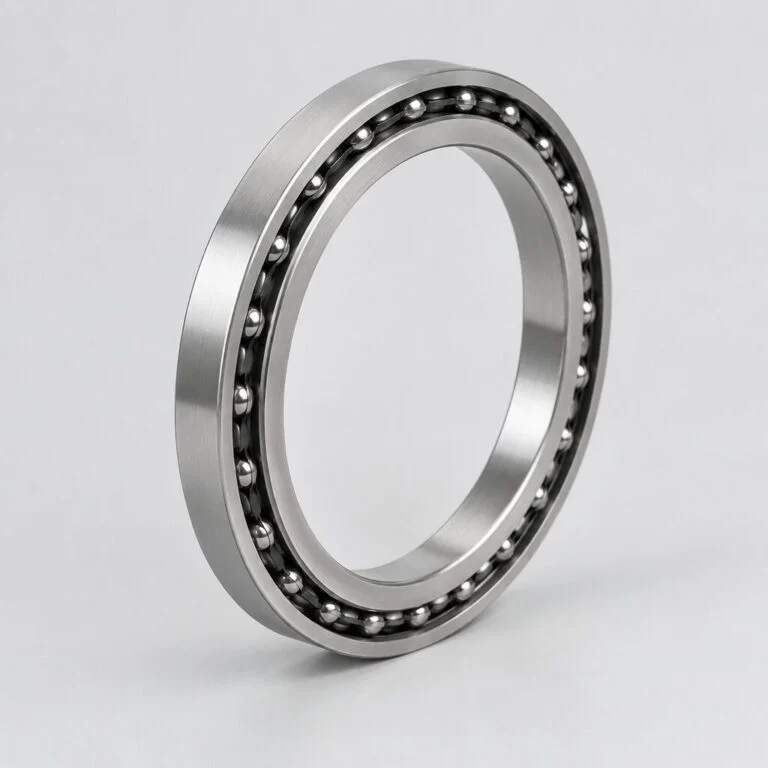


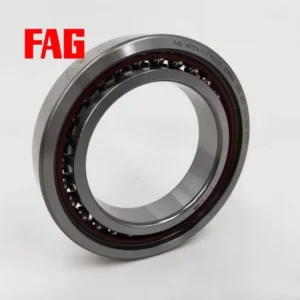
Product Details
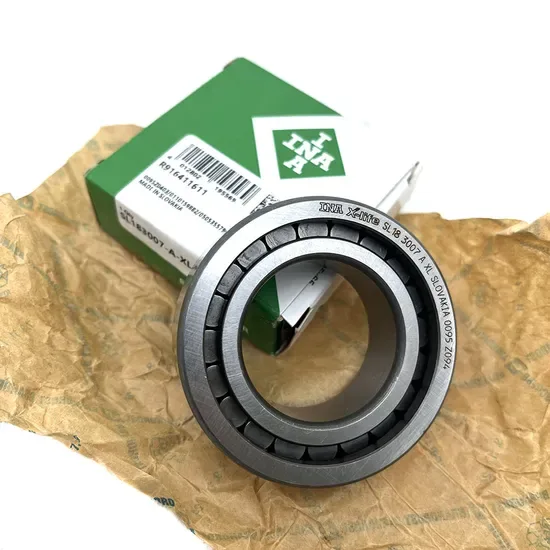
About This INA Bearing
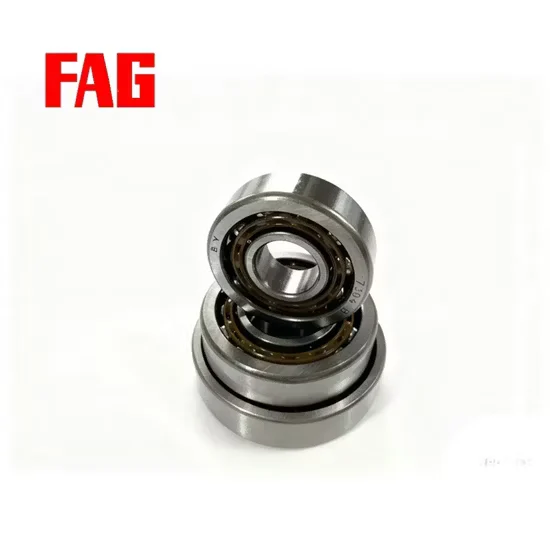
Original Batch Traceability — Every FAG B71900-C-T-P4s-Um angular contact ball bearing ships with verifiable factory lot documentation to ensure exact manufacturing lineage.
Technical Specifications
| Parameter | Value |
|---|---|
| Designation | FAG B71900-C-T-P4s-Um |
| Bearing Type | Angular Contact Ball Bearing |
| Number of Rows | Single-Row |
| Series | B719 |
| Precision Class | P4s |
| Contact Angle | 15° |
| Material | Steel |
| Standards | ISO |
| Origin | Jiangsu China |
| Customization | Available |
Note: The T and Um suffixes are unverified and require manufacturer catalog confirmation for exact specification details.
Application Suitability
| Industry | Typical Applications |
|---|---|
| Machine Tool Manufacturing | CNC router high-speed spindle assemblies |
| Precision Engineering | High-frequency milling machine spindle supports |
| Industrial Automation | Automated routing equipment rotary axes |
Why Spindle Vibration Destroys CNC Routers Before the Tool Fails
Precision mismatch in the spindle bearing causes harmonic resonance that shatters carbide end mills and ruins workpiece tolerances.
I witnessed this exact failure mode firsthand during a CNC retrofit project in Lagos, where a local workshop replaced a high-precision spindle unit with a standard commercial angular contact bearing and completely ignored the preload adjustments. The resulting harmonic chatter burned out the drive motor within days and scrapped a massive batch of aerospace aluminum components. Sourcing a genuine FAG B71900-C-T-P4s-Um angular contact ball bearing prevents these catastrophic rigidity losses and protects your expensive tooling inventory. When the internal geometry fails to match the high-frequency cutting forces, the entire machining center becomes unreliable.
Matching Spindle Dynamics to High-Speed Routing Demands
A rigid CNC router spindle demands exceptional running accuracy to maintain tight dimensional tolerances during continuous multi-axis profiling operations. The FAG B71900-C-T-P4s-Um angular contact ball bearing delivers the necessary structural stability required for these high-frequency cutting environments, ensuring that the tool tip remains perfectly centered under load. Our engineering team rigorously verifies the exact preload requirements and housing fits to ensure the spindle assembly maintains optimal stiffness under variable radial and axial cutting forces. By aligning the internal clearance with the specific thermal growth characteristics of your spindle housing, we eliminate the microscopic deflections that typically cause poor surface finishes on machined parts.
Overcoming Thermal Growth and Contamination in Router Enclosures
Spindle enclosures in woodworking and composite routing facilities face severe particulate contamination and rapid thermal cycling that degrade standard components. The 15° contact angle optimizes the internal load distribution to minimize friction heat generation during prolonged high-speed operation, preventing the grease from breaking down prematurely. Proper lubrication intervals are absolutely critical, as grease degradation at elevated temperatures directly compromises the P4s running accuracy and accelerates raceway wear. Sealing effectiveness must carefully balance friction reduction with the absolute exclusion of fine abrasive dust that infiltrates the spindle housing. Ignoring these environmental factors leads to rapid scoring of the rolling elements and unpredictable spindle runout.
Decoding the Precision and Contact Angle Parameters
The 15° contact angle is specifically engineered to accommodate the combined axial and radial loads typical in vertical CNC router spindles, providing superior axial rigidity without sacrificing rotational speed. Achieving P4s precision ensures that the inner and outer ring tolerances strictly limit radial runout, which is vital for achieving mirror-finish surface qualities on precision machined parts. The single-row configuration requires precise pairing and exact preload application during assembly to completely eliminate axial play while avoiding excessive rolling friction. Steel construction provides the necessary structural rigidity for heavy milling operations, though ceramic hybrid variants are available for applications demanding noticeably lower centrifugal forces at extreme rotational speeds. Understanding these fundamental design parameters allows maintenance engineers to diagnose spindle issues accurately before they escalate into total assembly failure.
The Financial Impact of Compromised Spindle Rigidity
Installing an improperly graded bearing leads to microscopic deflections that accelerate tool wear and trigger unplanned downtime for constant machine recalibration. According to ISO 281 fatigue life calculation frameworks, even slight deviations in applied preload can drastically reduce the operational lifespan of the entire spindle assembly. This premature failure often cascades into catastrophic damage to the precision ground spindle housing and necessitates costly motor replacements. Maintaining strict adherence to specified precision classes prevents these compounding maintenance expenses and protects your production schedule from unpredictable disruptions. When procurement teams prioritize initial cost savings over verified precision grades, the resulting scrap rates and machine downtime invariably erase any perceived financial advantage.
Securing Authentic Precision Components for Critical Assemblies
Counterfeit spindle bearings frequently exhibit substandard raceway finishing that triggers immediate vibration and unacceptable noise levels upon startup. We authenticate every FAG B71900-C-T-P4s-Um angular contact ball bearing through official manufacturer verification channels before dispatch, ensuring you receive genuine components. Our technical team cross-checks the specific P4s tolerance reports against your exact spindle housing drawings to guarantee absolute dimensional compatibility. We also consolidate mixed-brand shipments efficiently, allowing you to source complementary linear guides, ball screws, and sealing components in a single, fully documented logistics package. This comprehensive approach eliminates the coordination delays associated with managing multiple suppliers and ensures that every critical transmission component meets your stringent quality requirements.
Documentation & Authenticity
- Certificate of Conformity validating the P4s precision grade for this specific production batch.
- Original factory lot traceability documents linking the bearing to its exact manufacturing date and facility.
- Official manufacturer QR code verification confirming the authenticity of the spindle component.
- Dimensional and running accuracy inspection reports confirming tight tolerances prior to dispatch.
- Material certification detailing the metallurgical composition of the steel rings and rolling elements.
Storage, Handling & Mounting
- Retain the original vacuum-sealed packaging until installation to protect the P4s precision raceways from ambient humidity.
- Use lint-free cleanroom gloves when handling the bearing to prevent skin oils from initiating micro-corrosion on the steel surfaces.
- Apply controlled induction heating for the inner ring mounting to preserve the exact 15° contact angle alignment.
- Verify the spindle housing bore tolerances before pressing the outer ring to avoid distorting the single-row geometry.
- Follow the manufacturer's specified grease volume limits to prevent churning losses and excessive thermal buildup during high-speed router operation.
Engineering Review for Spindle Integration
Provide your complete spindle assembly drawings, including precise housing bore and shaft journal tolerances, so our engineers can verify the exact fit for this single-row configuration. Share the maximum operational speed, expected axial thrust from the router tooling, and the preferred lubrication method to confirm the absolute suitability of the P4s precision class for your specific application. Supplying the original equipment manufacturer part numbers allows us to cross-reference the exact preload and pairing requirements for your specific CNC model, preventing costly installation errors. This technical review process ensures that the bearing integrates flawlessly into your existing machinery without requiring expensive modifications to the spindle housing or shaft geometry.
Frequently Asked Questions
Q: How does the P4s precision class differ from standard P4 for CNC spindles?
A: The P4s classification enforces stricter limits on running accuracy and radial runout compared to standard P4 grades. This enhanced precision is critical for CNC router spindles, where microscopic deviations cause visible chatter marks on machined surfaces. It ensures the FAG B71900-C-T-P4s-Um angular contact ball bearing maintains tight tolerances during high-speed profiling.
Q: What does the 15° contact angle mean for my router spindle design?
A: A 15° contact angle optimizes the bearing for high-speed operation by reducing friction and centrifugal forces on the rolling elements. It provides an excellent balance between radial rigidity and axial thrust capacity, making it ideal for vertical CNC router spindles that experience significant downward cutting forces while maintaining high rotational speeds.
Q: How can I verify the cross-reference compatibility for my existing spindle?
A: To ensure compatibility, provide your current bearing designation or the OEM spindle part number. Our engineering team will cross-reference the dimensional envelope, preload requirements, and cage design. For instance, if you are replacing an H7006c P4 2rz, we will verify the exact contact angle, sealing arrangement, and precision class to guarantee an exact mechanical fit without modifying the housing.
Q: What are the critical mounting precautions for single-row spindle bearings?
A: Single-row angular contact bearings must be mounted in the correct orientation to handle axial loads properly. The spindle shaft and housing must be cleaned thoroughly to prevent particulate contamination from ruining the P4s raceway finish. Preload must be applied precisely according to the manufacturer's specifications to eliminate axial play without generating excessive friction heat.
Q: How do I determine the correct lubrication for this high-speed spindle?
A: High-speed CNC router spindles typically require specialized low-viscosity oils or high-speed greases to minimize churning losses. The optimal choice depends on your maximum RPM and the sealing arrangement of the spindle housing. Our engineering team evaluates your specific thermal profile and maintenance intervals to recommend the exact lubricant that preserves the P4s running accuracy without generating excessive friction heat.