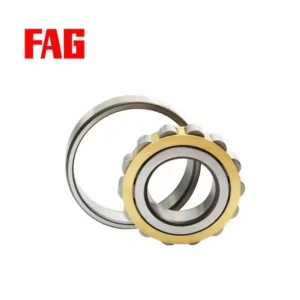
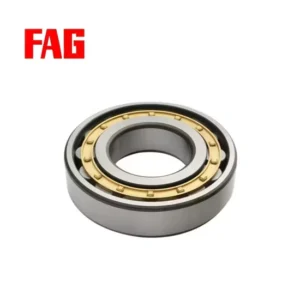
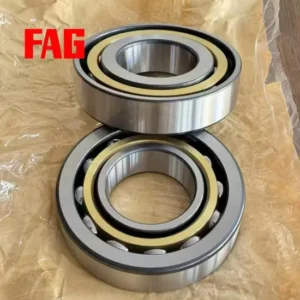
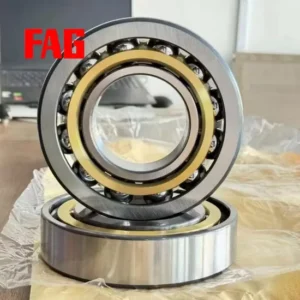
Product Details
About This INA Bearing
Verifiable Factory Lot Traceability — Every FAG B7016-E-T-P4s-Dul angular contact ball bearing ships with verifiable factory lot documentation to prevent counterfeit spindle failures.
Technical Specifications
| Parameter | Value |
|---|---|
| Designation | FAG B7016-E-T-P4s-Dul |
| Bearing Type | Angular Contact Ball Bearing |
| Bore Diameter (d) | 80 mm |
| Outside Diameter (D) | 125 mm |
| Width (B) | 22 mm |
| Precision Class | P4s |
| Contact Angle | 25° |
| Material | Available in standard steel, ceramic, or stainless steel variants |
| Certification | ISO |
| Customization | Available |
| Origin | Jiangsu China |
Note: Suffixes T and Dul remain unverified and require manufacturer catalog confirmation before finalizing spindle preload arrangements.
Application Suitability
| Industry | Typical Applications |
|---|---|
| Machine Tool Manufacturing | CNC milling machine spindles |
| Precision Engineering | High-speed pump shafts |
| Industrial Automation | Robotics joint actuators |
Why Spindle Seizures Happen Despite Using the Correct Base Model
Ignoring suffix variations in precision spindle bearings turns a high-speed asset into a catastrophic liability.
During my time repairing CNC milling machines in Nigeria and working on grinding operations, I witnessed firsthand how delicate spindle bearings truly are. On one occasion, a maintenance team substituted a standard 7016e bearing, completely overlooking critical suffix differences. This oversight caused severe vibration at high rotational speeds, ultimately leading to a seized and scrapped spindle. When sourcing a FAG B7016-E-T-P4s-Dul angular contact ball bearing, assuming interchangeability based solely on the base numeric code invites disaster. The internal geometry and preload specifications are uniquely calibrated for high-speed machining. Failing to match these exact parameters results in uneven load distribution across the rolling elements. Consequently, localized stress concentrations develop rapidly, generating excessive friction and heat that destroy the lubricant film. This chain reaction inevitably culminates in catastrophic spindle failure, halting production.
Matching Spindle Demands with Precision Engineering
Modern CNC milling spindles demand exceptional rigidity and rotational accuracy to maintain tight machining tolerances during aggressive cutting cycles. The FAG B7016-E-T-P4s-Dul angular contact ball bearing delivers the necessary axial and radial load distribution required for complex multi-axis cutting forces. Its specialized internal geometry ensures that the rolling elements maintain precise alignment, preventing micro-deflections that could otherwise ruin the workpiece surface finish. Our engineering team provides comprehensive cross-brand equivalent model consultation to ensure this specific configuration aligns perfectly with your machine tool's original design parameters. By analyzing your specific machining requirements, we confirm that the bearing's dynamic load capacity and speed limits comfortably exceed your operational thresholds, ensuring long-term reliability in demanding production environments.
Navigating High-Speed Thermal and Load Challenges
Spindle environments subject bearings to combined radial and axial loads while generating significant internal heat at elevated rotational speeds. Thermal expansion can rapidly alter internal clearance, making the initial precision class and contact angle vital for maintaining operational stability throughout the machining cycle. As the spindle accelerates, centrifugal forces push the rolling elements outward, altering the contact angle and increasing internal stress. Proper lubrication management, whether through advanced oil-air systems or specialized high-speed grease, must be strictly controlled to prevent contamination and friction-induced overheating. If the lubricant film breaks down due to thermal degradation, metal-to-metal contact occurs, accelerating wear and compromising structural integrity. Monitoring these thermal and mechanical interactions is essential for predicting maintenance intervals.
Decoding the Suffix Architecture for Spindle Stability
The designation relies heavily on its suffix sequence to define operational boundaries and performance characteristics. The "E" suffix designates a 25° contact angle, optimizing the load distribution for the combined axial and radial forces typical in heavy milling operations. This specific angle provides the necessary axial rigidity to resist thrust loads generated during plunge cutting or aggressive facing operations. Meanwhile, the "P4s" precision class indicates exceptionally tight dimensional and running accuracy tolerances, far exceeding standard industrial grades to minimize spindle runout. These strict tolerances ensure that the inner and outer rings remain perfectly concentric, preventing vibration that could transfer to the cutting tool. Together, these specific design choices ensure the rolling elements maintain precise alignment under heavy cutting loads, directly influencing the surface finish of the machined parts.
The Financial Impact of Overlooking Suffix Details
Procuring an incorrect variant might seem like a minor administrative error, but the resulting unplanned downtime severely disrupts production schedules and damages customer trust. A mismatched contact angle or inferior precision grade accelerates fatigue, leading to premature failure and catastrophic damage to the expensive spindle housing. According to the life calculation principles outlined in ISO 281, operating a bearing outside its intended geometric and precision parameters drastically reduces its calculated fatigue life. The financial burden extends far beyond the cost of the replacement bearing, encompassing lost production hours, expedited shipping fees, and the labor required to rebuild the spindle assembly. Investing in the exact specified component from the outset is the only reliable strategy to protect your capital equipment.
Securing Authentic Spindle Components Globally
Sourcing genuine precision components requires more than just locating a part number in a digital catalog. We maintain massive spot inventory covering thousands of standard and special part numbers, ensuring urgent maintenance requirements are met without prolonged delays that halt production lines. Our supply chain guarantees genuine original bearings with complete traceability documentation, protecting your equipment from the severe risks associated with counterfeit parts. Furthermore, we offer flexible order quantities, accommodating everything from single-unit emergency replacements to full container consolidation shipments for large-scale overhaul projects. Our technical support team provides long-term after-sales guidance, assisting with failure analysis and application optimization to ensure your spindle bearings perform reliably throughout their entire service life.
Documentation & Authenticity
- Certificate of Conformity verifying ISO compliance for this specific P4s precision batch.
- Original factory lot traceability documents linking the bearing to its production date.
- Official app QR verification codes to confirm authentic FAG manufacturing origins.
- Dimensional and running accuracy inspection reports confirming P4s tolerances before dispatch.
Storage, Handling & Mounting
- Keep the original packaging sealed to protect the P4s precision raceways from ambient humidity.
- Use clean lint-free gloves when handling the 80mm bore to prevent skin acid corrosion.
- Verify the 25° contact angle alignment marks before applying axial preload during mounting.
- Store in a temperature-controlled environment to prevent thermal distortion of the steel rings.
Preparing Your Technical Inquiry for Spindle Applications
To facilitate accurate technical review and selection, please provide your specific radial and axial load profiles alongside maximum operating speeds and expected temperature ranges. Sharing the original equipment manufacturer details allows our team to perform precise cross-reference verification against our extensive database. This operational data ensures the selected configuration perfectly matches your spindle's thermal and mechanical requirements, preventing costly mismatches. In return, you receive a detailed technical proposal outlining the exact specifications, expected fatigue life calculations, and recommended mounting procedures tailored to your specific machining environment.
Frequently Asked Questions
Q: How does the P4s precision class differ from standard P4 for this bearing?
A: The P4s classification enforces stricter running accuracy and dimensional tolerances compared to standard P4. This enhanced precision minimizes spindle runout and vibration at high speeds, which is critical for achieving superior surface finishes in CNC milling operations. We provide detailed inspection reports to verify these tight tolerances before shipment.
Q: What should I check when cross-referencing a standard 7016e to this model?
A: You must align three critical parameters: internal clearance, cage design, and precision class. A standard 7016e lacks the specific high-precision geometry and 25° contact angle optimization required for rigid spindle applications. Our technical team can verify these exact matching criteria to prevent premature spindle failure.
Q: How can I verify the authenticity of the received spindle bearing?
A: Every unit includes original factory lot traceability documentation and a verifiable QR code compatible with the official manufacturer app. Scanning this code confirms the production facility and batch details. We also supply a Certificate of Conformity to guarantee the component meets all required ISO quality standards.
Q: Why is the 25° contact angle preferred for milling machine spindles?
A: A 25° contact angle provides an optimal balance between axial rigidity and radial load capacity. Milling operations generate significant multi-directional cutting forces, and this specific angle ensures the bearing resists axial thrust while maintaining rotational stability. This configuration prevents deflection that could otherwise compromise machining accuracy.
Q: What information do you need to confirm the correct preload arrangement?
A: Please share your spindle's maximum rotational speed, expected operating temperature, and the required axial rigidity. These parameters dictate whether a light, medium, or heavy preload is necessary to prevent internal slippage or excessive heat generation. Our engineers will calculate the exact preload specification based on your operational data.