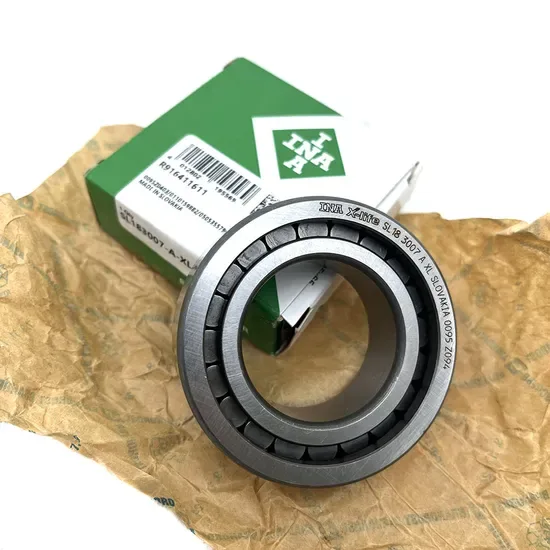
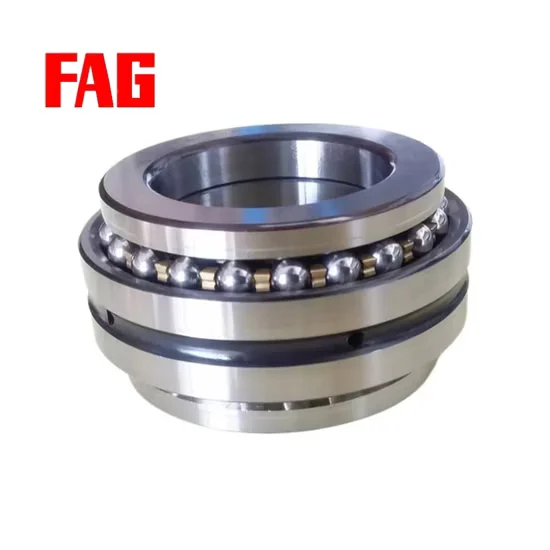



Product Details
About This INA Bearing
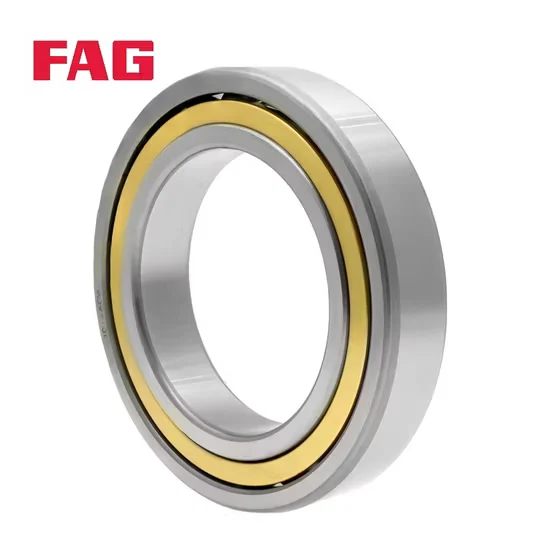
Authenticity Verification Guaranteed — Every FAG B7009-E-T-P4s-Um angular contact ball bearing ships with an intact manufacturer QR code for direct app-based origin validation.
Technical Specifications
| Parameter | Value |
|---|---|
| Designation | FAG B7009-E-T-P4s-Um |
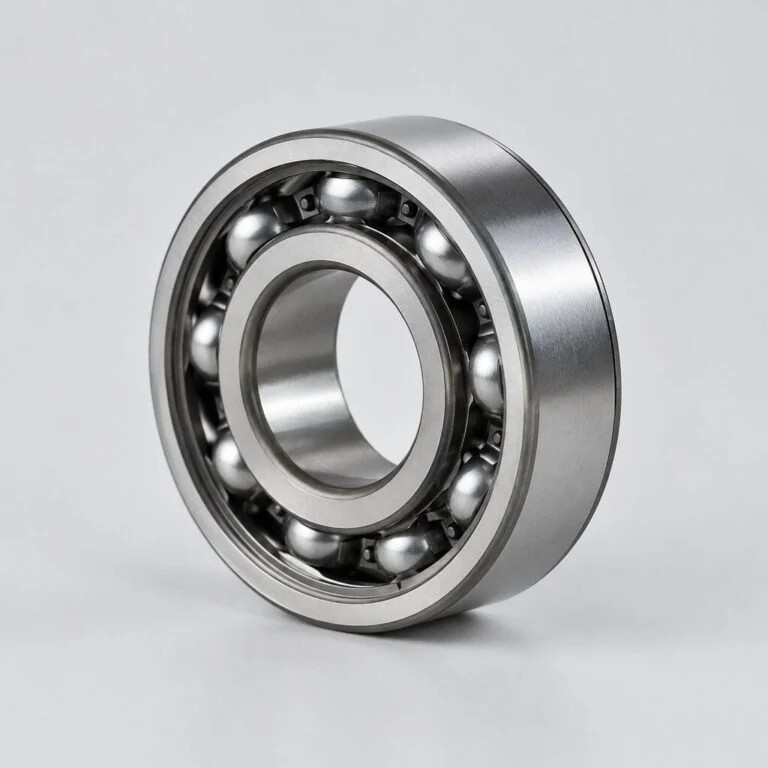
| Bearing Type | Angular Contact Ball Bearing |
| Precision Class | P4s (ISO) |
| Contact Angle | 25° (E suffix) |
| Material | Bearing steel (hybrid ceramic variants available) |
| Origin | Jiangsu, China |
| Certification | ISO compliant |
Note: The 'T' and 'Um' suffixes are unverified and require manufacturer catalog confirmation for exact cage and arrangement definitions.
Application Suitability
| Industry | Typical Applications |
|---|---|
| Machine Tool Manufacturing | High-speed motorized spindle assemblies and precision grinding headstocks |
| Precision Equipment | Rotary tables for multi-axis machining centers and coordinate measuring machines |
| Fluid Power | High-speed pump shafts requiring tight axial displacement control |
Why Spindle Vibration Spikes When Ignoring the FAG B7009-E-T-P4s-Um angular contact ball bearing Suffix Details
Mismatched preload and precision codes silently destroy spindle runout accuracy before the first workpiece is even cut.
Early in my career assembling machine tool spindles in Suzhou, I watched a high-speed test run fail catastrophically because an angular contact bearing lacked the correct pairing suffix. The vibration levels exceeded acceptable limits immediately, and tearing down the spindle revealed severe abnormal wear on the raceways. Sourcing the exact FAG B7009-E-T-P4s-Um angular contact ball bearing prevents these costly assembly rework cycles and ensures consistent machining tolerances.
Matching Precision Demands in High-Speed Machining Environments
Modern CNC spindles demand extreme rotational accuracy and thermal stability during prolonged cutting operations. The FAG B7009-E-T-P4s-Um angular contact ball bearing delivers the necessary running accuracy to maintain tight tolerances under dynamic radial and axial loads. Our engineering team cross-checks every spindle housing dimension to ensure this specific precision class integrates flawlessly into your existing machine tool architecture.
Managing Thermal Growth and Lubrication Starvation in Spindles
High-speed spindle operation generates significant friction heat, which directly impacts internal clearance and lubricant film thickness. A 25° contact angle optimally balances axial rigidity with the necessary radial support to counteract cutting forces without excessive preload stress. Proper oil-air or grease lubrication intervals must be strictly maintained to prevent cage wear and raceway smearing at elevated rotational speeds. Furthermore, preventing coolant contamination from entering the bearing arrangement is critical for preserving the P4s running accuracy over the spindle's operational lifespan.
Decoding the Engineering Behind P4s Precision and Contact Angle
The P4s precision class dictates tighter dimensional and running accuracy limits compared to standard P4, directly translating to superior surface finish on machined parts. The 'E' suffix confirms a 25° contact angle, providing an optimal load distribution profile for spindles experiencing combined axial thrust and radial cutting forces. While standard bearing steel handles most conventional machining tasks, hybrid ceramic variants are available for applications demanding higher speeds and reduced thermal expansion. This specific configuration ensures the spindle maintains its geometric alignment even when thermal gradients fluctuate during heavy roughing cycles.
The Compounding Financial Impact of Incorrect Spindle Bearing Selection
Installing an incorrect precision grade or mismatched contact angle leads to premature spindle failure and unplanned machine downtime. According to failure classification frameworks like ISO 15243, improper preload or clearance selection rapidly accelerates surface fatigue and raceway spalling. This catastrophic damage not only ruins the bearing but often scores the expensive spindle shaft and housing, voiding equipment warranties. Replacing a complete spindle assembly costs significantly more than investing in the correctly specified components from the start.
Securing Traceable Spindle Components Through Verified Supply Channels
Sourcing genuine precision bearings requires more than just matching the part number on a label. We verify the authorization and traceability documentation for every FAG B7009-E-T-P4s-Um angular contact ball bearing to guarantee original manufacturer origin. Our technical team actively prevents the common pitfall of substituting standard P4 with P4s, ensuring your spindle achieves its designed running accuracy. We maintain massive spot inventory to fulfill urgent maintenance requirements, eliminating prolonged machine idle time. Additionally, we provide cross-reference consultation for equivalent models like the Hc71908-E-T-P4s when hybrid ceramic upgrades are necessary.
Documentation & Authenticity
- Original manufacturer batch traceability codes linking directly to the production facility.
- Running accuracy inspection reports confirming P4s dimensional tolerances before dispatch.
- Official QR verification labels intact for direct authenticity validation via mobile application.
- Material certificates verifying the metallurgical composition of the bearing steel rings and rolling elements.
Storage, Handling & Mounting
- Store the P4s precision bearings in their original unopened packaging to prevent humidity-induced corrosion on the raceways.
- Maintain strict climate control in the storage area to avoid thermal shock before spindle assembly.
- Use lint-free cleanroom gloves when handling the 25° contact angle bearing to prevent skin acid etching on the polished steel surfaces.
- Follow the manufacturer's specified preload marking sequences during mounting to preserve the factory-matched arrangement integrity.
- Apply the recommended high-speed spindle grease sparingly to avoid churning losses and excessive thermal buildup during initial run-in.
Technical Review and Selection Guidance
To ensure optimal spindle performance, please share your specific radial and axial load profiles, maximum operating speeds, and target temperature ranges. Providing the original OEM equipment model number allows our engineering team to perform precise cross-reference verification and L10 life calculations. We will evaluate your machining environment to recommend the most suitable material variant and confirm the exact arrangement required for your application.
Frequently Asked Questions
Q: How does the P4s precision class differ from standard P4 for spindle applications?
A: The P4s designation indicates that the bearing meets standard P4 dimensional tolerances but features enhanced running accuracy limits. This tighter control over radial and axial runout is critical for high-speed machine tool spindles, ensuring superior surface finishes on machined parts and minimizing vibration during heavy cutting operations.
Q: What does the 25° contact angle mean for my spindle's load capacity?
A: A 25° contact angle, denoted by the E suffix, provides a balanced compromise between axial rigidity and radial load capacity. This configuration is highly effective for spindle applications that experience significant axial thrust forces from cutting tools while still requiring adequate radial support to maintain rotational stability.
Q: How can I verify the authenticity of the received spindle bearings?
A: Every genuine bearing we supply includes intact manufacturer traceability labels and QR codes. You can scan these codes using the official manufacturer mobile application to instantly verify the production batch, origin, and authenticity, ensuring you receive original components rather than counterfeit substitutes.
Q: Are hybrid ceramic options available for this specific spindle application?
A: Yes, while the standard configuration utilizes high-purity bearing steel, hybrid ceramic variants are available for applications demanding higher rotational speeds and reduced thermal expansion. Our engineering team can evaluate your specific speed and load requirements to determine if a ceramic rolling element upgrade is beneficial.
Q: What information is needed to cross-reference this bearing for an older machine?
A: Please provide the original equipment manufacturer part number, spindle housing dimensions, and the specific machining tasks the machine performs. This data allows us to verify interchangeability with equivalents like the Hc71908-E-T-P4s and ensure the replacement matches the original preload and precision requirements.