
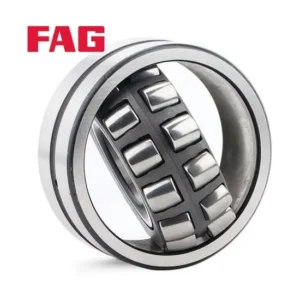
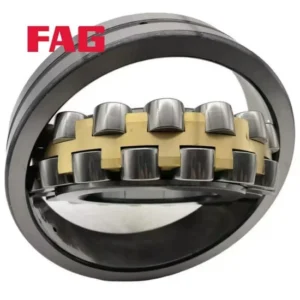
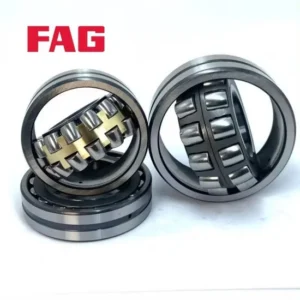
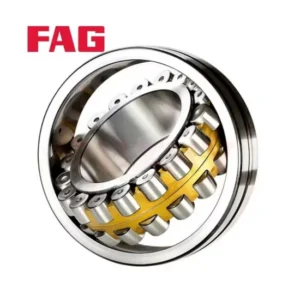
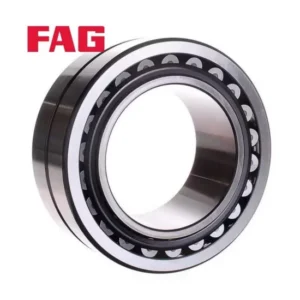
Product Details
About This INA Bearing
Mixed-Brand Sourcing Consolidation — procuring this specific unit alongside other premium lines in one shipment eliminates multi-vendor coordination delays.
Technical Specifications
| Parameter | Value |
|---|---|
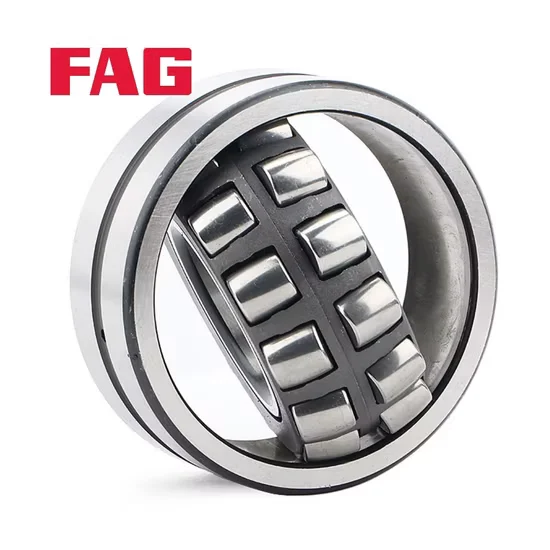
| Designation | FAG 22320-E1-C3 |
| Bearing Type | Spherical Roller Bearing |
| Number of Rows | Double Row |
| Arrangement | Self-Aligning |
| Clearance Class | C3 |
| Material | Chrome Steel Gcr15 |
| Cage Material Options | Steel / Brass / Nylon |
| Precision Class | P0, P2, P4, P5, P6 |
| Origin | Jiangsu China |
Note: The E1 suffix remains unverified and requires manufacturer catalog confirmation before finalizing the order.
Application Suitability
| Industry | Typical Applications |
|---|---|
| Mining & Aggregates | Vibrating screen eccentric shafts and jaw crusher toggle plates |
| Metallurgy | Steel mill continuous caster roll guide mechanisms |
| Pulp & Paper | Paper machine dryer cylinder drive sides |
Why Clearance Selection Dictates the Survival of Your FAG 22320-E1-C3 spherical roller bearing
Specifying the correct internal clearance prevents catastrophic thermal seizure under heavy operational loads.
During a continuous caster maintenance project in a local steel plant, substituting a standard clearance unit where a C3 was strictly mandatory led to immediate thermal expansion lock-up* radiant heat, eliminating the internal gap and halting the entire production line for emergency repairs. Such misalignments between operational heat and internal geometry cause severe edge stresses that destroy the raceway. Rolling bearing failure mode classification per ISO 15243 frequently traces these premature seizures back to ignored clearance suffixes rather than material defects. Procurement teams often overlook these critical alphanumeric designations, assuming standard replacements will suffice, which inevitably leads to disastrous mechanical failures in high-temperature metallurgy environments.
Matching the Bearing to Heavy-Vibration Environments
Deploying a genuine FAG 22320-E1-C3 spherical roller bearing ensures the double-row self-aligning geometry absorbs shaft deflections typical in vibrating screens and jaw crushers. The outer ring's spherical raceway allows the inner assembly to pivot slightly, compensating for structural flexing and minor housing misalignments that occur under continuous shock loading. Our technical team cross-checks your specific vibration frequency against the selected cage material to prevent resonance-induced fatigue. By validating the dynamic load requirements against the actual operational forces, we ensure the internal components survive the relentless impacts without suffering from localized spalling or premature cage fracture.
Operational Challenges in High-Temperature Metallurgy
Steel mill roll mechanisms subject components to extreme radial loads combined with intense radiant heat, demanding adequate internal clearance to accommodate thermal shaft expansion. Inadequate lubrication penetration in these dusty environments accelerates wear, while misaligned housings impose destructive edge stresses on the outer ring track. Selecting the appropriate cage material becomes critical to maintain structural integrity when lubrication films thin out at elevated temperatures. Furthermore, the ingress of fine metallic dust can severely compromise the rolling contact surfaces, making the selection of effective external sealing arrangements just as vital as the internal geometry itself.
Decoding the Internal Geometry and Material Options
The C3 clearance class provides the necessary thermal expansion room, preventing the rolling elements from binding when the inner ring heats up faster than the massive steel housing. Available in steel, brass, or nylon variants, the cage material must be carefully matched to the specific speed and vibration profile of the equipment. Brass cages offer exceptional durability under high-frequency vibrations, while machined steel variants provide reliable performance in moderate conditions. The self-aligning outer ring raceway distributes the load evenly across the double-row chrome steel rolling elements, significantly reducing localized stress concentrations. This structural flexibility, combined with precise P-class dimensional tolerances, ensures smooth rotation and extended service intervals in heavy-duty crusher applications.
The Hidden Costs of Ignoring Suffix Details
Overlooking the precise clearance designation inevitably leads to unplanned downtime and catastrophic damage to adjacent mechanical seals, housings, and drive shafts. When internal clearance collapses under thermal load, the resulting friction generates exponential heat, voiding warranty claims and destroying the expensive shaft surface. According to ISO 281 life calculation frameworks, operating a component outside its designated clearance envelope drastically reduces the theoretical fatigue limit. This turns a predictable, scheduled maintenance interval into an emergency breakdown that halts downstream processing. The financial impact extends far beyond the replacement part cost, encompassing lost production revenue and extensive collateral repairs.
Securing Authentic Components for Critical Machinery
Sourcing authentic premium components requires rigorous verification, especially when specific clearance classes like C3 are frequently mismatched with standard CN stock by unauthorized traders. We provide complete batch traceability for every unit, ensuring the internal geometry matches the exact operational demands of your steel mill or aggregate crusher. Our engineering support includes cross-referencing specific designations against official catalogs to guarantee dimensional compatibility before shipment. By maintaining massive spot inventory and offering flexible consolidation shipping, we eliminate the typical multi-week lead times associated with specialized MRO requirements, ensuring your critical machinery remains operational without extended procurement delays.
Documentation & Authenticity
- Certificate of Conformity verifying the C3 internal clearance class before dispatch.
- Original manufacturer batch traceability linking the specific unit to its production run.
- Official app QR verification confirming the genuine origin of the component.
- Dimensional inspection report validating the P-class precision tolerances.
Storage, Handling & Mounting
- Retain original VCI packaging until installation to protect the chrome steel surfaces from ambient humidity.
- Use induction heaters for the inner ring to preserve the factory-set C3 clearance during fitting.
- Verify housing alignment before pressing the self-aligning outer ring to prevent cage distortion.
- Apply recommended grease volumes based on the specific cage material option selected for the application.
Engineering Review and Selection Support
To finalize the optimal configuration, please share your equipment's radial and axial load profiles, operating temperatures, and shaft speeds for a comprehensive L10 life recalculation. Providing the exact OEM equipment number allows our team to perform a precise cross-reference check and verify the exact suffix compatibility. This technical validation ensures the selected unit perfectly matches your mechanical envelope and operational environment, preventing costly installation errors and maximizing the service life of your heavy-duty machinery.
Frequently Asked Questions
Q: How do I verify the authenticity of this specific unit through official channels?
A: You can scan the QR code printed on the original packaging using the manufacturer's official mobile application. This digital verification confirms the production batch, original factory location, and ensures the internal C3 clearance specification has not been altered or counterfeited by unauthorized distributors in the supply chain.
Q: What does the C3 clearance mean compared to standard CN in these applications?
A: The C3 designation indicates an internal clearance greater than the standard CN class. This extra space is mandatory in high-temperature environments like steel mills, as it accommodates the thermal expansion of the inner ring, preventing the rolling elements from binding and seizing under heavy operational heat.
Q: How should I choose between steel, brass, and nylon cages for vibrating screens?
A: Brass cages offer superior durability and resistance to high-frequency vibrations and shock loads typical in screening equipment. Steel cages are cost-effective for moderate conditions, while nylon variants provide quieter operation but are limited by temperature thresholds. The choice depends entirely on your specific vibration amplitude and thermal profile.
Q: What is the recommended relubrication interval for heavy-duty crusher applications?
A: Relubrication intervals depend heavily on the operating temperature, dust ingress, and the specific cage material installed. In high-contamination crusher environments, purging old grease more frequently prevents abrasive particle buildup. We recommend calculating the exact interval based on your specific shaft speed and environmental sealing effectiveness.