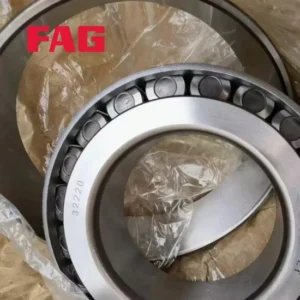


Product Details
About This INA Bearing
Original Batch Traceability — Every FAG 22240-Be-XL-K spherical roller bearing shipped includes factory lot documentation linking directly to the manufacturer's production records.
Technical Specifications
| Parameter | Value |
|---|---|
| Designation | FAG 22240-Be-XL-K |
| Bearing Type | Spherical Roller Bearing |
| Structure | Double Row, Self-Aligning |
| Bore Type | Tapered 1:12 (K suffix) |
| Main Material | Bearing Steel (Chrome Steel Gcr15 or stainless steel variants available) |
| Origin | Jiangsu China |
Note: The 'Be' and 'XL' designations in this specific part number remain unverified against current manufacturer catalogs and require direct technical confirmation prior to final order placement.
Application Suitability
| Industry | Typical Applications |
|---|---|
| Mining & Aggregates | Vibrating screen exciter mechanisms, primary jaw crusher eccentric shafts |
| Pulp & Paper | Paper machine dryer cylinder journal supports, press roll bearings |
| Metals Processing | Steel mill continuous casting machine guide rolls, rolling mill work rolls |
Why Shaft Misalignment Destroys Heavy-Duty Spherical Roller Bearings
Self-aligning capability only compensates for static housing errors, not dynamic shaft deflection under extreme radial loads.
In heavy-equipment maintenance, assuming a self-aligning design forgives all installation sins leads to catastrophic edge loading. I once dealt with a continuous casting machine where improper clearance selection caused the inner ring to seize under thermal expansion, forcing maintenance crews to use torches that severely scarred the shaft journal. Relying purely on the self-aligning feature of a FAG 22240-Be-XL-K spherical roller bearing without addressing dynamic deflection and thermal growth invites premature fatigue.
Matching the Bearing Profile to Severe Industrial Environments
When specifying a FAG 22240-Be-XL-K spherical roller bearing for vibrating screens or crusher eccentrics, the double-row configuration manages heavy combined loads while accommodating housing misalignment. Our sourcing network ensures that the exact internal geometry and cage design match the severe shock loads typical in aggregate processing. Procuring genuine units with verified metallurgical properties prevents the micro-cracking often seen in counterfeit alternatives operating under high-cycle vibration.
Navigating Thermal Growth and Lubrication Starvation
High-temperature environments in steel mills drastically alter internal operating clearance as the inner ring expands faster than the outer ring. If the initial clearance is too tight, thermal expansion eliminates the operational gap, leading to excessive friction and eventual seizure. Adequate lubrication flow through the outer ring oil grooves is critical to flush out metallic wear debris and maintain a stable hydrodynamic film. Selecting the correct initial clearance class is non-negotiable to accommodate these thermal gradients and prevent lubricant degradation.
Decoding the Tapered Bore and Internal Geometry
The 'K' suffix indicates a 1:12 tapered bore, which is essential for achieving precise radial internal clearance during mounting on adapter sleeves. This tapered fit allows maintenance teams to measure the drive-up distance and check residual clearance, ensuring the bearing is neither too loose nor dangerously tight. The fundamental double-row self-aligning structure, available in standard chrome steel Gcr15 or stainless steel variants, provides the necessary wear resistance for harsh, particulate-heavy environments.
The Financial Impact of Incorrect Clearance Selection
Specifying a standard clearance variant for a high-temperature application results in unplanned downtime when thermal expansion causes the bearing to bind. This catastrophic damage often extends beyond the bearing itself, destroying expensive shaft journals and housing seals. According to established reliability frameworks, a significant share of premature failures stems directly from ignoring the thermal and load-induced deflection parameters during the initial selection phase. The resulting warranty voidance and emergency freight costs easily dwarf the initial procurement savings.
Securing Genuine Components for Critical Machinery
Sourcing heavy-duty bearings requires strict verification to avoid the devastating consequences of counterfeit metallurgy. We provide complete factory batch traceability for every FAG 22240-Be-XL-K spherical roller bearing, ensuring the internal clearance and cage materials match the OEM specifications. Our technical team actively reviews cross-reference alignments, specifically checking that the tapered bore dimensions and clearance classes suit your exact operating temperatures. We consolidate mixed-brand shipments efficiently, offering flexible order quantities from single emergency spares to full project containers without compromising documentation integrity.
Documentation & Authenticity
- Original factory batch traceability documents linking the specific heat number to the production facility.
- Official manufacturer app QR code verification confirming the genuine origin of the tapered bore bearing.
- Material inspection reports validating the chrome steel Gcr15 chemical composition and hardness profiles.
- Dimensional and running accuracy inspection reports confirming the 1:12 taper tolerances before dispatch.
Storage, Handling & Mounting
- Retain the original vapor-phase corrosion inhibitor packaging until mounting to protect the precision-machined 1:12 tapered bore.
- Use induction heaters with automatic demagnetization to mount the inner ring, avoiding localized hot spots that alter the chrome steel microstructure.
- Measure the drive-up distance and check residual radial clearance continuously during adapter sleeve tightening to prevent internal preload.
- Apply clean, lint-free gloves when handling the exposed outer ring oil grooves to prevent particulate contamination before lubrication.
Engineering Review and Technical Alignment
To ensure the selected configuration perfectly matches your machinery, please share the specific radial and axial load profiles, operating speeds, and ambient temperature ranges. Providing the OEM equipment serial numbers allows our engineering team to perform a thorough cross-reference check and verify the required internal clearance class. This technical review guarantees that the final specification accounts for thermal expansion and dynamic shaft deflection, optimizing the service life of the installation.
Frequently Asked Questions
Q: How do I verify the authenticity of the FAG 22240-Be-XL-K spherical roller bearing upon delivery?
A: Every genuine unit includes original factory batch traceability documentation and a unique identification code. You can scan the official manufacturer app QR code directly on the packaging to verify the production origin, heat number, and dimensional specifications, ensuring the component meets strict metallurgical standards before installation.
Q: What is the significance of the K suffix in this specific part number?
A: The K suffix designates a 1:12 tapered bore, which is crucial for mounting the bearing on adapter sleeves or tapered shaft journals. This design allows maintenance technicians to precisely control the radial internal clearance during installation by measuring the drive-up distance, ensuring optimal load distribution and preventing premature failure.
Q: Why is internal clearance selection critical for continuous casting machine applications?
A: In high-temperature environments like steel mills, the inner ring expands significantly more than the outer ring. If the initial clearance is too tight, thermal growth eliminates the operational gap, causing excessive friction, lubricant breakdown, and eventual seizure. Selecting a larger internal clearance class accommodates this thermal expansion and maintains stability.
Q: Can this bearing be cross-referenced to other premium brands?
A: Yes, this configuration can be cross-referenced to equivalent models from other premium global brands, such as the 22240-B-K-MB-C4 or 22240-E1-a-MB1-C3 variants. However, it is essential to verify that the internal clearance class, cage material, and tapered bore dimensions perfectly align with your specific operating conditions before substituting the original specification.