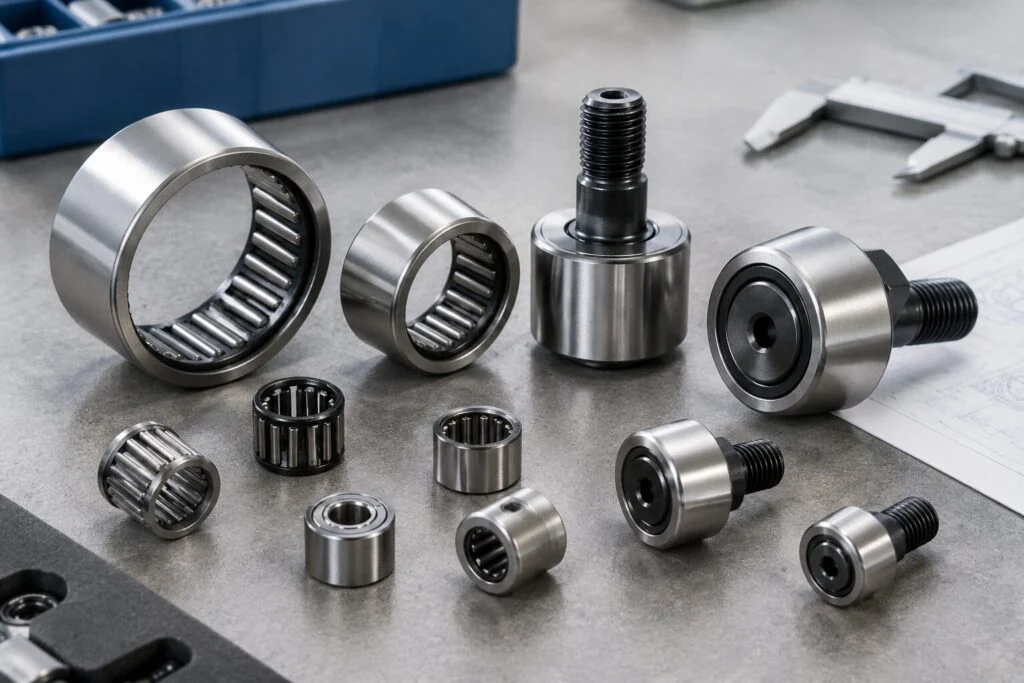
INA Needle Bearings Wholesale Supplier: Genuine Stock & Bulk Orders
Packaging is not just protection; it is the primary anti-counterfeit tool.
Authentic INA needle bearing packaging serves as the critical first line of defense against counterfeit components, ensuring full traceability and preventing catastrophic heavy-load failures in industrial machinery. Verifying the original box, holographic labels, and accompanying documentation is mandatory before acceptance, as repackaged or bulk-loose bearings void warranties and introduce contamination risks that lead to premature equipment downtime.
I still remember the humidity in Dubai during a particularly harsh summer. A procurement manager at a large packaging facility had decided to cut costs by sourcing a batch of cheap needle roller bearings from an unauthorized trader. The savings looked impressive on the spreadsheet. But within months, the keepers in the heavy-load conveyors began to shatter. The entire production line halted for weeks. The cost of replacing the damaged machinery and lost output dwarfed the initial savings by a massive margin. That incident was a brutal lesson in industrial reality: fake bearings are not just inferior products; they are operational liabilities. Since then, I have focused on supplying genuine components to MRO and heavy industry clients across the Middle East and beyond, ensuring that every shipment arrives with its identity intact.
Understanding how to distinguish genuine stock from counterfeit or improperly handled goods is essential for any buyer managing critical infrastructure. The following guide details the verification processes and risks associated with INA needle bearing packaging.
Why Does INA Needle Bearing Packaging Matter for Heavy Loads?
Original packaging guarantees proper lubrication retention and prevents micro-corrosion during storage and transit.
Many buyers assume that the box is merely a container for shipping convenience. This is a dangerous misconception. For precision components like needle roller bearings, the packaging is an engineered part of the product system. It maintains the specific pre-lubrication applied by the manufacturer and protects the hardened steel surfaces from atmospheric moisture and contaminants. [NEED_CITE: impact of improper storage on bearing corrosion per ISO standards]
In heavy equipment applications, such as mining crushers or construction excavators, the bearings operate under extreme stress. If the original protective coating is compromised due to poor packaging, microscopic corrosion pits form on the raceways. These pits act as stress concentrators, leading to early fatigue failure. I have seen batches of bearings that looked pristine upon visual inspection but failed prematurely because they had been stored in non-climate-controlled warehouses without their original vapor-corrosion inhibitor (VCI) paper.
The material specifications of the original box are designed to withstand specific environmental conditions. Using substitute packaging often means losing this protective barrier. For global distributors, maintaining the integrity of INA needle bearing packaging is not about aesthetics; it is about preserving the mechanical integrity of the component until the moment of installation.
How to Verify Authentic INA Packaging and Traceability Docs?
Check holographic labels, scan QR codes, and match batch numbers with certificates to confirm authenticity.
Verifying the genuineness of your supply requires a systematic approach. Counterfeiters have become sophisticated, often replicating the look of the box while neglecting the digital traceability features. Here is the standard verification protocol:
- Inspect the Holographic Label: Genuine packages feature a high-quality holographic seal that changes appearance when tilted. Counterfeit labels often appear flat or lack the intricate light-refraction patterns.
- Scan the QR Code/Barcode: Use a standard scanner to read the code on the package. It should direct you to the official brand verification portal or display detailed product information consistent with the item inside. [NEED_CITE: official brand guidelines for digital verification]
- Match Batch Numbers: The batch number printed on the bearing ring must match the number on the box and the accompanying certificate of conformity. Any discrepancy indicates tampering or mixing of parts.
- Review Documentation: Authentic shipments include full traceability documents. For wholesale orders, these documents are crucial for customs clearance and quality audits. Missing or vague paperwork is a major red flag.
A European wind farm operator once rejected a shipment because the batch numbers on the certificates did not align with the boxes. Upon investigation, it was revealed that the supplier had mixed old stock with new arrivals to fulfill the order quantity. This inconsistency could have led to unpredictable performance in the turbine gearboxes. By strictly enforcing these checks, buyers ensure they receive INA needle bearing packaging that meets the highest standards of accountability.
What Are the Risks of Repackaged or Bulk INA Bearings?
Repackaging voids warranties and introduces significant contamination risks that compromise bearing life.
Some suppliers offer "bulk" or "repackaged" bearings at a lower price, claiming they are genuine but sold without original boxes to save on freight. This practice is fraught with risk. When bearings are removed from their original sealed environment, they are exposed to dust, moisture, and handling damage.
| Risk Factor | Original Packaging | Repackaged/Bulk Loose |
|---|---|---|
| Contamination Control | Sealed with VCI protection | Exposed to ambient air and dust |
| Traceability | Full batch-level verification | Often lost or incomplete |
| Warranty Status | Fully valid | Voided by most manufacturers |
| Physical Protection | Rigid, custom-fit structure | Generic, often inadequate padding |
[NEED_CITE: warranty terms regarding repackaged industrial components]
I recall a wholesale distributor in Southeast Asia who faced severe customs delays because his repackaged bearings lacked the original traceability documents required for import clearance. The goods were held for days, incurring storage fees and delaying delivery to end-users. More critically, field failure rates for repackaged bearings are exponentially higher due to the introduction of foreign particles during the repacking process. For critical applications, the slight cost saving is never worth the potential for unplanned downtime. Ensuring your supply chain respects the integrity of INA needle bearing packaging is a non-negotiable aspect of risk management.
How to Ensure Proper Packaging for Global Shipping?
Use moisture-proof materials and rigid outer boxes to prevent transit damage and maintain product integrity.
Even genuine bearings can be compromised if the outer shipping logistics are poor. Global shipping involves multiple handovers, varying climate zones, and potential rough handling. To ensure that the INA needle bearing packaging arrives in perfect condition, several measures must be taken.
First, the inner original boxes should be packed in sturdy outer cartons that resist crushing. Palletization should be secure to prevent shifting during transit. Second, moisture control is vital. For shipments passing through humid regions or sea freight, additional desiccants and shrink-wrapping are recommended to create a barrier against salt air and humidity. [NEED_CITE: best practices for maritime shipping of precision metal components]
A Middle East MRO buyer once received a container where the outer boxes were crushed due to improper stacking. While the inner bearing boxes were intact, the stress on the packaging raised concerns about internal damage. We implemented stricter palletizing protocols and reinforced corner protection for subsequent shipments. This attention to detail ensures that the technical specifications of the bearings remain unaffected by the journey. For buyers sourcing from global suppliers, verifying the shipping packaging standards is as important as checking the product itself.
Conclusion
Authenticity verification starts with the box.
Protecting your industrial operations requires more than just selecting the right part number; it demands vigilance throughout the supply chain. By prioritizing genuine INA needle bearing packaging, verifying traceability documents, and rejecting repackaged goods, buyers safeguard their equipment against premature failure and costly downtime. Trust is built on consistency, and that consistency begins with unbroken packaging.