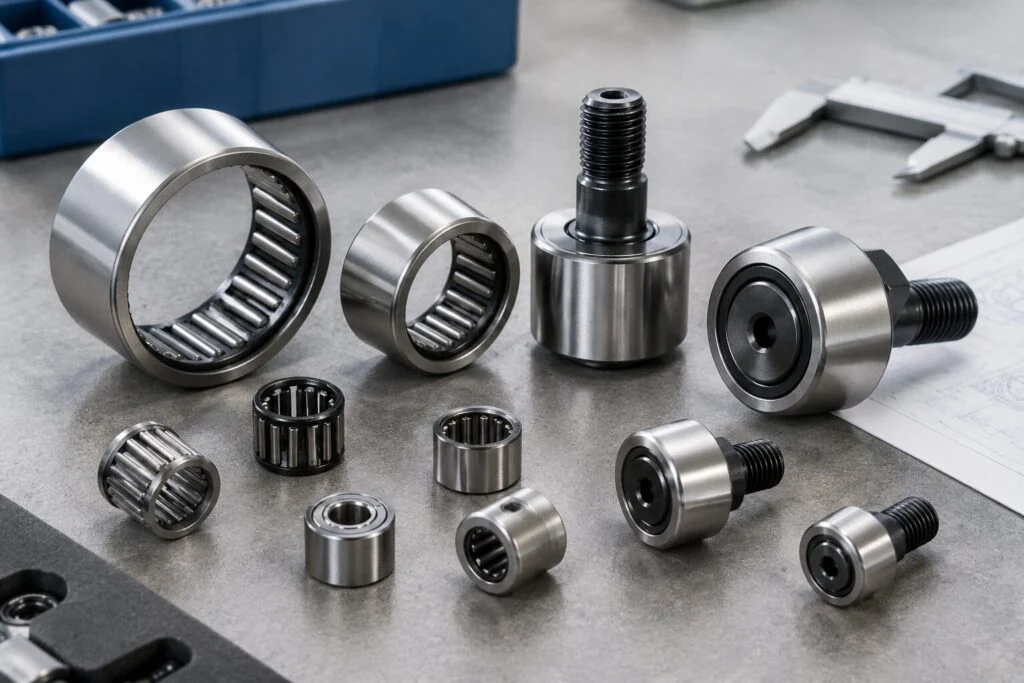
INA GIKR & GAKR Rod Ends Wholesale Supplier
Inner and outer diameters are not enough to specify a rod end.
The critical distinction between INA GIKR and GAKR rod ends lies in their thread configuration: GIKR features a female internal thread, while GAKR features a male external thread. Selecting the correct type requires matching the thread direction and mounting dimensions to the application’s mechanical interface to prevent installation failures and ensure structural integrity.
I learned this the hard way during a shipment to Lagos. The packing list simply read "rod ends," omitting the specific thread hand and pitch. At Apapa Port, customs held the container for weeks because the documentation did not match the physical inspection of the mixed batches. The client’s mining operation stalled, waiting for parts that were physically present but administratively invisible. This delay was not due to logistics but to a failure in technical specification at the sourcing stage. [NEED_CITE: common customs clearance issues for mechanical components with ambiguous descriptions]
This experience reshaped how I approach technical documentation. When sourcing INA GIKR and GAKR components, the focus must shift from generic bearing codes to precise mechanical interfaces. A mismatch here does not just cause assembly delays; it compromises the entire linkage system under dynamic load.
What are the key differences between INA GIKR and GAKR?
Thread direction defines the mounting method, not just the part number.
The primary difference between these two series is the gender of the threaded stud. The INA GIKR series comes with an internal female thread, designed to screw onto a male threaded rod or shaft. Conversely, the INA GAKR series features an external *ded hole in a machine frame or linkage arm. This fundamental distinction dictates the design of the mating component. [NEED_CITE: INA technical catalog definitions for GIKR and GAKR series]
Many buyers assume that if the ball diameter and housing width match, the parts are interchangeable. This is a dangerous oversimplification. The load path changes significantly depending on whether the force is transmitted through an internal or external thread. In high-vibration environments, such as heavy construction equipment, the stress concentration on the threads differs. A male thread (GAKR) may be more susceptible to bending moments if the engagement length is insufficient, while a female thread (GIKR) relies on the tensile strength of the mating rod.
| Feature | INA GIKR Series | INA GAKR Series |
|---|---|---|
| Thread Type | Female (Internal) | Male (External) |
| Mounting Interface | Screws onto male rod | Screws into female hole |
| Typical Application | Linkage rods, adjustable struts | Frame mounts, clevis pins |
| Load Consideration | Tensile strength of mating rod | Shear and bending of stud |
| Adjustment Method | Rotating the rod end on the rod | Rotating the rod end in the hole |
A European OEM once reported a batch failure where GAKR units were substituted for GIKR without redesigning the mounting bracket. The external threads stripped under cyclic loading because the housing material was too soft to support the male stud’s leverage. This was not a bearing failure but a system design error triggered by incorrect component selection. [NEED_CITE: mechanical failure modes in threaded joints under cyclic loading]
When evaluating INA GIKR rod end bearing options, always verify the mating component’s thread gender first. Do not rely solely on the spherical ball size. The housing design must accommodate the specific stress profile of the chosen thread type. For wholesale buyers, mixing these two types in a single order without clear segregation can lead to significant on-site confusion.
How to specify rod ends to avoid customs and assembly issues?
Detailed technical data prevents port holds and production stops.
Ambiguity in commercial invoices is the leading cause of customs delays for mechanical parts. Describing items merely as "bearings" or "joints" invites scrutiny. To avoid this, specifications must include the full part number, thread direction (left-hand or right-hand), and thread pitch. For example, specifying "INA GAKR 10 DO, Right Hand Thread, M12x1.5" leaves no room for interpretation. [NEED_CITE: best practices for international shipping documentation for industrial machinery parts]
In one instance, a batch of INA GAKR rod end joint units was held at a Southeast Asian port because the invoice lacked thread direction details. Customs officials could not verify if the goods matched the import permit for specific heavy machinery components. The delay lasted several weeks, costing the buyer far more than the freight savings they had initially sought. Clear, detailed descriptions align the physical goods with the declared intent, smoothing the clearance process.
Another critical aspect is verifying the thread hand. Standard threads are right-handed, but certain applications, such as turnbuckles or specific suspension linkages, require left-hand threads. Mixing these up results in assemblies that tighten in the wrong direction, leading to immediate loosening under vibration. Always confirm the thread hand with the engineering team before placing the order.
For distributors managing inventory for multiple clients, maintaining a strict database of these parameters is essential. When sourcing INA GIKR and GAKR products, request full technical datasheets from the supplier. These documents should include dimensional drawings that clearly mark the thread specifications. This level of detail protects both the buyer and the seller from disputes arising from misidentification.
Why choose genuine INA rod ends for heavy-duty applications?
Material integrity determines fatigue life under dynamic loads.
Counterfeit or lower-quality alternatives often fail to meet the rigorous standards required for heavy-duty applications. Genuine INA rod ends are manufactured from high-quality steel with controlled heat treatment processes, ensuring consistent hardness and toughness. This consistency is vital for components subjected to continuous shock and vibration, such as those found in mining crushers or agricultural harvesters. [NEED_CITE: ISO standards for spherical plain bearings and rod ends]
Cheaper alternatives may use inferior steel or inadequate surface treatments, leading to premature wear of the sliding contact surface. In a case involving a South American cement plant, non-genuine rod ends failed within months due to rapid wear of the inner ring. The resulting downtime cost the facility significantly more than the initial savings on the bearing purchase. Genuine INA GIKR rod end bearing units provide predictable service life, allowing for accurate maintenance scheduling.
Traceability is another key advantage of sourcing genuine products. Each batch comes with documentation that verifies its origin and compliance with quality standards. This traceability is crucial for OEMs who need to certify their final products for safety and regulatory compliance. Without proper documentation, manufacturers risk liability issues if a component fails in the field.
When purchasing INA GAKR rod end joint units, insist on proof of authenticity. Reputable suppliers will provide batch certificates and original packaging. This diligence ensures that the components meet the specified load ratings and dimensional tolerances, protecting the integrity of the entire mechanical system.
How to optimize wholesale sourcing and mixed-container shipping?
Consolidation reduces freight costs and simplifies inventory management.
Sourcing different types of rod ends separately can lead to inefficient use of container space and higher logistics costs. By consolidating orders for both INA GIKR and GAKR series, along with other bearing types, buyers can optimize container utilization. This approach is particularly beneficial for regional distributors who need to stock a wide variety of SKUs to serve diverse local markets.
A distributor in the Middle East reduced their logistics costs by combining orders for spherical roller bearings, deep groove ball bearings, and rod ends into single container shipments. This consolidation not only saved on freight but also simplified customs clearance, as all items were documented under a single bill of lading with detailed breakdowns. [NEED_CITE: logistics efficiency strategies for industrial spare parts distribution]
Flexibility in minimum order quantities (MOQ) is also crucial. Suppliers who offer flexible MOQs allow buyers to purchase exact quantities needed for specific projects without overstocking. This flexibility is essential for MRO operations where urgent replacements are needed in small batches. By working with a supplier who understands these needs, buyers can maintain lean inventory levels while ensuring availability.
When planning your next procurement cycle, consider the benefits of mixed-batch consolidation. Sourcing INA GIKR and GAKR units alongside other essential bearings from a single reliable partner streamlines the supply chain. This strategy reduces administrative overhead, minimizes shipping frequency, and ensures that all components arrive together, ready for immediate deployment.
Conclusion
Precision in specification prevents costly operational failures.
Choosing between INA GIKR and GAKR rod ends requires a clear understanding of thread configuration and mounting requirements. Accurate documentation and genuine product sourcing are essential for avoiding customs delays and ensuring long-term reliability. By focusing on these technical details, buyers can secure a robust supply chain for their heavy-duty applications.