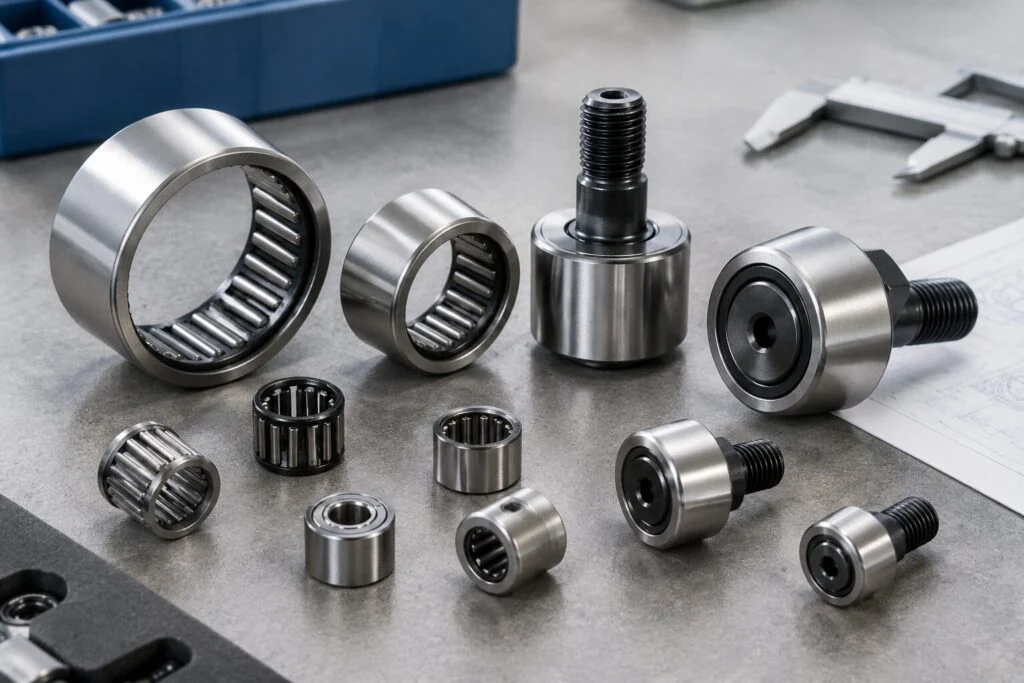
INA Crossed Roller Bearings Robot Wrists Wholesale Supplier
Tighter preload is not always better for robot wrists.
Selecting the correct INA crossed roller bearings for robot wrists requires matching the specific preload class to the wrist’s moment load and rotational speed, rather than assuming maximum rigidity prevents all assembly issues.
I still remember the silence on a production line in Ningbo. It was not the quiet of efficiency, but the heavy, expensive silence of a halted assembly. A batch of bearings I had handled years ago, destined for a German automation client, had been cleared with a standard clearance code instead of the required preloaded specification. The HS code on the paperwork looked clean, but the technical reality was a mismatch. The robot wrists, designed for high-precision articulation, wobbled under load. The assembly line stopped. That incident shifted my focus from mere documentation to the granular details of bearing selection. Now, when I review specifications for INA crossed roller bearings robot wrists, I do not just look at the part number. I look at the suffix, the intended load path, and the operational speed. [NEED_CITE: impact of incorrect preload on robotic joint precision]
This guide breaks down the technical nuances of selecting these critical components. It is written for those who need to understand why a specific suffix matters more than the brand name alone, and how to secure genuine supply without disrupting production schedules.
Why Are INA Crossed Rollers Critical for Robot Wrists?
Robot wrists operate in a confined space yet must handle complex multi-directional forces. Unlike a simple rotary joint, a wrist experiences combined radial, axial, and moment loads simultaneously. Standard ball bearings often struggle here because their point contact cannot adequately resist tilting moments without excessive deflection.
Crossed roller bearings solve this by arranging cylindrical rollers at 90-degree angles to each other. This geometry allows a single bearing ring to support loads from all directions. For robot wrists, this means a compact design that minimizes the overall footprint of the joint while maximizing rigidity. [NEED_CITE: mechanical advantages of crossed roller geometry in compact spaces]
The rigidity provided by INA crossed roller bearings robot wrists is not just about holding position. It is about repeatability. In high-speed pick-and-place operations or precise welding paths, any elastic deformation in the bearing translates directly to error at the end-effector. INA’s manufacturing standards ensure that the raceways are ground to micron-level precision, providing the stiffness required for modern collaborative robots and industrial arms alike.
However, rigidity alone is not enough. The bearing must also accommodate the dynamic nature of robotic movement. Frequent start-stop cycles and rapid direction changes generate significant friction heat. If the internal clearance is too tight, the bearing overheats. If it is too loose, the wrist loses accuracy. This balance is where the selection process becomes critical.
How to Select the Right INA Preload and Clearance?
The most common mistake in sourcing INA crossed roller bearings robot wrists is treating preload as a one-size-fits-all parameter. Preload is the internal stress applied to the bearing before external loads are introduced. It eliminates internal clearance and increases stiffness, but it also increases friction and heat generation.
For robot wrists, the selection depends on two main factors: load magnitude and rotational speed.
| Application Scenario | Load Characteristic | Speed Requirement | Recommended Preload Class |
|---|---|---|---|
| Heavy Payload Welding | High Moment Load | Low to Medium | Heavy Preload |
| High-Speed Pick & Place | Moderate Load | High | Light Preload |
| General Assembly | Variable Load | Medium | Normal Preload |
[NEED_CITE: guidelines for preload selection based on operating conditions]
A heavy preload might seem ideal for a welding robot that needs to hold a steady position against gravity. However, if that same preload is applied to a high-speed sorting robot, the resulting friction can cause the wrist temperature to rise noticeably. I have seen cases where switching from a heavy preload suffix to a light preload suffix dropped the operating temperature significantly, extending the service life of the grease and the bearing itself.
Conversely, using a light preload in a high-load application leads to micro-movements between the rollers and raceways. This causes premature wear and a loss of positional accuracy over time. The key is to match the preload class to the specific duty cycle of the robot.
When reviewing datasheets, pay close attention to the suffix codes. INA uses specific suffixes to denote preload classes. Ignoring these suffixes or substituting them with generic equivalents is a primary cause of field failures. [NEED_CITE: interpretation of INA bearing suffix codes for preload]
What Are the Common Sourcing Pitfalls for Automation Bearings?
Sourcing INA crossed roller bearings robot wrists involves navigating a market filled with counterfeit products and mislabeled stock. The visual similarity between a genuine INA bearing and a lower-quality imitation can be deceptive, especially to the untrained eye.
One major pitfall is the "mixed-batch" risk. Distributors sometimes combine stock from different origins to fulfill large orders. While this may save on shipping costs, it introduces variability in quality and traceability. A robot manufacturer using bearings from multiple unknown sources may face inconsistent performance across their product line.
Another issue is the misuse of standard catalog numbers. Some suppliers offer "equivalent" bearings that claim to match INA dimensions but lack the specific material treatments or surface finishes required for high-precision robotics. These substitutes may fit physically but fail to meet the fatigue life expectations of the original design.
I once assisted a European distributor who received a shipment of bearings labeled with the correct part number but missing the critical precision grade marking. Upon inspection, the raceway roughness was visibly higher than the INA standard. These bearings would have caused increased vibration and noise in the robot wrists, leading to early customer complaints.
To avoid these pitfalls, buyers must demand full traceability documentation. Genuine INA bearings come with batch-specific certificates that verify their origin and quality parameters. Without this paper trail, the risk of receiving counterfeit or substandard goods increases significantly. [NEED_CITE: risks of counterfeit bearings in industrial automation]
How to Ensure Genuine INA Supply for OEMs and Distributors?
Securing a reliable supply of INA crossed roller bearings robot wrists requires more than just finding a low price. It requires a partner who understands the technical requirements and can provide consistent, verifiable stock.
For OEMs, batch-to-batch consistency is crucial. A change in material composition or heat treatment can alter the bearing’s performance, requiring costly re-validation of the robot design. Therefore, sourcing from suppliers who maintain direct links to the manufacturer’s production facilities is essential. This ensures that every bearing meets the same rigorous standards.
Distributors, on the other hand, often need flexibility. They may need to consolidate orders for multiple brands and sizes to optimize shipping costs. A capable supplier can offer mixed-brand consolidation services, allowing distributors to stock a wide range of spare parts without managing dozens of separate shipments. This is particularly valuable for MRO clients who need urgent replacements for various machine types.
Traceability is the cornerstone of genuine supply. Every bearing should be traceable back to its production batch. This allows for quick resolution of any quality issues and provides confidence to end-users. Suppliers who invest in robust inventory management systems can provide this level of transparency, reducing the risk of counterfeit infiltration.
Furthermore, technical support is a key differentiator. A supplier who can assist with model selection, offering advice on preload classes and load capacities, adds significant value. This support helps prevent the selection errors that lead to assembly line halts and costly downtime. [NEED_CITE: importance of technical support in bearing procurement]
Conclusion
Precision in selection prevents downtime in automation.
Choosing the right INA crossed roller bearings robot wrists is a technical decision that impacts the entire lifecycle of a robotic system. By understanding the role of preload, recognizing sourcing risks, and prioritizing traceable supply chains, buyers can ensure reliable performance. The goal is not just to buy a bearing, but to secure a component that delivers the rigidity and accuracy required for modern automation.