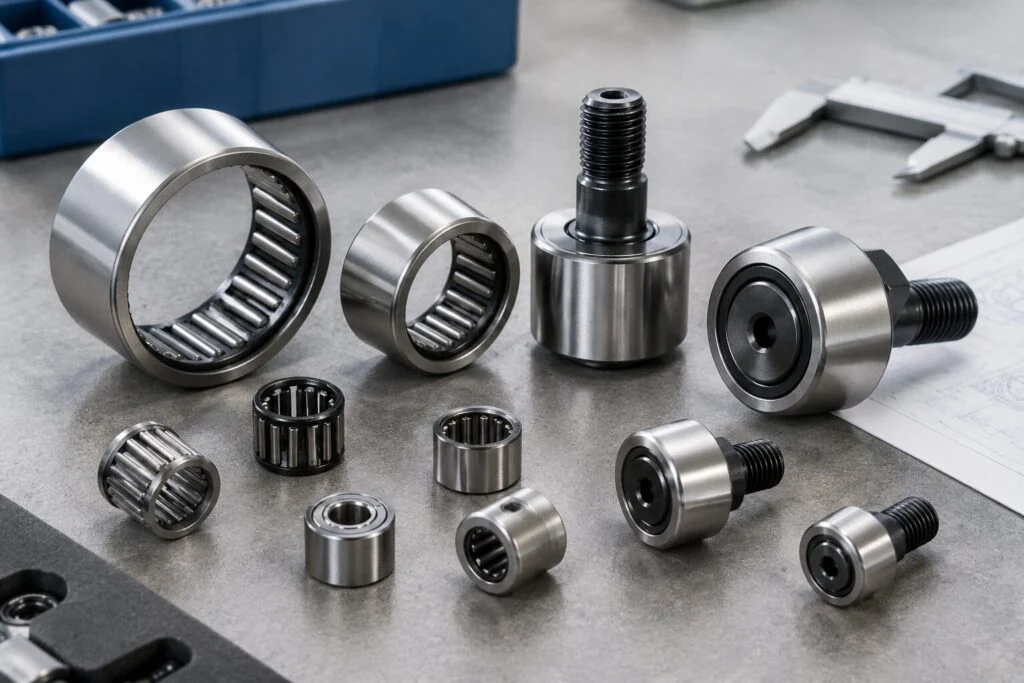
Genuine INA Bearings for Textile Machinery Wholesale Supplier
Matching a part number is not enough to secure production stability.
Sourcing genuine INA bearings for textile machinery requires strict traceability and correct lubrication protocols, not just matching alphanumeric codes, to prevent catastrophic high-speed failures. The core argument is that internal clearance and cage material integrity matter more than the label on the box, and verifying these attributes through original mill certificates is the only way to avoid ruining entire fabric batches with counterfeit components.
I still remember the silence in a knitting plant in Zhangcha, Foshan. It was not the peaceful quiet of a well-oiled machine, but the heavy, expensive silence of a production line that had just ground to a halt. A client had decided to cut costs by sourcing what he believed were INA needle roller bearings from a non-authorized channel. Under normal operating speeds, they seemed fine. But when the machines ramped up to high-speed production, the cages shattered. The resulting yarn snap-back did not just stop the machine; it ruined a whole batch of premium fabric. That scene taught me that in textile manufacturing, the bearing is not just a component; it is the guardian of quality. Now, when I advise buyers, I emphasize that genuine INA bearings for textile machinery are defined by their traceability and application-specific engineering, not just their brand name.
The transition from that costly lesson to a robust sourcing strategy begins with understanding why standard procurement methods fail in this specific industry. Textile machinery operates under unique stress profiles that differ significantly from general industrial applications. The high rotational speeds, combined with the need for minimal vibration to prevent fabric defects, create a narrow margin for error. Counterfeit or incorrectly specified bearings may look identical to the naked eye, but they lack the metallurgical precision and cage durability required for these conditions. This guide explores how to identify authentic components, verify their lineage, and maintain them properly to ensure continuous operation.
Why Do INA Bearings Fail in Textile Machinery?
High-speed operation exposes material and lubrication flaws in non-genuine parts immediately.
In textile applications, particularly in spinning frames and high-speed looms, bearings are subjected to continuous high-frequency loads. The primary reason for failure is often not the rolling elements themselves, but the cage structure and the lubrication regime. Non-genuine bearings often use inferior polyamide materials for cages that cannot withstand the thermal expansion and centrifugal forces generated at high speeds. When these cages degrade, they release particles into the raceway, causing rapid wear and eventual seizure.
Another critical factor is internal clearance. Textile spindles require precise radial internal clearance to handle thermal growth without preloading the bearing excessively. Counterfeit parts often have inconsistent clearances due to poor manufacturing tolerances. This leads to ove*es fatigue. [NEED_CITE: relationship between internal clearance and bearing temperature in high-speed applications]
I have seen cases where mills reported frequent bearing replacements every few months. Upon inspection, the failed bearings showed signs of cage fragmentation rather than typical rolling contact fatigue. This is a hallmark of using bearings designed for lower-speed applications or counterfeit units with substandard cage materials. Genuine INA bearings for textile machinery are engineered with specific cage designs, such as reinforced polyamide or brass, depending on the speed and load requirements. Using a standard industrial bearing in a high-speed textile spindle is a recipe for disaster, regardless of whether it carries the correct brand logo.
How to Compare Genuine vs. Counterfeit INA Bearings?
Use a spec matrix focusing on cage integrity, precision grades, and surface finish rather than just external dimensions.
Visual inspection alone is insufficient for distinguishing high-quality counterfeits from authentic products. However, a detailed comparison of key technical attributes can reveal significant differences. Buyers should request technical data sheets and compare them against the physical product. The following table outlines the qualitative differences that serve as reliable indicators of authenticity.
| Feature | Genuine INA Bearing | Counterfeit/Low-Quality Alternative |
|---|---|---|
| Cage Material | Certified polyamide or brass with consistent texture | Brittle plastic or uneven metal casting |
| Surface Finish | Mirror-like raceway finish, no tool marks | Visible grinding marks or rough patches |
| Precision Grade | Consistent with P5 or P4 standards as specified | Inconsistent runout, noticeable wobble |
| Marking Quality | Laser-etched or deeply stamped, crisp and clear | Shallow stamping, easily rubbed off, or blurred |
| Packaging | Sealed, branded packaging with batch codes | Generic boxes, loose wrapping, or missing labels |
[NEED_CITE: ISO standards for bearing precision grades and surface finish requirements]
A buyer once shared a story about a shipment of bearings that looked perfect externally. However, when they measured the radial runout, it exceeded the acceptable limits for high-speed textile use. The bearings caused excessive vibration, leading to visible stripes in the woven fabric. This case highlights that dimensional accuracy is not just about fitting the shaft; it is about maintaining dynamic balance. Genuine INA bearings for textile machinery undergo rigorous quality control to ensure that each unit meets these strict dynamic performance criteria.
When evaluating suppliers, ask for sample units and perform these basic checks. If the cage feels brittle or the surface finish is rough, reject the batch. The cost of a single failed bearing in terms of downtime and wasted material far exceeds the price difference between genuine and counterfeit units.
What Documents Prove Bearing Traceability?
Demand original mill certificates and batch tracking to verify authenticity before payment.
Traceability is the backbone of authentic sourcing. In the global bearing market, counterfeiters are sophisticated, often replicating packaging and even holograms. The only foolproof method to ensure you are receiving genuine INA bearings for textile machinery is to verify the documentation chain. This starts with the certificate of origin and the mill test certificate.
These documents should include specific batch numbers that correspond to the markings on the bearing rings and packaging. A legitimate supplier will provide these documents willingly and promptly. If a supplier hesitates or provides generic certificates that do not reference specific batch numbers, it is a major red flag. [NEED_CITE: importance of batch-level traceability in preventing counterfeit infiltration]
I recall a situation where a distributor in Southeast Asia was offered a large lot of bearings at a significantly discounted price. The seller claimed they were overstock from a factory closure. However, they could not provide batch-specific certificates. Upon further investigation, it turned out the bearings were refurbished units repackaged as new. By insisting on full traceability documentation, the buyer avoided a potential disaster.
For textile MRO managers, maintaining a library of these certificates for each batch purchased is essential. It not only proves authenticity but also aids in root cause analysis if a failure occurs. If a bearing fails, you can trace it back to its production batch and check if other units from the same batch are at risk. This level of accountability is only possible with genuine products sourced through authorized channels.
How to Optimize Lubrication for Textile Spindles?
Match lubricant viscosity to operating temperatures to prevent cage shattering and extend service life.
Even the most genuine INA bearings for textile machinery will fail prematurely if lubricated incorrectly. Textile environments often involve high temperatures and the presence of lint or fiber dust, which can contaminate lubricants. The choice of lubricant and the re-lubrication interval are critical factors in bearing longevity.
The viscosity of the lubricant must be selected based on the operating speed and temperature of the bearing. Using a lubricant that is too thick can cause churning and overheating, while one that is too thin may not provide adequate film strength. [NEED_CITE: guidelines for selecting lubricant viscosity based on bearing speed factor]
In many mills, maintenance teams follow a fixed schedule for re-lubrication, regardless of actual operating conditions. This approach is flawed. Instead, condition-based monitoring should be used to determine when lubrication is needed. Signs of inadequate lubrication include increased noise, higher operating temperatures, and visible discoloration of the bearing components.
I have observed that proper lubrication can significantly reduce yarn breakage rates. When bearings run smoothly with minimal vibration, the tension on the yarn remains consistent, reducing the likelihood of defects. Conversely, a poorly lubricated bearing introduces micro-vibrations that weaken the yarn structure. Therefore, lubrication is not just a maintenance task; it is a quality control measure.
Suppliers who offer technical support can help mills select the right lubricant for their specific machinery. This service is invaluable for optimizing performance and reducing total cost of ownership. By treating lubrication as a strategic element of bearing management, textile producers can achieve higher efficiency and better product quality.
Conclusion
Authenticity and proper maintenance are inseparable from operational success in textile manufacturing.
Sourcing genuine INA bearings for textile machinery is not merely a purchasing decision; it is a strategic investment in production stability. By focusing on traceability, verifying technical specifications, and optimizing lubrication, mills can avoid the hidden costs of counterfeit components. The experience of past failures serves as a reminder that quality cannot be compromised for short-term savings. Ensure that every bearing installed in your machinery is backed by verifiable documentation and supported by correct maintenance practices.