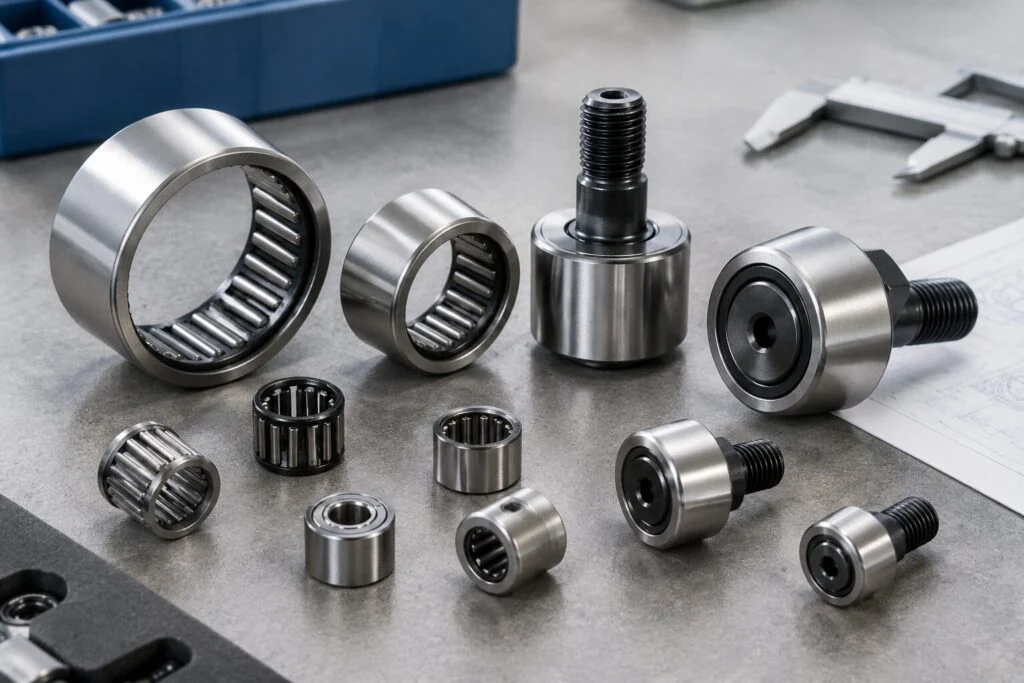
Genuine INA Bearings for Printing Machinery Wholesale Supplier
Price is rarely the primary risk in printing press maintenance; lack of traceability is.
Sourcing authentic INA bearings for printing machinery requires strict verification of origin documents and precise model selection to prevent catastrophic press downtime. Counterfeit components often appear identical to genuine parts but fail to meet micron-level tolerance standards, leading to roller misalignment and registration errors that halt production lines. Buyers must prioritize suppliers who provide full batch-level traceability and technical datasheet support over those offering the lowest unit cost.
The difference between a profitable run and a halted line often comes down to the integrity of a single bearing cage. I learned this not from a textbook, but from the silence of a stopped Heidelberg press. A client needed urgent replacements for their packaging line. To cut costs and speed up delivery, I sourced what appeared to be genuine parts from a local trader. The bearings looked correct. The packaging seemed intact. Yet, within weeks, the rollers began to vibrate. The vibration escalated into severe misalignment, forcing the entire packaging line to stop. The client lost a massive contract due to missed deadlines. That disaster taught me that in high-speed printing, traceability is not just paperwork—it is survival. Now, every batch of INA bearings for printing machinery I handle undergoes rigorous origin document verification before it leaves the warehouse.
Why Do INA Bearings Fail Prematurely in Printing Presses?
Counterfeit bearings cause microscopic deviations that destroy print registration long before they seize up.
Many operators assume that if a bearing fits and spins, it is functional. This is a dangerous misconception in precision printing. Genuine INA components are manufactured to strict ISO quality standards, ensuring consistent hardness and surface finish. Counterfeits often use inferior steel with uncontrolled inclusion density, leading to premature fatigue under the high cyclic loads of printing cylinders. [NEED_CITE: failure modes per ISO 15243 standard]
When a fake bearing deforms even slightly under load, it alters the gap between the impression cylinder and the plate cylinder. In offset printing, this gap is critical. A deviation of a few microns results in blurred images or double printing. The bearing may not fail catastrophically immediately, but it causes consistent quality rejects. By the time the bearing finally seizes, the press has already produced thousands of wasted sheets.
I once consulted for a European printer who experienced recurring registration issues on a new press. They had replaced the main cylinder bearings with cheaper alternatives. The bearings ran smoothly, but the print quality was inconsistent. After replacing them with verified genuine units, the registration stabilized immediately. The issue was not lubrication or alignment; it was the internal geometry of the bearing itself.
To avoid this, buyers must look beyond the physical appearance. Genuine INA bearings for printing machinery come with specific laser-etched markings on the ring faces that are difficult to replicate accurately. The packaging should include holographic seals and batch numbers that can be cross-referenced with the manufacturer’s database. If a supplier cannot provide these verification steps, the risk of counterfeit infiltration is significantly high.
How to Verify Genuine INA Bearings Before Shipment?
Traceability documentation is the only reliable defense against sophisticated counterfeits.
Verifying authenticity requires a multi-layered approach. Visual inspection is the first step, but it is insufficient on its own. Buyers must demand a complete chain of custody documents. This includes the original certificate of conformity from the manufacturing plant and the commercial invoice linking the specific batch number to the order. [NEED_CITE: official brand anti-counterfeit guidelines]
A robust verification process involves checking the following elements:
- Batch Number Consistency: The batch number on the bearing ring must match the number on the packaging box and the accompanying documentation. Any discrepancy indicates potential tampering.
- Packaging Quality: Genuine INA packaging uses high-quality cardboard with precise printing. Counterfeit boxes often have blurry logos, spelling errors, or poor-quality adhesive seals.
- Surface Finish: Authentic bearings have a uniform, smooth finish without any tool marks or discoloration. Counterfeits may show signs of rough machining or uneven heat treatment colors.
I recall a shipment destined for a Middle East distributor. The local customs agent flagged the package due to suspicious packaging. Upon inspection, we found that while the bearings themselves looked acceptable, the batch numbers on the boxes did not correspond to any valid production records in the manufacturer’s system. We rejected the entire lot. Had those bearings been installed, they would have likely failed within months, causing significant downtime for the end-user.
For distributors and MRO operators, establishing a relationship with a supplier who performs these checks internally is crucial. It shifts the burden of verification from the buyer to the source. When sourcing INA bearings for printing machinery, ask your supplier about their incoming quality control procedures. Do they verify batch numbers? Do they inspect packaging integrity? A professional supplier will have clear answers and documented processes.
Which INA Bearing Models Suit Specific Printing Parts?
Selecting the correct bearing series is critical for handling the unique load profiles of printing units.
Printing presses operate under complex loading conditions. Feeders require bearings that can handle high radial loads at low speeds, while printing cylinders need precision bearings that maintain rigidity at high rotational speeds. Using the wrong type can lead to premature wear and increased maintenance costs.
| Printing Unit Component | Recommended INA Bearing Type | Key Performance Requirement | Load Profile |
|---|---|---|---|
| Paper Feeder Rollers | Needle Roller Bearings | High radial load capacity, compact design | Heavy radial, low speed |
| Printing Cylinders | Cylindrical Roller Bearings | High precision, rigid support, low vibration | Combined radial/axial, high speed |
| Cam Followers | Cam Follower Bearings | Shock load resistance, precise tracking | Intermittent shock, variable speed |
| Gearbox Drives | Deep Groove Ball Bearings | Low friction, high-speed capability | Moderate radial/axial, high speed |
Needle roller bearings are particularly common in printing machinery due to their high load-carrying capacity relative to their size. They are ideal for the tight spaces within feeder mechanisms. However, they require precise shaft and housing tolerances to function correctly. [NEED_CITE: technical datasheets for needle roller bearing applications]
Cam follower bearings are essential in the mechanical linkage systems that control paper movement and plate positioning. These bearings must withstand repeated shock loads as cams engage and disengage. Using standard ball bearings in these positions would result in rapid failure due to fatigue.
When procuring INA bearings for printing machinery, it is vital to consult technical datasheets to ensure the selected models match the specific operational parameters of the press. Suppliers who offer technical selection support can help identify equivalent models or upgrades that may improve performance. For instance, switching to a bearing with a higher precision class can reduce vibration and extend the life of adjacent components.
How to Optimize Mixed-Batch Procurement for Press Overhauls?
Consolidating mixed-brand orders reduces logistics complexity and ensures consistent quality standards.
Press overhauls often require a wide variety of bearing types and sizes. Sourcing these from multiple suppliers increases shipping costs, customs clearance complexity, and the risk of receiving counterfeit items from less reputable sources. Consolidating orders with a single, trusted supplier simplifies the procurement process.
A key advantage of working with a global full-range supplier is the ability to mix brands and sizes in a single shipment. This allows buyers to source genuine INA products alongside other premium brands like SKF or FAG, ensuring that all components meet high-quality standards. [NEED_CITE: benefits of consolidated MRO procurement]
For example, a large-scale overhaul might require hundreds of deep groove ball bearings for motor replacements, several spherical roller bearings for main drives, and specific needle bearings for feeder units. Ordering these separately would result in multiple shipments, each with its own set of customs documents and tracking numbers. Consolidating them into one container load reduces freight costs and simplifies inventory management upon arrival.
Flexibility in minimum order quantities (MOQ) is also crucial for MRO operators. Emergency repairs may require only a few specific units, while planned overhauls may involve bulk purchases. A professional supplier should accommodate both scenarios, offering competitive pricing for bulk orders while still providing access to single-unit emergency spares. This flexibility ensures that maintenance teams can respond quickly to breakdowns without being forced to buy excessive stock.
When evaluating suppliers for INA bearings for printing machinery, consider their ability to handle mixed-batch consolidation. Do they offer inspection services before shipping? Can they provide comprehensive customs documentation for all items in the consignment? These capabilities are essential for efficient global procurement.
Conclusion
Authenticity and precision are non-negotiable in printing press maintenance.
Sourcing INA bearings for printing machinery demands more than just finding the lowest price. It requires a partner who prioritizes traceability, technical accuracy, and supply chain integrity. By verifying documentation, selecting the correct models, and consolidating procurement, buyers can protect their operations from the hidden costs of counterfeit failures.