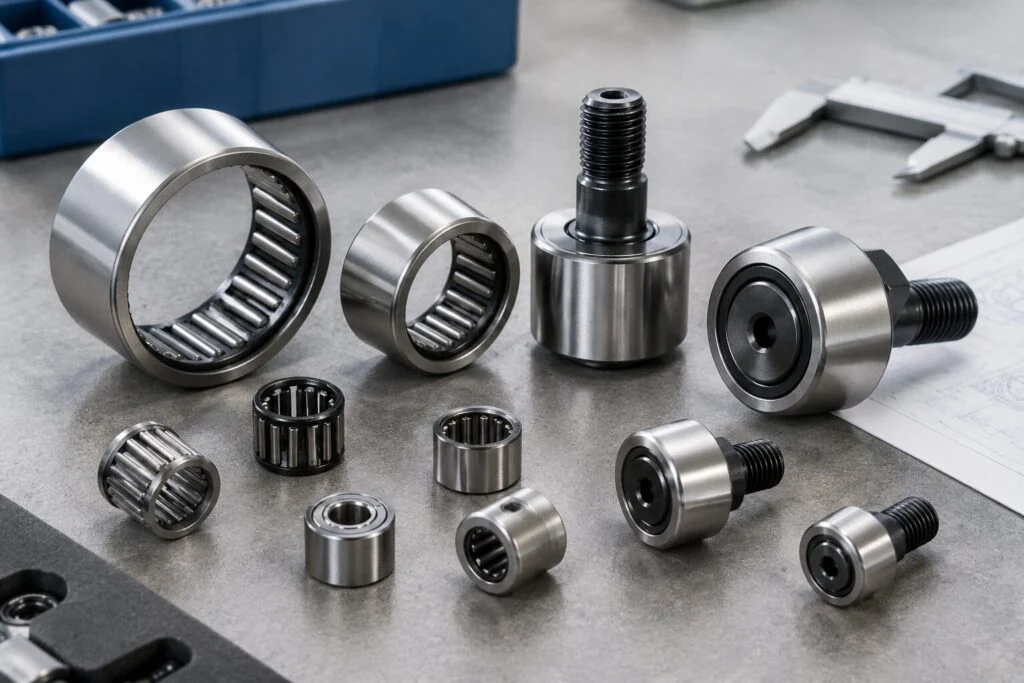
Genuine INA Bearings for Medical Equipment Wholesale Supplier
The lowest unit price often triggers the highest total cost of ownership in medical device manufacturing.
Sourcing genuine INA bearings for medical equipment requires more than checking a part number; it demands verifying full traceability from the Schaeffler production line to your assembly floor. For medical OEMs and precision equipment builders, the critical path is not just procurement speed, but the absolute assurance of P4 or P2 precision grades and ISO-compliant material certifications. Without documented chain-of-custody, even visually perfect bearings can introduce micro-vibrations that compromise patient safety and trigger costly regulatory recalls. This guide details how to distinguish authentic inventory from high-quality counterfeits, focusing on tolerance verification and lifecycle reliability rather than upfront savings.
My perspective on this supply chain was forged in Chicago, years ago, during a frantic procurement cycle for a mid-sized medical device assembler. Eager to meet a tight margin target, I sourced a batch of what appeared to be standard INA needle rollers for a surgical table lift mechanism. The packaging looked correct, and the price was significantly below the official distributor rate. Within months, the units began exhibiting audible friction and positional drift. The failure was not gradual; it was catastrophic for the client’s reputation. The entire batch had to be rejected, leading to a mid-six-figure loss in rework and penalties. That incident shifted my focus entirely. I no longer view bearings as simple commodities but as critical safety components where traceability is non-negotiable. Today, every shipment I handle undergoes rigorous pre-shipment verification, ensuring that the genuine INA bearings for medical equipment we supply carry the unbroken digital thread required by modern quality audits. [NEED_CITE: importance of traceability in medical device supply chains per FDA QSR guidelines]
Why Do Medical Devices Specifically Require INA Bearings?
High rigidity and low friction profiles are not optional features; they are fundamental requirements for compact, high-precision medical joints.
Medical equipment operates under unique constraints. Space is often at a premium, yet the load-bearing requirements can be substantial. INA’s specialization in needle roller and combined bearing designs addresses this paradox directly. Unlike standard deep-groove ball bearings, needle rollers provide a high load-carrying capacity within a minimal cross-sectional height. This allows designers to create slimmer, more ergonomic devices without sacrificing structural integrity.
Consider the rotation module of a CT scanner. The requirement here is zero-play movement under continuous rotational stress. A standard bearing might introduce slight radial clearance variations that manifest as image artifacts. In contrast, precision-grade INA bearings, manufactured to strict P4 or P2 tolerances, ensure the smooth, vibration-free rotation necessary for diagnostic accuracy. [NEED_CITE: ISO 15:2017 standards for radial internal clearance in precision bearings]
Furthermore, the materials used in these bearings must withstand repeated sterilization cycles. While the bearing steel itself is protected, the surrounding environment in operating rooms and labs is harsh. Authentic INA products use high-purity steel with controlled inclusion levels, reducing the risk of premature fatigue failure. Counterfeit alternatives often skip these metallurgical refinements, leading to spalling and debris generation that can contaminate sterile fields. When selecting genuine INA bearings for medical equipment, you are essentially buying into a metallurgical process that prioritizes long-term stability over short-term cost efficiency.
How to Compare INA Bearing Series for Medical Applications?
Selecting the right series involves balancing load capacity, speed limits, and spatial constraints through a structured comparison matrix.
Not all INA bearings are suitable for every medical application. The KUSE and KUVE linear recirculating ball bearing and shaft units, for instance, are designed for high-rigidity linear motion, making them ideal for patient positioning systems in radiotherapy tables. Standard needle rollers, however, excel in oscillating movements found in dental chairs or surgical instrument drives. Misapplication leads to premature wear, regardless of authenticity.
| Application Context | Recommended INA Series Type | Key Performance Attribute | Traceability Requirement |
|---|---|---|---|
| Surgical Table Lift Mechanisms | Needle Roller Bearings (Full Complement) | High static load capacity, compact design | Full batch-level certification |
| CT/MRI Rotation Modules | Precision Angular Contact Ball Bearings | Zero-play, high-speed stability | Individual serial number tracking |
| Patient Bed Linear Adjustments | KUSE/KUVE Linear Units | Smooth linear motion, high rigidity | Material certificate per heat number |
| Dental Drill Handpieces | Miniature Deep Groove Ball Bearings | Low noise, high RPM capability | Cleanroom packaging verification |
A European medical OEM once faced recurring noise issues in their new line of adjustable hospital beds. They had specified standard radial bearings for the linear adjustment rails. Upon review, it became clear that the oscillating load profile was causing brinelling in the raceways. Switching to a specialized linear recirculating unit resolved the issue, but only because the replacement parts were verified as authentic. Counterfeit linear units often lack the precise hardening depth required for such dynamic loads, leading to rapid deformation. [NEED_CITE: failure modes in linear bearing systems under oscillating loads]
When evaluating suppliers, ask for the specific technical datasheet for the proposed series. A reliable INA bearing suppliers for surgical tables and other medical devices will provide detailed load ratings and life calculation models. If a supplier cannot provide these documents or hesitates to discuss the specific series suitability, it is a significant red flag. The goal is to match the bearing’s mechanical personality to the machine’s operational rhythm.
What Are the Hidden Costs of Non-Genuine Medical Bearings?
Tolerance deviations in counterfeit bearings cause vibration and noise, leading to equipment recalibration or total scrapping.
The initial savings from purchasing non-genuine bearings are illusory. The true cost emerges during assembly and, more critically, during field operation. Medical devices are subject to rigorous quality control tests before they leave the factory. A bearing with inconsistent roundness or surface finish will fail these tests, causing production line stoppages. The cost of halting an assembly line to replace a faulty component far exceeds the price difference between a genuine and a fake bearing.
Moreover, the risk extends to post-market surveillance. If a device fails in the field due to a bearing defect, the manufacturer faces recall costs, legal liabilities, and reputational damage. A single recall can cost millions, dwarfing any procurement savings. In one instance, a manufacturer of diagnostic imaging equipment had to recall a series of units because the bearings in the gantry rotation system exhibited premature wear. The root cause was traced to a batch of bearings that lacked the proper heat treatment, a common shortcut in counterfeit production. [NEED_CITE: cost analysis of medical device recalls due to component failure]
Another hidden cost is the impact on brand reputation. Medical professionals rely on equipment consistency. A surgical table that jerks unexpectedly or a CT scanner that produces noisy images undermines trust in the manufacturer. This erosion of confidence can lead to lost contracts and reduced market share. Therefore, investing in genuine INA bearings for medical equipment is an investment in brand protection. It ensures that the end-user experiences the reliability and precision that the brand promises.
The vibration caused by poor-quality bearings can also affect sensitive electronic components within the medical device. Micro-vibrations can loosen connections or interfere with sensor readings, leading to diagnostic errors. This systemic risk makes the selection of authentic, high-precision bearings a critical engineering decision, not just a purchasing one.
How to Verify INA Bearing Authenticity Before Installation?
Mandatory checks include original packaging integrity, laser-etched batch codes, and supplier traceability declarations.
Verification is the final firewall against counterfeit infiltration. It begins with the packaging. Genuine INA bearings arrive in sealed, branded packaging with holographic security labels. Any sign of tampering, poor print quality, or missing security features should trigger an immediate quarantine of the stock. However, packaging alone is not sufficient, as sophisticated counterfeiters can replicate external boxes.
The next step is physical inspection. Authentic INA bearings feature laser-etched identification codes on the ring or cage. These codes are precise, deep, and resistant to removal. Counterfeit markings are often stamped or printed, lacking the permanence and clarity of laser etching. Use a magnifying glass to inspect the font and alignment. Irregularities in the marking are a strong indicator of forgery. [NEED_CITE: Schaeffler official guidelines on identifying genuine products via marking techniques]
Crucially, you must demand the traceability documentation. A reputable supplier will provide a certificate of conformity that links the specific batch of bearings to the manufacturer’s production records. This document should include the heat number, production date, and quality control test results. Without this paper trail, the bearings are effectively unverified, regardless of their appearance. In our operations, we enforce a strict pre-shipment check where every batch is cross-referenced with the manufacturer’s database to ensure validity. This level of diligence is what separates a trusted partner from a mere box mover.
For urgent MRO replacements, such as a single-unit order for a hospital bed, the same standards apply. Even small orders must come with full customs and traceability documents. This ensures that the replacement part matches the original specifications exactly, maintaining the equipment’s integrity. A reliable source for medical equipment bearing traceability will not hesitate to provide these documents, even for small quantities.
Conclusion
Precision in medical equipment is non-negotiable, and the foundation of that precision is authentic componentry.
Sourcing genuine INA bearings for medical equipment is a strategic decision that impacts patient safety, regulatory compliance, and brand reputation. By understanding the specific requirements of medical applications, comparing bearing series effectively, recognizing the hidden costs of counterfeits, and implementing rigorous verification protocols, manufacturers can mitigate risk and ensure long-term reliability. The focus must always remain on traceability and technical suitability, not just unit price. In the high-stakes world of medical device manufacturing, there is no room for compromise on quality.